Marketing · Researched comparison

Influencer Software in 2026: A Guide to 8 Tools

TaskReports may earn a fee from some links on this page, and some placements are paid and labelled. Neither one decides the order. See our disclosure.

The short answer

Heepsy comes first here, mainly for low-cost end-to-end campaigns for small teams. Influencity is better for agencies managing numerous client campaigns, and Grin is better for DTC brands running always-on gifting and affiliates. The remaining 5 options are covered below with prices and limits.

On this page

Key takeaways

  • This list starts with Heepsy, which is built for low-cost end-to-end campaigns for small teams.
  • Only 2 of the 8 tools have a free plan (Heepsy, Grin), so check the caps.
  • A fair warning about Heepsy: database is smaller than enterprise systems.
  • The lowest published monthly entry price here is $69/month, from Heepsy.
  • Upfluence fits E-commerce teams scaling creator outreach.

Quick comparison

ToolSuited toStarting priceMain limit
------------
HeepsyBudget-friendly end-to-end campaigns for small teams$69/monthDatabase is smaller than enterprise platforms
InfluencityAgencies managing numerous client campaignsSee websitePricing not published
GrinDTC brands running always-on gifting and affiliatesSee websiteLess useful outside e-commerce
CreatorIQEnterprise programs with deep reportingSee websiteImplementation needs dedicated resources
LaterSocial teams already managing content in LaterSee websiteDiscovery database is smaller
AspireTeams comparing choices in this categorySee websiteQuote-based pricing
ModashQuick creator vetting and discoverySee websitePricing tiers gate higher usage
UpfluenceE-commerce teams scaling creator outreachSee websiteOnboarding takes commitment
★ Best overall

Heepsy

Budget-friendly end-to-end campaigns for small teams

  • Free plan with no card required
  • AI and lookalike search plus authenticity checks built into results
Price$69/month (billed yearly)
See Heepsy pricing

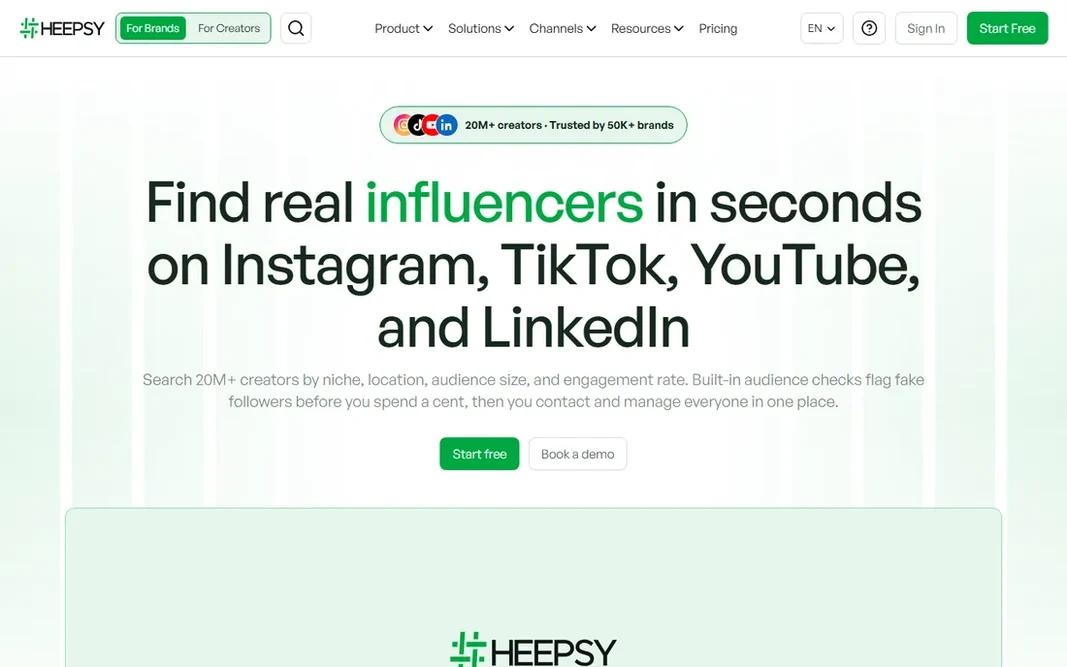
Heepsy makes the most sense for budget-friendly end-to-end campaigns for small teams. The database includes over 20 million creators across Instagram, TikTok, YouTube and LinkedIn, with authenticity analysis showing genuine compared with suspicious followers on every profile. As for the details, Heepsy is the rare tool that runs the entire campaign, discovery, vetting, outreach, payments and reporting, at a price a small brand can approve without a meeting. On top of that, premium plans start at $69 per month billed yearly, flat with no credits to ration. The free plan lets you start searching without talking to sales. In daily use, the tradeoff for the price is depth. Start here if budget matters and upgrade when your program outgrows it. What you pay to start with Heepsy: $69/month. Free access exists with Heepsy. Points against: Support is self-serve on lower levels.

Price: $69/month (billed yearly)

Free plan: Yes

Website: heepsy.com

Watch out for

  • Advanced features are thinner than Grin or CreatorIQ
2

Influencity

Agencies managing numerous client campaigns
See website

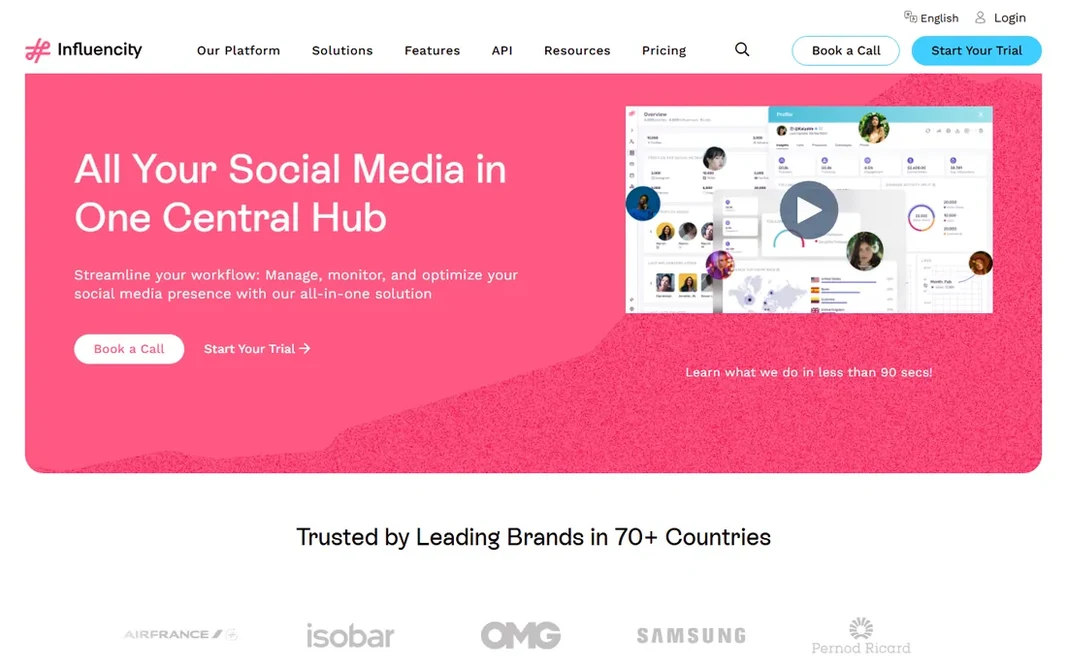
Influencity works best for agencies managing plenty of client campaigns. For single brands, the generalist tools above normally fit better. Influencity is built with agencies in mind: run several brands' campaigns from one dashboard, keep client data separate, and report per client without spreadsheet gymnastics. Drawbacks to consider: Interface can feel busy. It is a Spanish company with a solid European footprint and expanding US presence, which means the integration ecosystem is smaller than the American incumbents'. From a buyer's view, the interface packs a lot in and can feel busy on first use. Beyond that, pricing is not published, so expect a sales conversation. For agencies juggling ten client programs, the multi-brand workflow is the deciding feature. No starting price is listed for Influencity here; confirm pricing on the vendor site. Free plan details: Free trial.

Free plan: Free trial

Website: influencity.com

Strengths

  • Workflow fits agency processes
  • Solid discovery and reporting

Watch out for

  • Pricing not published
3

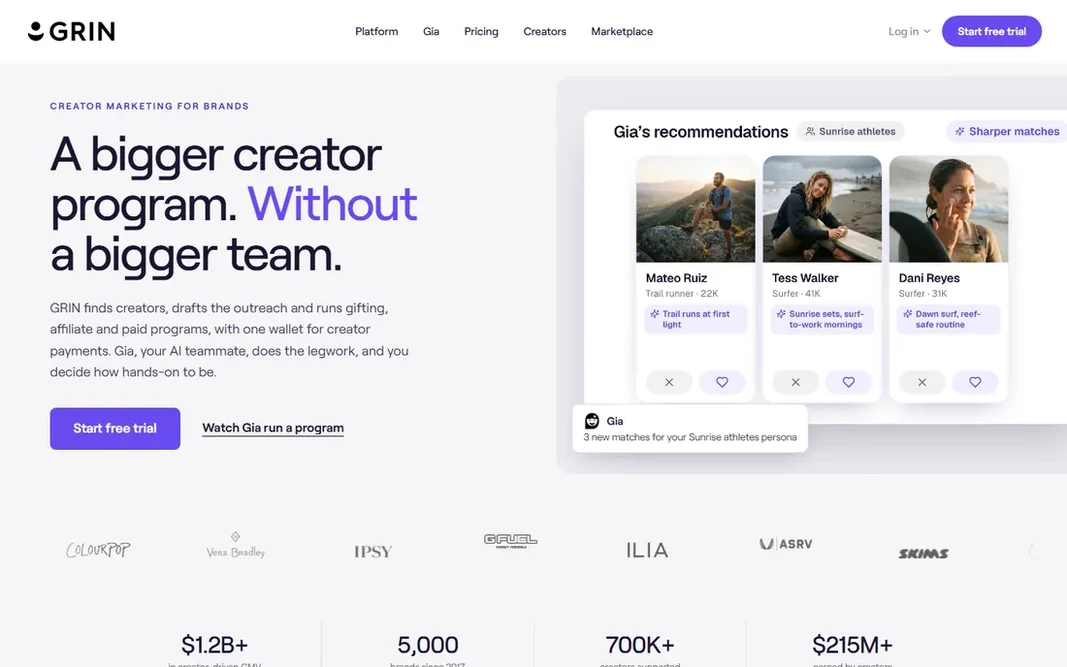
Grin

DTC brands running always-on gifting and affiliates
See website

Where Grin fits: DTC brands running always-on gifting and affiliates. The pricing is the catch. Where it falls short: Full workspace pricing is quote-based and starts high. More specifically, if you run two campaigns per year, it is overkill. This comparison lists no price for Grin; ask the vendor. You can start on Grin without paying. Where Grin stands out: Handles gifting.

Free plan: Yes

Website: grin.co

Strengths

  • Purpose-built for e-commerce creator programs
  • Codes and affiliates in one place

Watch out for

  • Less handy outside e-commerce
4

CreatorIQ

Enterprise programs with deep reporting
See website

CreatorIQ targets enterprise programs with deep reporting. It provides deep analytics, competitive benchmarking, brand safety controls and the kind of reporting a CMO can take to the board. Small and mid-sized brands get 90 percent of what they need from less expensive tools. Where it is weaker: Enterprise pricing and long sales cycles. But if you handle dozens of creators across markets, need audit trails and legal approvals, or report influencer ROI alongside other media, CreatorIQ is made for exactly that. From a buyer's view, global teams can run multi-market programs with consistent measurement and approval workflows. Pricing for CreatorIQ is not stated here, so ask the vendor for current figures. CreatorIQ does not include a free plan.

Free plan: No

Website: creatoriq.com

Strengths

  • Enterprise-grade reporting and data governance
  • Takes care of complicated global programs

Watch out for

  • Implementation needs dedicated resources
5

Later

Social teams already managing content in Later
See website

Later was built for social teams already managing content in Later. Later started as a social media scheduler and added influencer marketing, originally through the Mavrck acquisition, into the same workspace. For a small social team that already plans content in Later, running creator campaigns in the same tool removes a subscription and a ramp-up time. What to check first: Influencer features are less deep than specialists. As for the details, specialist products beat it on depth: the creator database is smaller, vetting analytics are thinner, and global enterprise programs will outgrow it. But depth is not what every team needs. In practice, if your influencer work is ten creators a quarter managed by the same person who schedules your Instagram, Later keeps everything in one place at a reasonable price. Teams running influencer as a standalone growth channel should look at Grin or Upfluence instead. No starting price is listed for Later here; confirm pricing on the vendor site. No free plan comes with Later.

Free plan: No

Website: later.com

Strengths

  • Decent campaign organization for the price level
  • Simple for lean teams to adopt

Watch out for

  • Discovery database is smaller
6

Aspire

Teams comparing choices in this category
See website

For teams comparing options in this category, Aspire is a natural candidate. Aspire, formerly AspireIQ, centres on the relationship side of creator marketing: long-term ambassadors, affiliates and user-generated content instead of single promoted posts. Its marketplace lets creators apply to your campaigns, which flips the usual outbound grind. Trade-offs to know: Best for continuing programs, not one-offs. Pricing is quote-based and the product is tuned for continuing programs, so a brand running one holiday campaign will not get the value. The content library collects everything creators produce so your team can repurpose it across ads and social. No starting price is listed for Aspire here; confirm pricing on the vendor site. Aspire has no permanent free option.

Free plan: No

Website: aspire.io

Strengths

  • Capable creator marketplace with inbound applications
  • Visual content library for repurposing creator posts

Watch out for

  • Quote-based pricing
7

Modash

Quick creator vetting and discovery
See website

Modash is designed for quick creator vetting and discovery. Modash built its reputation on doing one job well: telling you rapidly whether a creator is worth your money. In practice, outreach, contracts and payments exist but are lighter than what Grin or Aspire offer, so plenty of teams use Modash for discovery and vetting alongside another tool for management. Search is quick, profiles display engagement quality and audience authenticity without digging, and you can vet a shortlist in an afternoon. It is not a full campaign suite. From a buyer's view, pricing is tiered by usage, which fits teams with variable volume. Modash shows no starting price here, so confirm the cost on the vendor site. On free options: Free trial. Downsides: Smaller brand recognition than incumbents.

Free plan: Free trial

Website: modash.io

Strengths

  • Simple to begin without a sales call
  • Quick

Watch out for

  • Campaign management is lighter than full-suite tools
8

Upfluence

E-commerce teams scaling creator outreach
See website

Upfluence is a good fit for E-commerce teams scaling creator outreach. Upfluence merges a large influencer database with the campaign tools to actually run programs: outreach, contracts, product seeding, payments and performance tracking. What to check first: Onboarding takes commitment. For everyday use, E-commerce integrations with Shopify, WooCommerce and others let teams handle gifting at scale. Upfluence does not show a starting price in this comparison, so check the vendor site for current pricing. No free plan comes with Upfluence.

Free plan: No

Website: upfluence.com

Strengths

  • Capable e-commerce integrations
  • Large creator database with live social data

Watch out for

  • Interface can feel dense for first-time users

FAQ

What is the cheapest option for influencer software in this list?

On published monthly entry prices, Heepsy is the lowest here at $69/month. Entry price is only part of the cost, because seats, add-ons and billing terms can change the total.

How much does influencer marketing software cost?

From $69 per month for Heepsy's full workflow to quote-based enterprise plans that run into thousands monthly. In practice, usage-based vetting tools start around $299 per month. Most serious systems sit between $300 and $1,000 per month for mid-sized brands.

Can I try these options before paying?

Often, yes. Heepsy and Grin have a free plan and Influencity and Modash offer a free trial. Use your own data and a real task during the test, and check what the free tier or trial limits before you rely on it.

Do these tools publish their prices?

Not all of them. Influencity, Grin, CreatorIQ and others publish no starting price, so expect a quote request for those. The rest, Heepsy included, show a starting price, though seats and billing terms still change the final cost.

Can I just use Instagram search rather than paying for software?

For your first five creators, yes. Software earns its keep on vetting at scale, managing outreach to dozens of creators, tracking payments and codes, and proving ROI.

Is Heepsy the right pick for everyone comparing influencer software?

No single tool suits every team. Heepsy comes first because it fits affordable end-to-end campaigns for small teams, while Influencity suits agencies managing many client campaigns and Grin suits DTC brands running always-on gifting and affiliates. Match the tool to your own size, budget and workflow before deciding.