Logistics · Researched comparison

Shortlist: 6 Best Inventory Software Options for 2026

TaskReports may earn a fee from some links on this page, and some placements are paid and labelled. Neither one decides the order. See our disclosure.

The short answer

If you need teams that require to track stuff, not run full ERP, Sortly is the first tool to look at here. Finale Inventory fits multichannel Amazon and Shopify sellers; Zoho Inventory fits small sellers already in the Zoho ecosystem. The remaining 3 options are covered below with prices and limits.

On this page

Key takeaways

  • The list opens with Sortly, aimed at teams that require to track stuff, not run full ERP.
  • Sortly, Zoho Inventory, Katana: these are the 3 tools out of 6 that offer a free plan.
  • Before buying Sortly, weigh this: not a full accounting or order management system.
  • Fishbowl fits QuickBooks-centric manufacturers and wholesalers.
  • The cheapest monthly starting price in the list is $99/month, offered by Finale Inventory.

Quick comparison

ToolFree planIdeal forKey limitation
------------
SortlyYesTeams that require to track stuff, not run full ERPPer-user costs add up for large teams
Finale InventoryFree trial (14 days)Multichannel Amazon and Shopify sellersInterface is utilitarian
Zoho InventoryYesSmall sellers already in the Zoho ecosystemAdvanced warehousing needs higher tiers
KatanaYesSmall manufacturers and makers selling directAdvanced features need higher tiers
Cin7Free trial (14 days)Expanding brands selling across Shopify, Amazon and wholesaleImplementation takes real effort
FishbowlFree trial (14 days)QuickBooks-centric manufacturers and wholesalersImplementation can be heavy
★ Best overall

Sortly

Teams that require to track stuff, not run full ERP

  • Quick setup
  • Easiest visual inventory tracking with barcode and QR
PriceFree plan (100 items, 1 user); Advanced $49/month ($24/month first-year annual)
See Sortly pricing

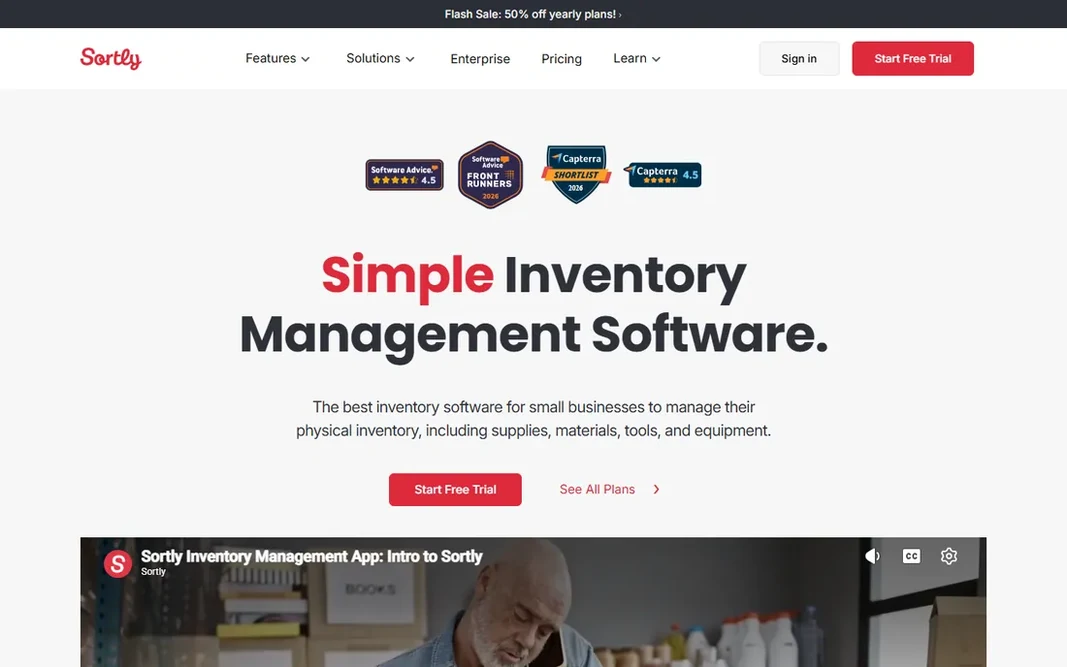
Sortly is aimed squarely at teams that require to track stuff, not run full ERP. For a contractor, event company or small warehouse tracking assets and stock, this is enough. It is not an ERP. In practice, per-user costs add up for large teams. But for visual stock tracking at $0 to $49, nothing is simpler to adopt. Visual inventory with phone-based barcode and QR scanning, an excellent mobile app for the floor team, and setup measured in hours. Starting cost for Sortly: Free plan. Sortly includes a free tier. The main drawbacks: Per-user costs add up for large teams.

Price: Free plan (100 items, 1 user); Advanced $49/month ($24/month first-year annual)

Free plan: Yes

Website: sortly.com

Watch out for

  • Not a full accounting or order management system
2

Finale Inventory

Multichannel Amazon and Shopify sellers
$99/month (Starter, 1 user, up to 500 orders/month); Bronze $240/month
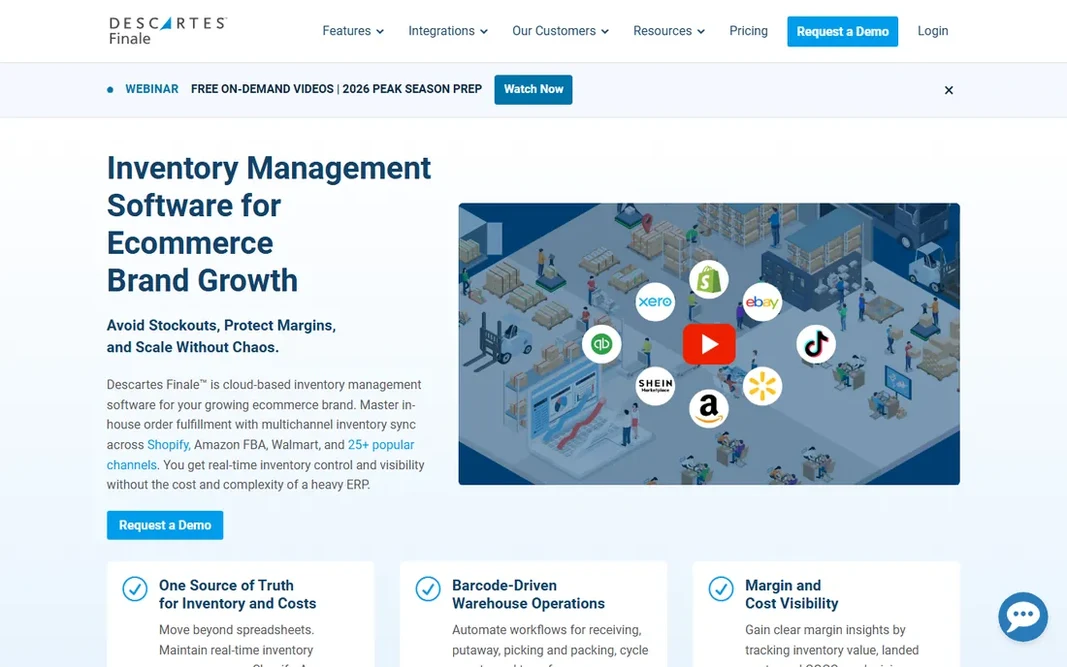
Finale Inventory targets multichannel Amazon and Shopify sellers. At $99 for the Starter tier, it undercuts Cin7 substantially for sellers who do not need EDI. Where it falls short: Advanced features need higher levels. In practice, the interface is utilitarian instead of beautiful, and advanced features need higher levels. The starting price for Finale Inventory: $99/month. On free options: Free trial (14 days).

Free plan: Free trial (14 days)

Website: finaleinventory.com

Strengths

  • Decent value at entry level
  • Capable multichannel inventory sync for Amazon and Shopify sellers

Watch out for

  • Interface is utilitarian
3

Zoho Inventory

Small sellers already in the Zoho ecosystem
Free plan (50 orders/month); Standard $39/month ($29/month annual)

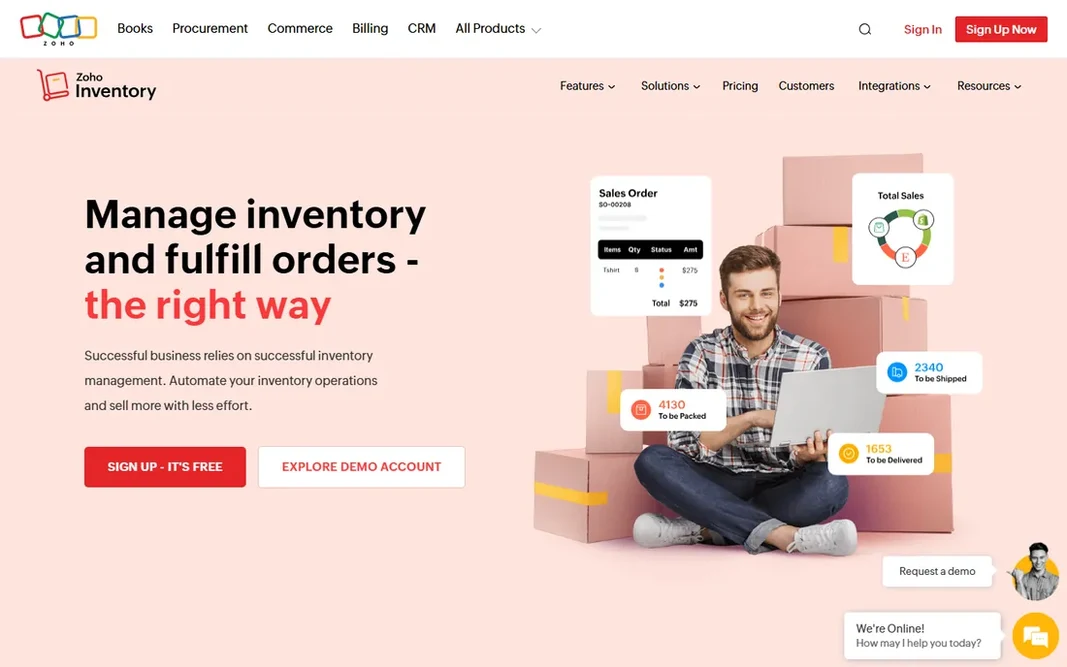
Zoho Inventory makes the most sense for small sellers already in the Zoho ecosystem. Setup is self-serve. For a small seller starting out, this is the cheapest real inventory system; graduate when the warehouse outgrows it. Drawbacks to consider: US support coverage is thinner than competitors. From a buyer's view, Zoho Inventory is the value pick for small sellers: a real free level at 50 orders per month, then $29 to $39 for Standard. Also, the Zoho Books and CRM integrations make it the natural choice inside the Zoho stack, and Shopify and Amazon connections handle the sales side. Starting cost for Zoho Inventory: Free plan. Free access exists with Zoho Inventory.

Free plan: Yes

Website: zoho.com/inventory

Strengths

  • Budget-friendly premium levels
  • Tight integration with Zoho Books and CRM

Watch out for

  • Advanced warehousing needs higher levels
4

Katana

Small manufacturers and makers selling direct
Free plan (30 SKUs); Core from $299/month

Katana makes the most sense for small manufacturers and makers selling direct. Production planning, materials, and shop-floor workflows are native, not bolted on, which generic inventory tools cannot match. Downsides: Pricing scales with order volume, which can surprise expanding makers. Volume-based pricing means success raises the bill, so model the scaling cost before committing. From a buyer's view, setup is guided. Katana starts at: Free plan. You can start on Katana without paying.

Free plan: Yes

Website: katanamrp.com

Strengths

  • Decent Shopify and QuickBooks integrations
  • Visual shop-floor workflows

Watch out for

  • Advanced features need higher levels
5

Cin7

Expanding brands selling across Shopify, Amazon and wholesale
$349/month (Core Standard); Pro $599/month

Cin7 was built for expanding brands selling across Shopify, Amazon and wholesale. Cin7 is inventory truth for brands selling everywhere at once. For a multichannel business where oversells cost real money, Cin7's depth justifies the price. Worth adding: the QuickBooks and Xero integrations keep accounting in sync. In daily use, for a single-channel seller, the tools below do the job less expensive. Entry price for Cin7: $349/month. As for free access: Free trial (14 days). Trade-offs to know: Implementation takes real effort. Strengths: Deep integrations with QuickBooks and Xero.

Free plan: Free trial (14 days)

Website: cin7.com

Strengths

  • Capable multichannel and 3PL workflows
  • Native EDI for retail and wholesale

Watch out for

  • Entry price is high for small sellers
6

Fishbowl

QuickBooks-centric manufacturers and wholesalers
From $229/month (Inventory, 2 users); Advanced from $595/month

Fishbowl makes the most sense for QuickBooks-centric manufacturers and wholesalers. Fishbowl's moat is the QuickBooks sync: years of maturity in keeping inventory and accounting aligned, plus real manufacturing and warehouse depth. Beyond that, annual contracts are usual. Reasons to shortlist it: Asset and order tracking. For everyday use, modernity is the trade. The interface feels dated next to Cin7 or Katana, and implementation can be heavy. Starting cost for Fishbowl: From $229/month. As for free access: Free trial (14 days). Drawbacks to consider: Dated interface compared to cloud-native rivals.

Free plan: Free trial (14 days)

Website: fishbowlinventory.com

Strengths

  • A long-standing strength
  • Solid manufacturing and warehouse features

Watch out for

  • Implementation can be heavy

FAQ

Can inventory software manage Amazon FBA?

Cin7 and Finale deal with multichannel FBA sellers best. If FBA is your only channel, Seller Central plus a bookkeeping tool may be enough.

Which options for inventory software have a free plan?

Sortly, Zoho Inventory and Katana offer a free plan in this list. Free plans usually cap users, projects or features, so check the limits on the vendor page. Several others offer a trial instead.

Can I try these options before paying?

Often, yes. Sortly, Zoho Inventory and Katana have a free plan and Finale Inventory, Cin7 and Fishbowl offer a free trial. Use your own data and a real task during the test, and check what the free tier or trial limits before you rely on it.

How are the tools for inventory software ordered?

Sortly sits first and Fishbowl last because the order follows typical fit for inventory software, then price clarity and free access. It is a judgement call, so read each profile for fit and limits.

Do I need inventory software or just a spreadsheet?

The triggers are multichannel selling, purchase orders, warehouse staff, or manufacturing. Also, if any of those apply, a spreadsheet is already costing you money.

Do these tools publish their prices?

Yes. Every tool from Sortly to Fishbowl shows a starting price, though seats, add-ons and billing terms still change the final cost.