Marketing · Researched comparison

6 Best Marketing Automation Platforms for 2026

TaskReports may earn a fee from some links on this page, and some placements are paid and labelled. Neither one decides the order. See our disclosure.

The short answer

This list puts ActiveCampaign first for SMBs that want advanced automation without enterprise cost. For a different need, Customer.io covers SaaS and app firms doing behavior-triggered lifecycle messaging and Klaviyo covers E-commerce and DTC brands where email drives revenue. Details, prices and limits for the rest of the 6 tools are below.

On this page

Key takeaways

  • Top of the list is ActiveCampaign, which targets SMBs that want advanced automation without enterprise cost.
  • The cheapest monthly starting price in the list is $15/month, offered by ActiveCampaign.
  • A free plan is available from 4 of the 6 tools: Klaviyo, HubSpot Marketing Hub, Brevo, Mailchimp.
  • What to know about Customer.io first: $100/month entry is steep for tiny lists.

Quick comparison

ToolSuited toFree accessKey limitation
------------
ActiveCampaignSMBs that want advanced automation without enterprise costFree trial (14 days)No free plan
Customer.ioSaaS and app firms doing behavior-triggered lifecycle messagingFree trial (14 days)Advanced setups need developer help
KlaviyoE-commerce and DTC brands where email drives revenueYesOverkill outside e-commerce
HubSpot Marketing HubB2B teams that want marketing and sales on oneYesMarketing-contact pricing punishes large databases
BrevoHigh-volume senders and budget teamsYesBig jump to Professional at $499/month
MailchimpSmall firms sending newsletters and straightforward automationsYesAutomation depth lags specialists
★ Best overall

ActiveCampaign

SMBs that want advanced automation without enterprise cost

  • 900-plus prebuilt automation recipes
  • Best-in-class visual automation builder at this price
Price$15/month (Starter, billed yearly, 1,000 contacts); Plus $49/month; Pro $79/month
See ActiveCampaign pricing

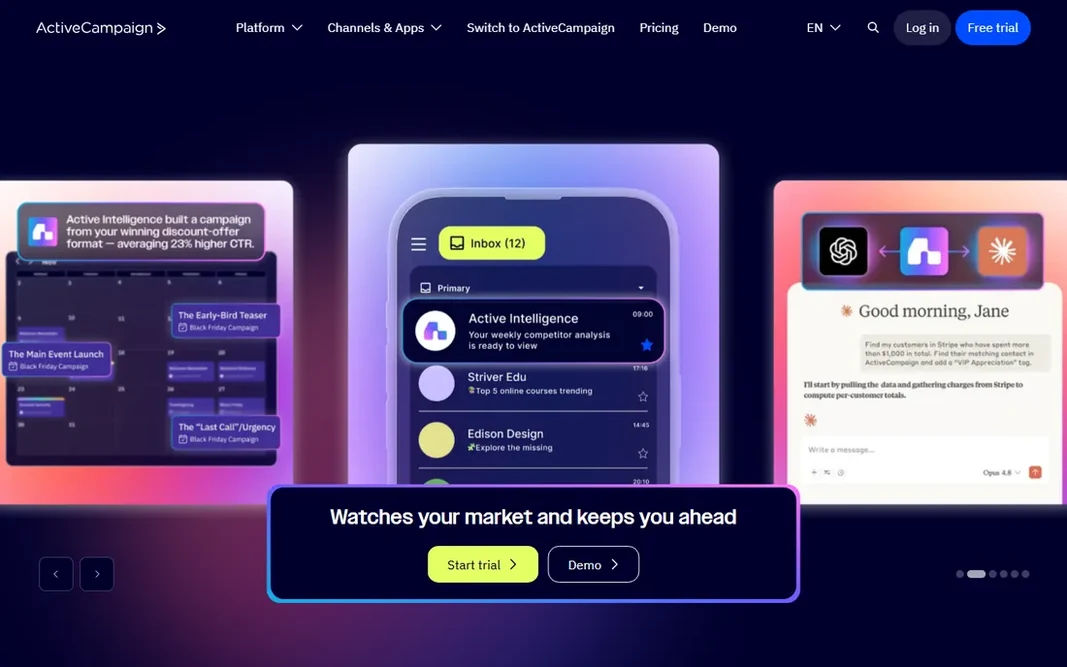
ActiveCampaign is a good fit for SMBs that want advanced automation without enterprise cost. ActiveCampaign is the automation nerd's pick at SMB prices. Its visual builder deals with multi-step, conditional, cross-channel automations that rival tools multiple times the price. Where it is weaker: No free plan. The 900-plus recipe library means you seldom start from a blank canvas. From a buyer's view, there is no free plan, only a 14-day trial, so this is a premium commitment from day one. On top of that, setup takes days, and free migration from another product softens the switch. A built-in CRM includes the sales side for small teams. Price to start with ActiveCampaign: $15/month. On free options: Free trial (14 days).

Price: $15/month (Starter, billed yearly, 1,000 contacts); Plus $49/month; Pro $79/month

Free plan: Free trial (14 days)

Website: activecampaign.com

Watch out for

  • Interface can feel busy
2

Customer.io

SaaS and app firms doing behavior-triggered lifecycle messaging
$100/month (Essentials: 5,000 profiles, 100,000 emails/month); Premium $1,000/month

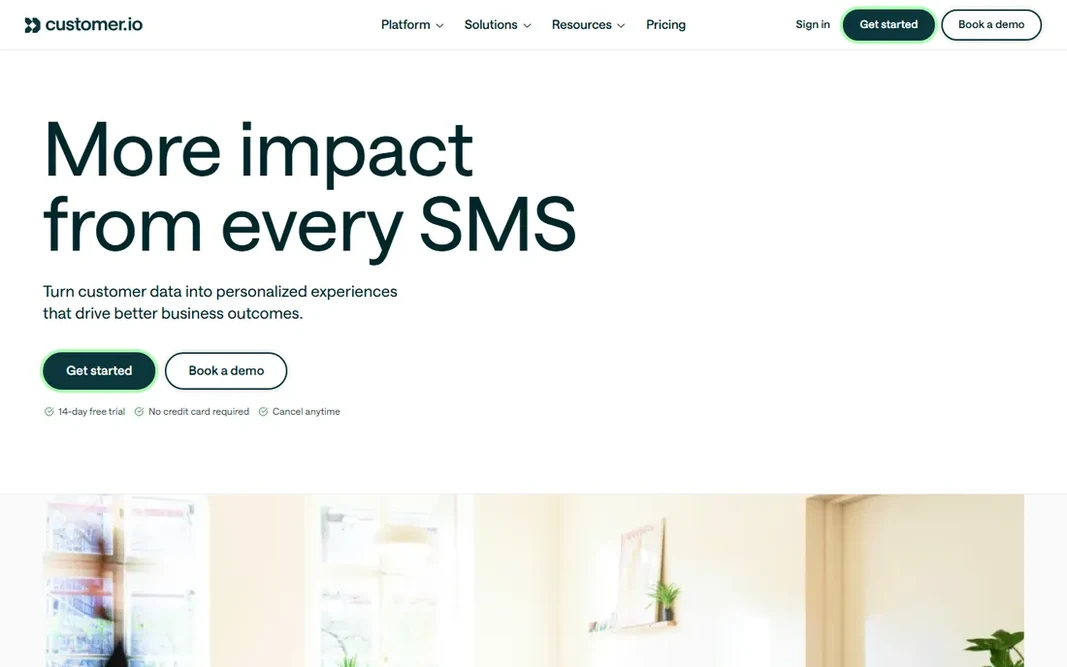
Where Customer.io fits: SaaS and app businesses doing behavior-triggered lifecycle messaging. Customer.io is the product-led company's automation system. Instead of list-based campaigns, everything triggers off live event data: onboarding sequences, activation nudges, churn win-backs, all personalized from behavioral signals. Points against: Advanced setups need developer help. What Customer.io does well: Developer-friendly API and data pipelines. More specifically, pricing scales on profiles and message volume, so model your monthly events before committing. In daily use, at $100 a month for Essentials, this is not a newsletter tool. It is infrastructure for businesses whose product produces the events. Email, SMS, push, and in-app messages share one visual workflow builder, and the API-first design suits engineering-led teams. Entry price for Customer.io: $100/month. As for free access: Free trial (14 days).

Free plan: Free trial (14 days)

Website: customer.io

Strengths

  • Event-triggered messaging across email, SMS, push
  • Solid compliance posture

Watch out for

  • $100/month entry is steep for tiny lists
3

Klaviyo

E-commerce and DTC brands where email drives revenue
Free $0 (250 profiles); Email from $20/month (500 profiles, 5,000 sends)

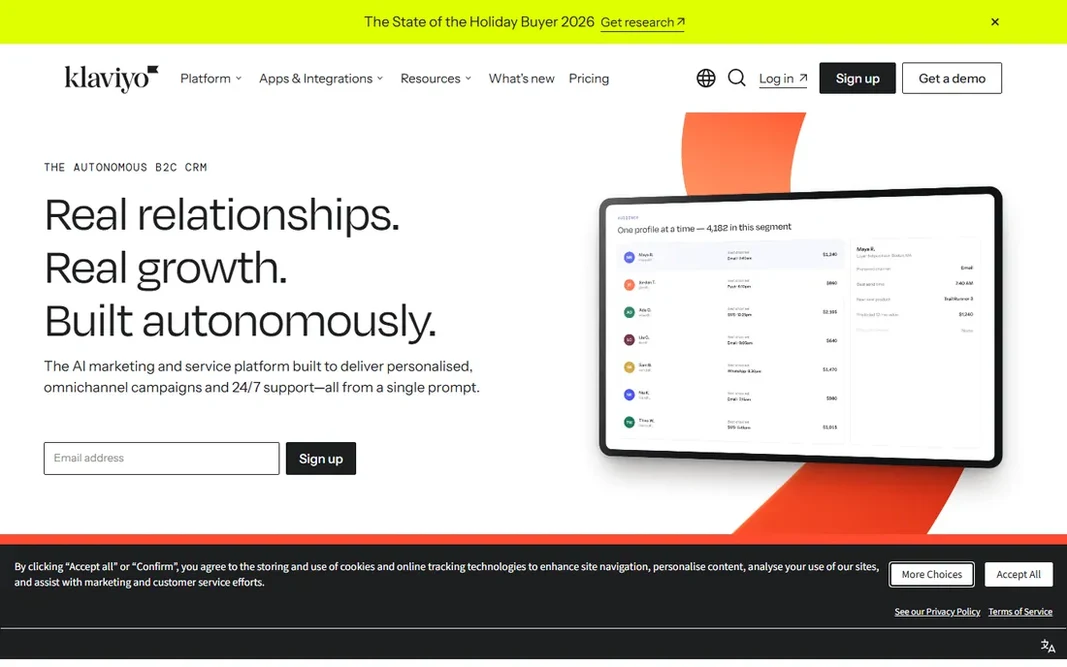
Think of Klaviyo for E-commerce and DTC brands where email drives revenue. Klaviyo is built for one job: turning e-commerce customer data into revenue. Also, audit your active-profile count on a regular basis; Klaviyo counts profiles, not just subscribers. Klaviyo starts at: Free $0. Free access exists with Klaviyo. Watch-outs: SMS is a separate significant cost.

Free plan: Yes

Website: klaviyo.com

Strengths

  • Predictive analytics and AI segmentation
  • Revenue attribution per flow and campaign

Watch out for

  • Profile-based pricing escalates quick as lists grow
4

HubSpot Marketing Hub

B2B teams that want marketing and sales on one CRM
Free $0; Starter $9/seat/month (billed yearly); Professional $800/month + $3,000 onboarding

Choose HubSpot Marketing Hub for B2B teams that want marketing and sales on one CRM. Automation runs on lead score, lifecycle stage, and deal ownership instead of just email opens, so nurture actually reflects the sales process. The honest catch is the pricing cliff. As for the details, the free level is genuinely handy, and Starter at $9 per seat a month gets small teams running. More specifically, if your database is big and your needs are straightforward, the per-contact model may cost more than a send-based rival. HubSpot Marketing Hub pricing: Free $0. A free plan is available with HubSpot Marketing Hub. The main drawbacks: Marketing-contact pricing punishes large databases.

Free plan: Yes

Website: hubspot.com

Strengths

  • 1,700-plus app ecosystem
  • CRM-native automation with lead scoring and lifecycle stages on real sales data

Watch out for

  • Professional at $800/month plus $3,000 onboarding is a huge jump from Starter
5

Brevo

High-volume senders and budget teams wanting multichannel in one bill
Free $0 (300 emails/day); Starter $9/month (5,000 emails/month)

Pick Brevo if this describes you: high-volume senders and budget teams wanting multichannel in one bill. Model your monthly send volume before choosing a level; heavy senders can outgrow the cheap plans quick. For high-volume senders with big lists, that math wins by a lot. Also, for newsletters and straightforward campaigns at scale, the value is hard to beat. Serious automation, A/B testing, and landing pages sit above Starter, and Professional at $499 a month ($449 billed yearly) is a different universe from the $9 Starter. As for the details, email, SMS, WhatsApp, chat, and a CRM share one bill, which fits teams that want multichannel without stitching tools together. For everyday use, setup takes hours with the drag-and-drop editor. Starting cost for Brevo: Free $0. Free access exists with Brevo. The main drawbacks: Logo removal on Starter costs additional. Highlights: Email, SMS, WhatsApp, chat.

Free plan: Yes

Website: brevo.com

Strengths

  • CRM in one product
  • Send-based pricing with unlimited contacts even on free

Watch out for

  • Big jump to Professional at $499/month
6

Mailchimp

Small firms sending newsletters and straightforward automations
Free $0 (250 contacts); Essentials $13/month (500 contacts); Standard $20/month

Mailchimp serves small businesses sending newsletters and straightforward automations. Mailchimp is where most small firms start, and the onboarding presents it: first campaign in hours, not days. Multi-step automation unlocks at Standard ($20 a month), and Premium at $350 a month is a steep top end. Where Mailchimp stands out: Easiest ramp-up time in the category. Subscribed, unsubscribed, and non-subscribed contacts all count toward your contact limit until you manually archive them, so dirty lists cost real money. Templates, simple automations, and e-commerce integrations handle the newsletter-and-promo use case well, and the free level takes care of 250 contacts. What you pay to start with Mailchimp: Free $0. Mailchimp offers a free plan. The main drawbacks: Automation depth lags specialists.

Free plan: Yes

Website: mailchimp.com

Strengths

  • Solid e-commerce integrations
  • Free plan to start

Watch out for

  • Contact billing counts unsubscribed contacts until archived

FAQ

Is a free plan enough to start?

You will hit limits on automation depth, contact counts, or branding. Treat the free level as a trial with no expiry, and upgrade when a specific limitation costs you more than the premium plan.

Can I try these tools before paying?

Often, yes. Klaviyo, HubSpot Marketing Hub, Brevo and Mailchimp have a free plan and ActiveCampaign and Customer.io offer a free trial. Use your own data and a real task during the test, and check what the free tier or trial limits before you rely on it.

How are the tools for marketing automation platform ordered?

ActiveCampaign sits first and Mailchimp last because the order follows typical fit for marketing automation platform, then price clarity and free access. It is a judgement call, so read each profile for fit and limits.

Is ActiveCampaign the right pick for everyone comparing marketing automation platform?

No single tool suits every team. ActiveCampaign comes first because it fits SMBs that want advanced automation without enterprise cost, while Customer.io suits SaaS and app businesses doing behavior-triggered lifecycle messaging and Klaviyo suits E-commerce and DTC brands where email drives revenue. Match the tool to your own size, budget and workflow before deciding.

Do these tools publish their prices?

Yes. Every tool from ActiveCampaign to Mailchimp shows a starting price, though seats, add-ons and billing terms still change the final cost.