Developer Tools · Researched comparison

6 Best Automated Software Testing Tools for 2026

TaskReports may earn a fee from some links on this page, and some placements are paid and labelled. Neither one decides the order. See our disclosure.

The short answer

Cypress is the first pick on this list for JavaScript teams doing end-to-end testing. If your case is different, Katalon suits teams needing web, API, mobile, and desktop in one tool and Tricentis Tosca suits enterprise codeless test automation. The other 3 tools in the list cover narrower or pricier cases.

On this page

Key takeaways

  • Cypress is the opening pick, best for JavaScript teams doing end-to-end testing.
  • A fair warning about LambdaTest: rebranded to TestMu AI which confuses.
  • Only 4 of the 6 tools have a free plan (Cypress, Katalon, LambdaTest, Selenium), so check the caps.
  • BrowserStack fits real-device and browser infrastructure.
  • LambdaTest has the lowest monthly starting price in this list: $15 per month.

Quick comparison

ToolFree accessBest fitWatch out for
------------
CypressYesJavaScript teams doing end-to-end testingJavaScript only
KatalonYesTeams needing web, API, mobile, and desktop in one toolIDE-based setup adds friction
Tricentis ToscaNoEnterprise codeless test automationEnterprise pricing
LambdaTestYesCloud cross-browser and device testingUsage-based costs scale with parallelization
SeleniumYesOpen-source web UI testing standardNo built-in auto-waiting
BrowserStackNoReal-device and browser infrastructurePricing not published here

How we chose

TaskReports used vendor pricing pages and product documentation as the base, then compared plans, free access and documented limits for 6 tools. Where a vendor does not publish a price, the entry says quote. Where a price depends on seats or billing term, the entry says so. Position on the page reflects fit for a typical buyer first, with price clarity and free access breaking ties. Treat it as a guide, not a ruling.

★ Best overall

Cypress

JavaScript teams doing end-to-end testing

  • Simple setup
  • Very good developer experience

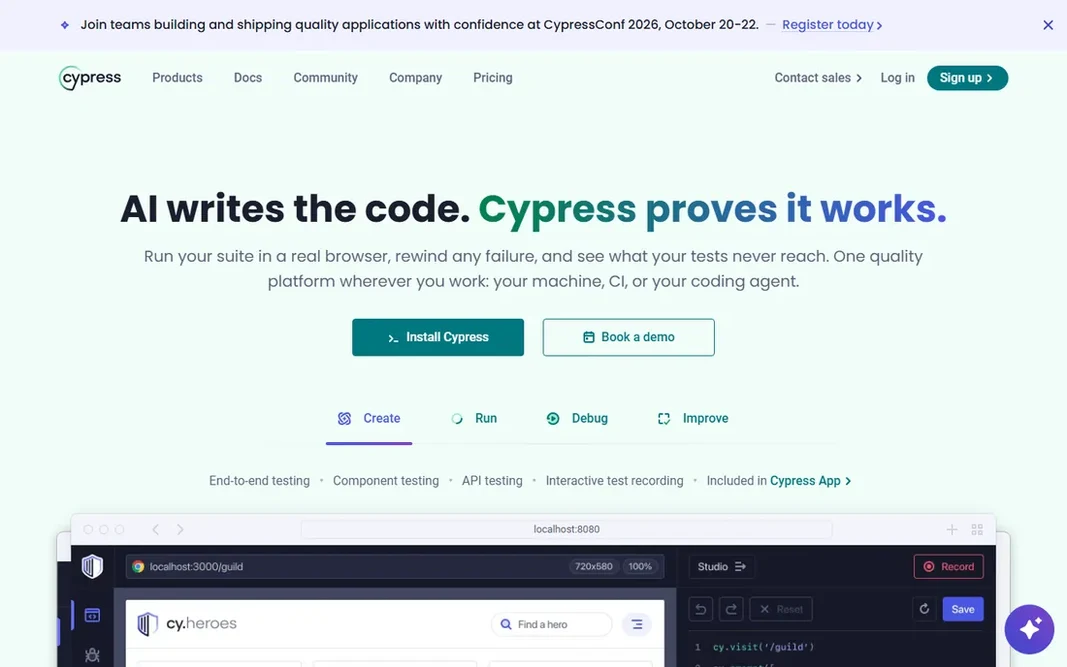
Cypress makes the most sense for JavaScript teams doing end-to-end testing. Cypress is the JavaScript-first end-to-end testing framework with the best developer experience in the category. On top of that, the documentation and community are very good, and the premium Cypress Cloud brings parallelization and flake detection for CI. Where it shines: Time-travel debugging. JavaScript-only support excludes teams on other stacks, and the architecture trades some cross-browser breadth for speed. More specifically, for JavaScript web apps with developer-owned testing, Cypress is the natural fit. On cost, Cypress starts like this: Free. Cypress includes a free tier. Downsides: JavaScript only.

Price: Free

Free plan: Yes

Website: cypress.io

Watch out for

  • Premium dashboard for CI features
2

Katalon

Teams needing web, API, mobile, and desktop in one tool
Free

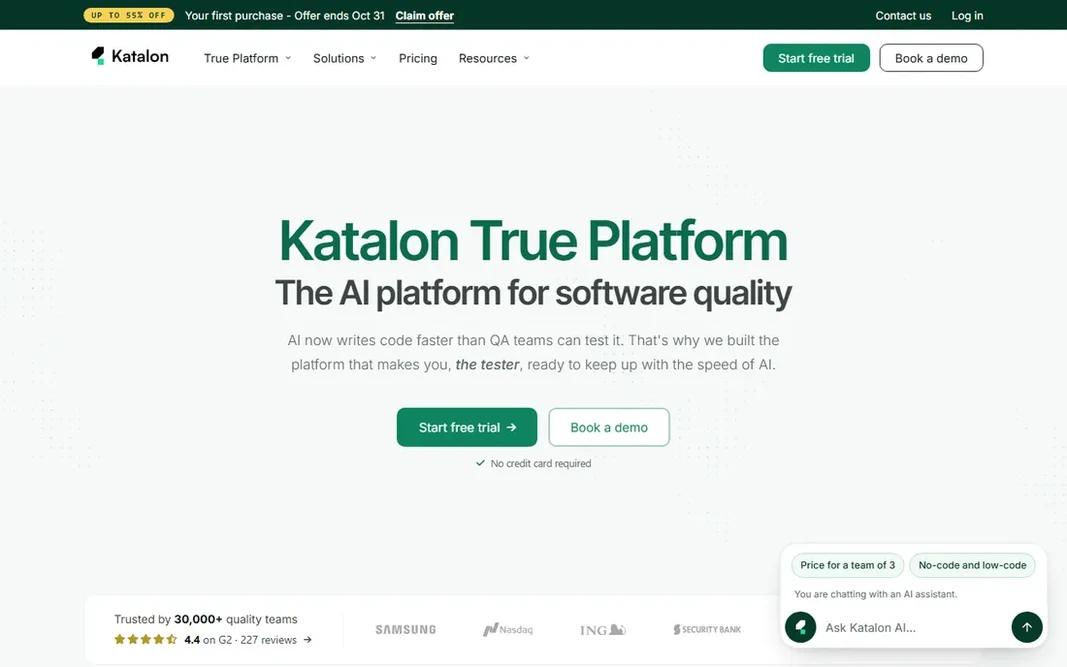
Katalon serves teams needing web, API, mobile, and desktop in one tool. The IDE-based workflow brings setup friction compared to browser-native tools, and performance slows on very large suites. As for the details, the Katalon Platform starts around $208 per month for teams needing the full suite. As for the details, the keyword-driven interface lets testers build tests without code, whereas scripting mode deals with Groovy when complexity demands it. Katalon Studio is the all-in-one test automation product with a free version handling web, API, mobile, and desktop testing. Katalon pricing: Free. A free plan is available with Katalon. Downsides: System starts around $208 monthly.

Free plan: Yes

Website: katalon.com

Strengths

  • Free version with solid features
  • Low-code and scripting in one tool

Watch out for

  • Slower on very large suites
3

Tricentis Tosca

Enterprise codeless test automation
See website

Where Tricentis Tosca fits: enterprise codeless test automation. The AI-powered self-healing adapts tests to application changes, and the product handles web, mobile, API, and enterprise applications like SAP. More specifically, for enterprises standardizing testing across dozens of applications, the governance and reporting matter as much as the automation. Downsides: Implementation is a significant project. In daily use, the model-based approach serves large QA organizations with plenty of testers and complicated applications: business-readable test models that non-programmers maintain, with automation generated underneath. Also, for large organizations that require codeless automation with enterprise governance, Tosca is the category leader. Tricentis Tosca shows no starting price here, so confirm the cost on the vendor site. There is no free plan with Tricentis Tosca.

Free plan: No

Website: tricentis.com

Strengths

  • Wide enterprise application support
  • Model-based codeless automation

Watch out for

  • Enterprise pricing
4

LambdaTest

Cloud cross-browser and device testing
$15 a month

LambdaTest is a good fit for cloud cross-browser and device testing. KaneAI produces tests from natural language prompts, and HyperExecute orchestrates runs up to 70 percent quicker. The 120+ integrations handle CI/CD pipelines. Strengths: 10,000+ real devices. Limits to weigh: Usage-based costs scale with parallelization. Worth adding: costs scale with parallel sessions and usage. The rebrand to TestMu AI produces confusion in documentation and reviews. Beyond that, the system play serves teams that have frameworks but lack infrastructure: run your existing tests on every browser and device without maintaining a device lab. On cost, LambdaTest starts like this: $15 per month. LambdaTest has a free plan.

Free plan: Yes

Website: lambdatest.com

Strengths

  • 3,000+ browser and OS combinations
  • $15 monthly entry

Watch out for

  • Rebranded to TestMu AI which confuses
5

Selenium

Open-source web UI testing standard
Free

In short, Selenium is for open-source web UI testing standard. Selenium WebDriver is the open-source standard for web UI automation, and most commercial tools either build on it or compete against it. Beyond that, for teams that want the open standard and can invest in test engineering, Selenium remains the baseline. The main drawbacks: Needs infrastructure for scale. The free framework supports Java, Python, C#, Ruby, and JavaScript, runs against every major browser, and plugs into every CI system. From a buyer's view, the ecosystem is the moat: decades of documentation, Stack Overflow answers for every error, and bindings in every language. For everyday use, the maintenance burden is real: no auto-waiting means flaky tests without careful coding, and scaling needs infrastructure work. Entry price for Selenium: Free. You can start on Selenium without paying. What Selenium does well: Massive community.

Free plan: Yes

Website: selenium.dev

Strengths

  • Free and open source
  • Runs anywhere

Watch out for

  • No built-in auto-waiting
6

BrowserStack

Real-device and browser infrastructure
See website

BrowserStack is a good fit for real-device and browser infrastructure. The integrations with CI systems, Jira, and Slack fit existing workflows, and the device cloud includes the long tail of real-world devices. From a buyer's view, for enterprises that require proven testing infrastructure, BrowserStack is the safe choice. BrowserStack does not show a starting price in this comparison, so check the vendor site for current pricing. BrowserStack has no permanent free option. Where BrowserStack stands out: Largest real-device cloud. What to check first: Costs add up with heavy parallel use.

Free plan: No

Website: browserstack.com

Strengths

  • Dependable infrastructure
  • Solid enterprise adoption

Watch out for

  • Pricing not published here

FAQ

How are the tools for automated software testing tools ordered?

Cypress sits first and BrowserStack last because the order follows typical fit for automated software testing tools, then price clarity and free access. It is a judgement call, so read each profile for fit and limits.

Is Cypress the right pick for everyone comparing automated software testing tools?

No single tool suits every team. Cypress comes first because it fits JavaScript teams doing end-to-end testing, while Katalon suits teams needing web, API, mobile, and desktop in one tool and Tricentis Tosca suits enterprise codeless test automation. Match the tool to your own size, budget and workflow before deciding.

Do these tools publish their prices?

Not all of them. Tricentis Tosca and BrowserStack publish no starting price, so expect a quote request for those. The rest, Cypress included, show a starting price, though seats and billing terms still change the final cost.

What are automatic software testing tools?

Automatic software testing tools run tests against software without manual effort: web UI tests, mobile app tests, API tests, and visual checks, usually integrated into CI/CD pipelines so every code change gets tested automatically.

Which options for automated software testing tools have a free plan?

On this list, Cypress, Katalon, LambdaTest and Selenium include a free plan. Caps on seats, usage or features are common, so test the free plan against your real workload.