
Developer Tools · Researched comparison

The 6 Best Automation Testing Tools to Shortlist in 2026

TaskReports may earn a fee from some links on this page, and some placements are paid and labelled. Neither one decides the order. See our disclosure.

The short answer

For keyword-driven testing, Robot Framework is where this list starts. Appium is better for mobile automation, and Selenium is better for enterprise web standard. All 6 tools are compared below on price, free plan and limits.

On this page

Key takeaways

  • Robot Framework is the opening pick, best for keyword-driven testing.
  • Katalon is the one to check for mixed-skill QA teams.
  • A free plan is offered by 6 of the 6 tools, including Robot Framework, Appium, Selenium and Cypress.
  • What to know about Robot Framework first: Python-based keywords need technical setup.

Quick comparison

ToolSuited toStarting priceKey limitation
------------
Robot FrameworkKeyword-driven testingFreeReporting needs plugins
AppiumMobile automationFreeCode-first, needs setup
SeleniumEnterprise web standardFreeSlower setup than Playwright
CypressFrontend developer experienceFreeJavaScript and TypeScript only
PlaywrightModern web automationFreeReporting needs setup
KatalonMixed-skill QA teamsFreeHeavier than Playwright
★ Best overall

Robot Framework

Keyword-driven testing

  • Keyword-driven
  • Database libraries

Robot Framework is designed for keyword-driven testing. Robot Framework fits non-developer QA teams that require keyword-driven acceptance testing readable by business stakeholders, with libraries for web, API, and database testing. Technical setup is still needed, and complex flows run slower than code-first tools. Entry price for Robot Framework: Free. Robot Framework includes a free tier. Highlights: Web, API. Limits to weigh: Reporting needs plugins.

Price: Free

Free plan: Yes

Website: robotframework.org

Watch out for

  • Slower than code-first tools for complicated flows
2

Appium

Mobile automation
Free

Choose Appium for mobile automation. Appium fits teams testing native, hybrid, and mobile web apps on iOS and Android, with free open-source licensing and language support in Java, Python, C#, and JavaScript. Appium cost at the entry level: Free. Appium includes a free tier. Where it is weaker: Slower feedback than web tools. What Appium does well: Free open source.

Free plan: Yes

Website: appium.io

Strengths

  • Native, hybrid
  • IOS and Android

Watch out for

  • Code-first, needs setup
3

Selenium

Enterprise web standard
Free

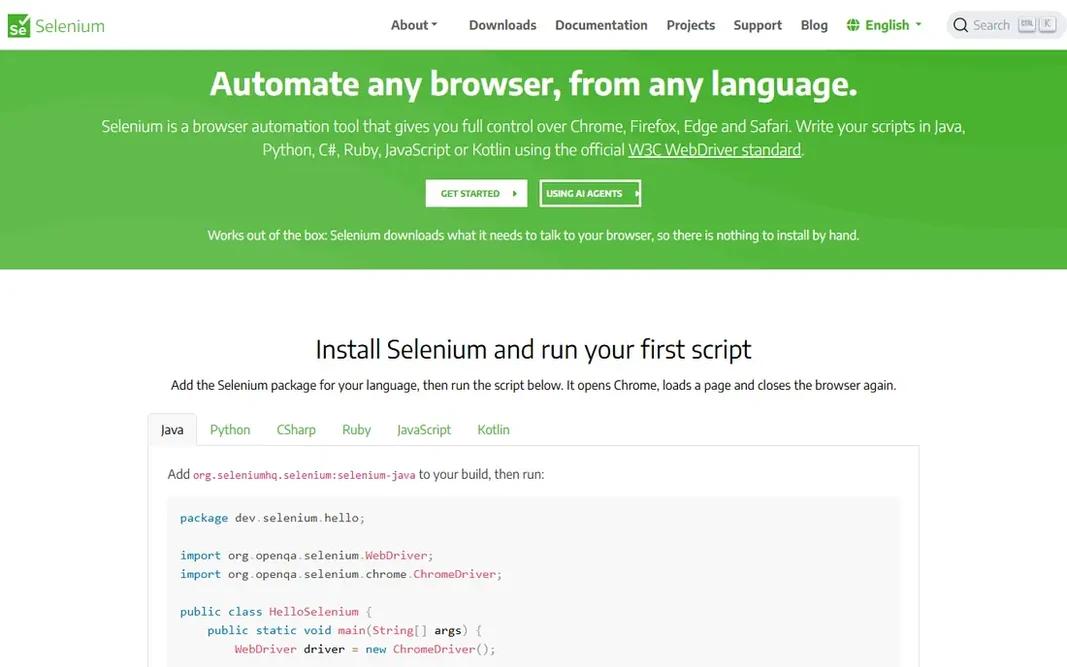
Selenium is designed for enterprise web standard. Selenium remains the enterprise standard with the largest ecosystem, notably where legacy browser support matters or where existing suites and Java-heavy teams already run Selenium. Where it is weaker: Flaky tests without careful waits. In practice, the cost is framework building: Selenium provides you a driver, not a test framework, so waits, reporting, and parallel runs need building and maintenance. Worth adding: language support handles Java, Python, C#, Ruby, and JavaScript, and the community and tooling depth is unmatched. Selenium starts at: Free. A free plan is available with Selenium.

Free plan: Yes

Website: selenium.dev

Strengths

  • Largest ecosystem and enterprise standard
  • Plenty of languages

Watch out for

  • Slower setup than Playwright
4

Cypress

Frontend developer experience
Free

Cypress serves Frontend developer experience. Cypress supplies the best developer experience for frontend teams testing modern web apps, with quick feedback, time-travel debugging. A runner that feels made for developers. Downsides: Cypress Cloud Team about $67 per month; JavaScript and TypeScript only. For a JavaScript frontend team that values developer experience above all, Cypress is the most enjoyable pick. Beyond that, the free core handles local testing, whereas Cypress Cloud brings parallelization and recording at about $67 per month for Team by October 2026 guides. It is JavaScript and TypeScript only, and multi-tab flows and some Safari scenarios need workarounds. Cypress starts at: Free. Free access exists with Cypress. Highlights: Free core; Best developer experience for frontend teams.

Free plan: Yes

Website: cypress.io

Strengths

  • Premium cloud
  • Quick feedback

Watch out for

  • Multi-tab and Safari limits by guides
5

Playwright

Modern web automation
Free

Playwright targets modern web automation. Auto-wait, the built-in runner, and the trace viewer get beginners productive quicker than Selenium, and cross-browser coverage bundles Chromium, Firefox, and WebKit, so Safari testing works without a separate tool. It is code-first, so non-developer QA teams need programming skill, and the ecosystem is newer than Selenium. By October 2026 public data, Playwright npm downloads dwarf Cypress, which presents where new projects are heading. Playwright cost at the entry level: Free. Playwright has a free plan. Highlights: Cross-browser including Safari. Limits to weigh: Reporting needs setup.

Free plan: Yes

Website: playwright.dev

Strengths

  • Trace viewer
  • Default for new web projects

Watch out for

  • Code-first, needs programming skill
6

Katalon

Mixed-skill QA teams
Free

Katalon works best for mixed-skill QA teams. Coded tests use Java and Groovy, which limits teams on other languages, and the system feels heavier than Playwright for pure web work. Downsides: Java and Groovy only for coded tests; Professional about $84 per seat per month by guides. Main advantages: Free level plus premium plans. The free level spans starting teams, whereas Professional costs about $84 per seat per month by October 2026 guides. Katalon starts at: Free. You can start on Katalon without paying.

Free plan: Yes

Website: katalon.com

Strengths

  • All-in-one web, mobile, API, desktop
  • Low-code mode beside full code

Watch out for

  • Heavier than Playwright

Pre-purchase checklist

  • Confirm the entry price on the vendor page for Robot Framework and the others: seat counts and billing terms change the total.
  • Look at free plan limits closely: Robot Framework, Appium, Selenium and others have one, and the caps decide whether it is usable for real work.
  • Before choosing Robot Framework, weigh its main limit: Python-based keywords need technical setup.
  • Run a one or two week pilot of Cypress with the people who will use it every day.
  • Check the support hours and onboarding help Robot Framework offers; smaller vendors vary a lot here.

FAQ

Can I try these options before paying?

Often, yes. Robot Framework, Appium, Selenium and others have a free plan. Use your own data and a real task during the test, and check what the free tier or trial limits before you rely on it.

Do these tools publish their prices?

Yes. Every tool from Robot Framework to Katalon shows a starting price, though seats, add-ons and billing terms still change the final cost.

Is Selenium still worth learning?

Yes. Selenium remains the most typical skill in existing enterprise suites and the standard where legacy browser support matters. Beginners get productive quicker with Playwright, but knowing both includes more jobs and more codebases, and migration skills between the two are valuable in themselves.

How are the tools for automation testing tools ordered?

The order follows typical fit for automation testing tools, with Robot Framework first and Katalon last, then price clarity and free access. It is editorial judgement, not a score, so another team could rank the tools differently.

Which options for automation testing tools have a free plan?

On this list, 6 of 6 tools include a free plan, among them Robot Framework, Appium, Selenium and Cypress. Caps on seats, usage or features are common, so test the free plan against your real workload.