Education · Researched comparison

6 Best Ear Training Apps for 2026

TaskReports may earn a fee from some links on this page, and some placements are paid and labelled. Neither one decides the order. See our disclosure.

The short answer

Auralia is the first pick on this list for Exam-style aural training. Look at EarMaster for structured courses and schools, and at Functional Ear Trainer for playing melodies by ear. Prices, free plans and limits for all 6 tools follow.

On this page

Key takeaways

  • This list starts with Auralia, which is built for Exam-style aural training.
  • A fair warning about EarMaster: heavier and more costly than a straightforward drill app.
  • For Auralia and EarMaster, you have to request a quote because no starting price is shown.
  • EarMaster, Functional Ear Trainer, Perfect Ear, Earpeggio, Teoria: these are the 5 tools out of 6 that offer a free plan.
  • Teoria fits free browser-based exercises.

Quick comparison

ToolFree planIdeal forKey limitation
------------
AuraliaFree trialExam-style aural trainingDesktop-focused and more formal than casual apps
EarMasterYesStructured courses and schoolsSome features need a subscription
Functional Ear TrainerYesPlaying melodies by earInterface is plain beside newer apps
Perfect EarYesWide free ear trainingInterface can feel dense
EarpeggioYesRefined free iOS trainingIOS only
TeoriaYesFree browser-based exercisesSound and design feel basic
★ Best overall

Auralia

Exam-style aural training

  • In-depth aural and theory training for exams
  • Progress reports for teachers
PriceSee website
See Auralia pricing

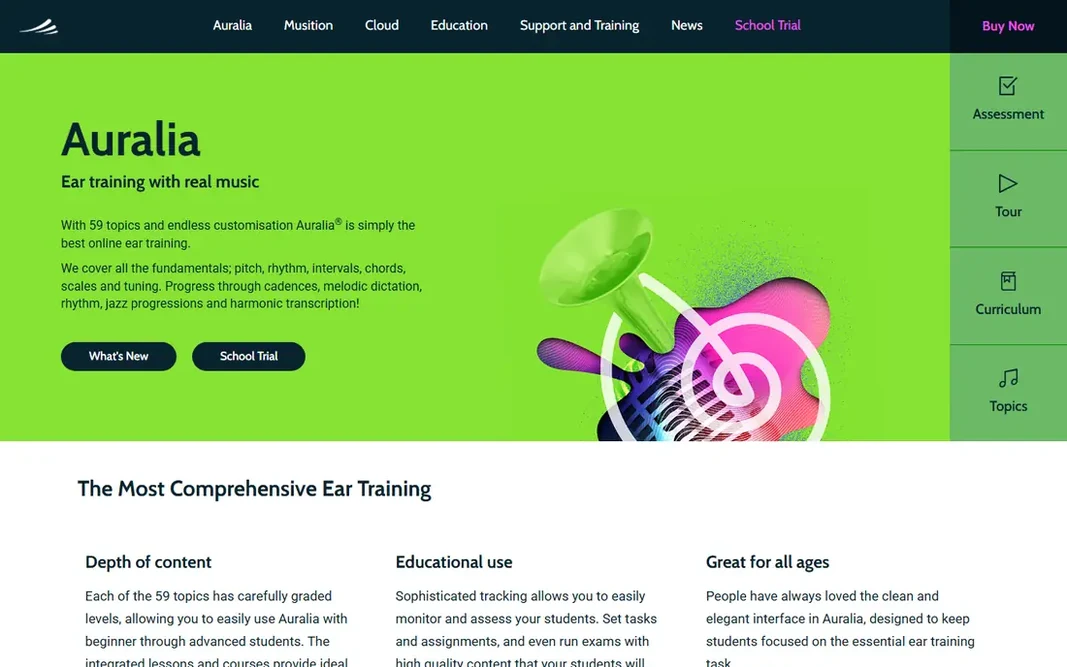
Auralia was built for Exam-style aural training. Auralia, from Rising Software, is made for formal aural training, with exercises in intervals, chords, scales, rhythm, melodic dictation, and harmonic progressions, plus in-depth reporting for teachers and students. That formal focus makes Auralia less appealing for a casual learner who wants a fast phone game. Where it is weaker: Desktop-focused and more formal than casual apps. It is also more desktop-oriented than mobile-first rivals. For a student preparing for a graded exam, or a teacher who needs reports and structured topics, Auralia supplies a level of organisation that free apps do not match. Auralia shows no starting price here, so confirm the cost on the vendor site. Free options: Free trial.

Price: See website

Free plan: Free trial

Website: risingsoftware.com/auralia

Watch out for

  • Pricing is geared toward schools and serious students
2

EarMaster

Structured courses and schools
See website

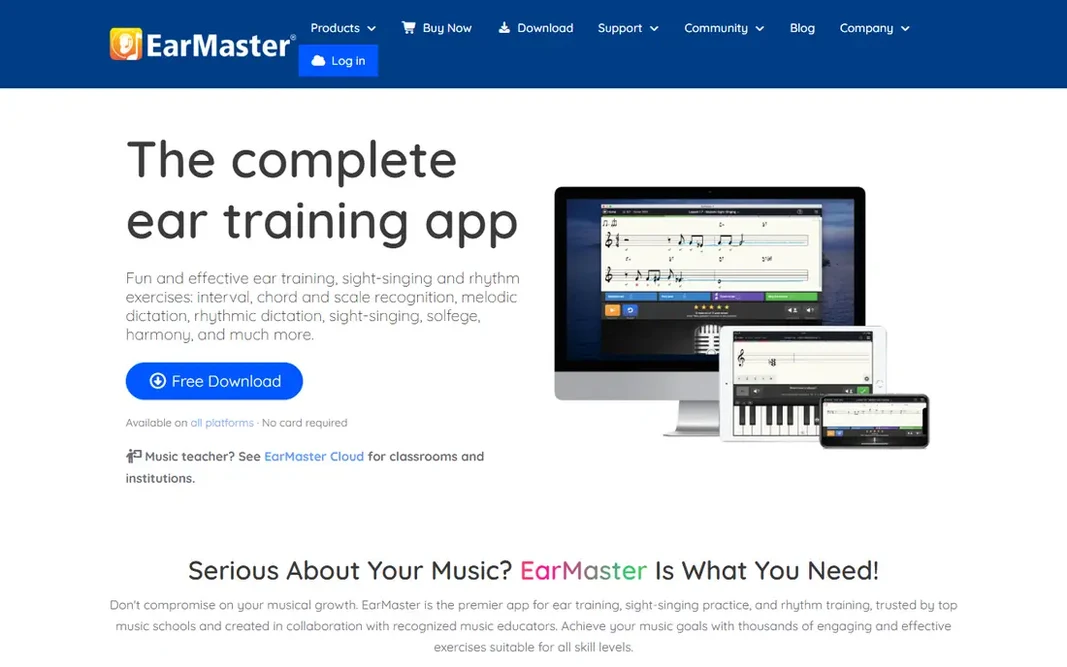
EarMaster works best for structured courses and schools. Singing answers into a microphone provides feedback on pitch accuracy, which straightforward tap-to-answer apps cannot offer. The downside is weight: EarMaster feels like a study programme, not a fast game, and full access costs more than most rivals. As for the details, users who only want five minutes of interval practice may prefer a lighter app. Check the vendor site for EarMaster pricing; none is listed in this comparison. EarMaster has a free plan. Points against: Some features need a subscription.

Free plan: Yes

Website: earmaster.com

Strengths

  • Full course structure with lessons
  • Sight-singing with microphone feedback

Watch out for

  • Heavier and more pricey than a straightforward drill app
3

Functional Ear Trainer

Playing melodies by ear
Free

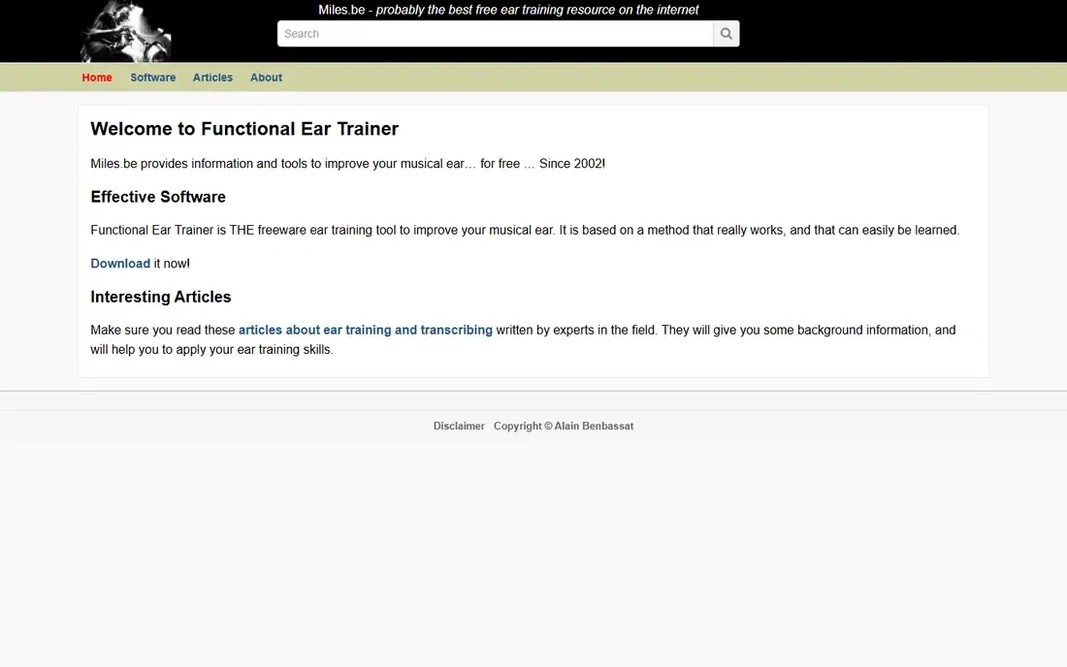
Functional Ear Trainer is a good fit for playing melodies by ear. Functional Ear Trainer takes a different path from most interval apps. Over time, the user learns how each scale degree sounds and resolves, which transfers more straight to playing a tune by ear. Watch-outs: No chord progression or rhythm training. That focus is also its limit. It is best used as a daily core habit, ten minutes at a time, beside an instrument. Functional Ear Trainer starts at: Free. Functional Ear Trainer includes a free tier.

Free plan: Yes

Website: miles.be

Strengths

  • Straightforward
  • Focused practice

Watch out for

  • Interface is plain beside newer apps
4

Perfect Ear

Wide free ear training
Free

Perfect Ear was built for wide free ear training. Perfect Ear packs a lot into a free app. It provides interval and chord training, scale practice, melodic dictation, rhythm exercises, sight reading, and singing practice, with choices to build custom drills. Watch-outs: Interface can feel dense. That breadth makes it a decent single app for a beginner who does not yet know which area needs the most work. Worth adding: the free version handles an excellent deal, that said, and the app runs on both iOS and Android. More specifically, for a musician who wants one free app that does almost everything, Perfect Ear is a capable default. Perfect Ear starts at: Free. Perfect Ear has a free plan.

Free plan: Yes

Website: perfectear.app

Strengths

  • Free core version
  • Sight reading in one app

Watch out for

  • Some advanced features need a purchase
5

Earpeggio

Refined free iOS training
Free

Earpeggio works best for polished free iOS training. Earpeggio is a refined iOS app that includes intervals, chords, scales, chord progressions, and melody and rhythm dictation, with a difficulty ramp that feels well judged for beginners. As for the details, statistics display which intervals or chords need work, so practice can focus on weak spots rather than repeating strengths. Downsides: Deeper material sits behind a premium level. On top of that, some deeper material also needs a premium level, though the free core includes an excellent deal. For an iPhone or iPad user looking for a free, pleasant first ear trainer, Earpeggio is a safe first pick. Beyond that, the central limits are system and depth. Earpeggio starts at: Free. Earpeggio includes a free tier.

Free plan: Yes

Website: earpeggio.com

Strengths

  • Clean design and clear difficulty ramp
  • Intervals, chords, progressions, dictation

Watch out for

  • IOS only
6

Teoria

Free browser-based exercises
Free

Teoria is aimed squarely at free browser-based exercises. Teoria is a free website for music theory and ear training, with exercises for intervals, chords, scales, and melodic dictation, plus tutorials and reference material. As for the details, progress tracking is free when you sign in, though Teoria does not offer streaks, levels, or singing feedback. More specifically, for a student who already uses Teoria for theory study, adding its ear exercises to a routine is a simple step. It pairs well with a more structured app. Since it runs in a browser, it works on almost any device without an install, which fits school computers, shared devices, and fast practice sessions. On cost, Teoria starts like this: Free. A free plan is available with Teoria. Strengths: Handy theory reference beside drills; scale training. Downsides: Sound and design feel entry-level.

Free plan: Yes

Website: teoria.com

Strengths

  • Interval, chord
  • No install needed

Watch out for

  • No gamification, but progress tracking is free when you sign in

Pre-purchase checklist

  • Confirm the entry price on the vendor page. For Auralia and EarMaster that means a quote rather than a fixed price.
  • Check what the free option really includes: EarMaster, Functional Ear Trainer, Perfect Ear and others offer a free plan, and usage caps differ.
  • Run a trial of Auralia with real work before paying for a year; your own workflow is the best test.
  • Before choosing Auralia, weigh its main limit: desktop-focused and more formal than casual apps.
  • Ask the daily users to test EarMaster on a live task before you roll it out to everyone.
  • Find out whether the entry plan of Auralia covers your must-haves or only a trimmed-down version.

FAQ

Do I need perfect pitch to benefit from ear training?

Relative pitch is enough for transcription, improvisation, harmony, and playing by ear, and it is a trainable skill for almost all musicians.

Can I try these tools before paying?

Often, yes. EarMaster, Functional Ear Trainer, Perfect Ear and others have a free plan and Auralia offers a free trial. Use your own data and a real task during the test, and check what the free tier or trial limits before you rely on it.

Do these tools publish their prices?

Not all of them. Auralia and EarMaster publish no starting price, so expect a quote request for those. The rest, Functional Ear Trainer included, show a starting price, though seats and billing terms still change the final cost.

Which options for Ear training app have a free plan?

EarMaster, Functional Ear Trainer, Perfect Ear, Earpeggio and Teoria offer a free plan in this list. Free plans usually cap users, projects or features, so check the limits on the vendor page. One other tool offers a trial instead.

Which ear training app is a good match for exam preparation?

Auralia comes first here and is built for Exam-style aural training. Buyers with other needs may prefer EarMaster (for structured courses and schools) or Functional Ear Trainer (for playing melodies by ear). Compare costs and limits first.

Is Auralia the right pick for everyone comparing Ear training app?

No single tool suits every team. Auralia comes first because it fits Exam-style aural training, while EarMaster suits structured courses and schools and Functional Ear Trainer suits playing melodies by ear. Match the tool to your own size, budget and workflow before deciding.