Collaboration · Researched comparison

7 Internal Communication Software Options Ranked for 2026

TaskReports may earn a fee from some links on this page, and some placements are paid and labelled. Neither one decides the order. See our disclosure.

The short answer

Our first pick is Google Chat, best for Google Workspace SMBs wanting simple team messaging. Haiilo is the stronger choice for mid-market and enterprise comms teams wanting intranet, comms and advocacy from one vendor, while Slack suits SMBs and tech teams wanting the richest integration ecosystem. Details, prices and limits for the rest of the 7 tools are below.

On this page

Key takeaways

  • Top of the list is Google Chat, which targets Google Workspace SMBs wanting straightforward team messaging.
  • Connecteam is the one to check for frontline SMBs wanting chat plus operations in a single app.
  • A free plan is available from 4 of the 7 tools: Google Chat, Slack, Microsoft Teams, Connecteam.
  • The cheapest monthly starting price in the list is $3.75/user/month billed annually, offered by Blink.

Quick comparison

ToolBest fitFree tierWatch out for
------------
Google ChatGoogle Workspace SMBs wanting straightforward team messagingYesAdvanced retention needs Plus
HaiiloMid-market and enterprise comms teamsFree trialModular
SlackSMBs and tech teams wanting the richest integration ecosystemYesAnnual prepayment non-refundable
Microsoft TeamsMicrosoft-centric SMBs and regulated industriesYesHeavier
BlinkMid-market frontline teams in healthcare, retail, manufacturing and logisticsFree trial (14 days)No native scheduling
StaffbaseLarge, distributed organizations where reaching non-desk employees is the core problemNoOverkill for small teams
ConnecteamFrontline SMBs wanting chat plus operations in a single appYesEach hub priced separately
★ Best overall

Google Chat

Google Workspace SMBs wanting straightforward team messaging

  • Near-zero ramp-up time for Google users
  • Spaces organize topic-based collaboration
Price$7/user/month billed yearly ($8.40 per month), Workspace Starter; Standard $14; Plus $22
See Google Chat pricing

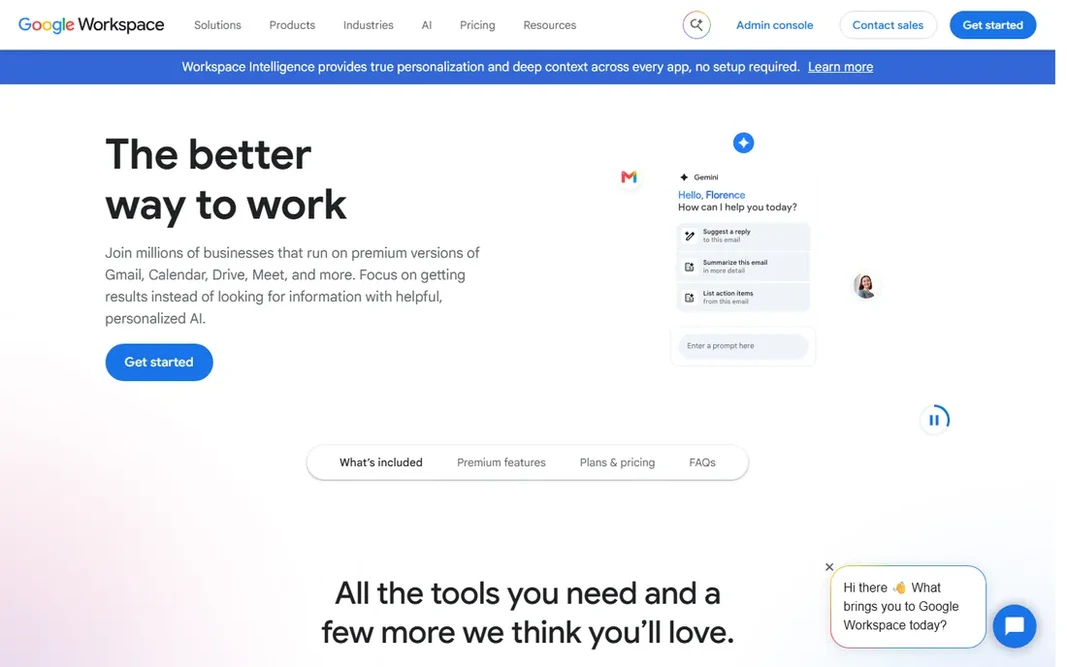
For Google Workspace SMBs wanting straightforward team messaging, Google Chat is a natural candidate. If your company runs on Google, start here and spend the saved budget elsewhere; if it does not, the standalone case is thin. For a Google shop, the incremental cost is zero and the ramp-up time is flat. Reasons to shortlist it: Bundled with Workspace: Gmail, Drive. What to check first: Chat is a Workspace component; Advanced retention needs Plus. It is not a Slack competitor on depth: far fewer external integrations, and chat is a component instead of a system. Meet recording arrives on Standard, Vault retention on Plus. What you pay to start with Google Chat: $7/user/month billed annually. A free plan is available with Google Chat.

Price: $7/user/month billed yearly ($8.40 per month), Workspace Starter; Standard $14; Plus $22

Free plan: Yes

Website: workspace.google.com

Watch out for

  • Not a standalone business product
2

Haiilo

Mid-market and enterprise comms teams
See website (quote-based; modular tiers: Engage, Align, Measure, Amplify)

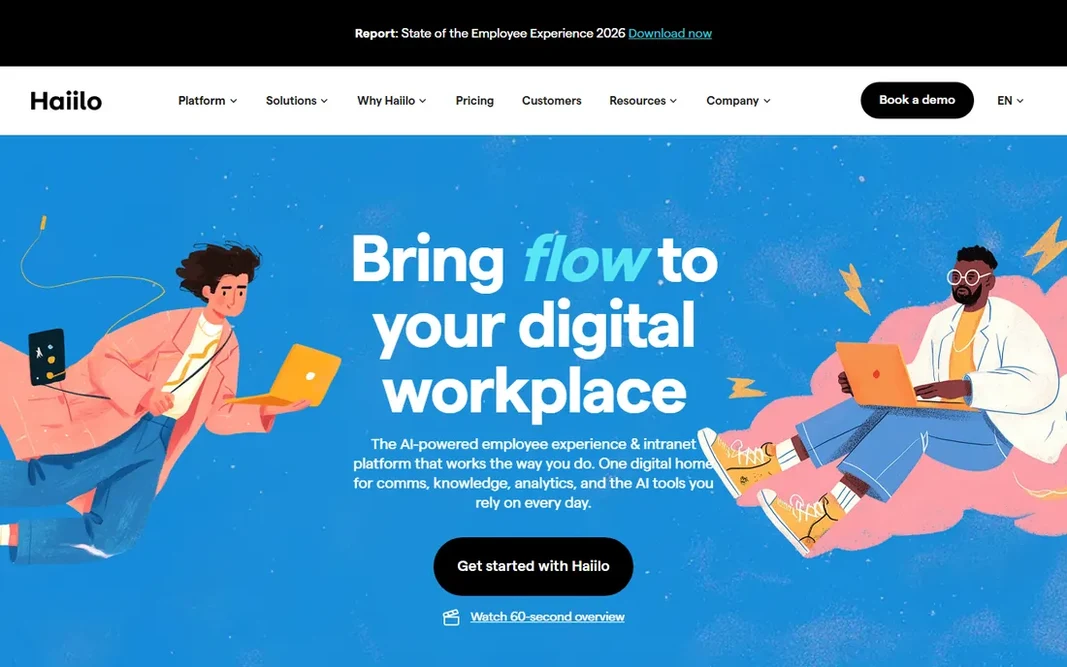
In short, Haiilo is for mid-market and enterprise comms teams wanting intranet, comms and advocacy from one vendor. Haiilo, formed in 2022 from the COYO, Smarp and Jubiwee merger, bundles three jobs: an AI-powered intranet, targeted employee communications, and employee advocacy. In practice, the AVA AI assistant translates across 28 languages with AI search, and read receipts plus reach metrics present who actually saw what. It deploys cloud or on-premise with GDPR compliance and ISO 27001 certification. Beyond that, the modular levels (Engage, Align, Measure, Amplify) are the catch: comms, analytics and advocacy are licensed separately, so the total climbs with each capability. Pricing for Haiilo is not stated here, so ask the vendor for current figures. Trial and free access: Free trial. Where it is weaker: Some users find the interface less easy-to-learn; No public pricing.

Free plan: Free trial

Website: haiilo.com

Strengths

  • Reach metrics and engagement analytics
  • Combines an AI-powered intranet

Watch out for

  • License-bound level structure means buying separate levels for comms, analytics and advocacy
3

Slack

SMBs and tech teams wanting the richest integration ecosystem
$7.25/user/month billed yearly ($8.75 monthly), Pro; Business+ $15 ($18)

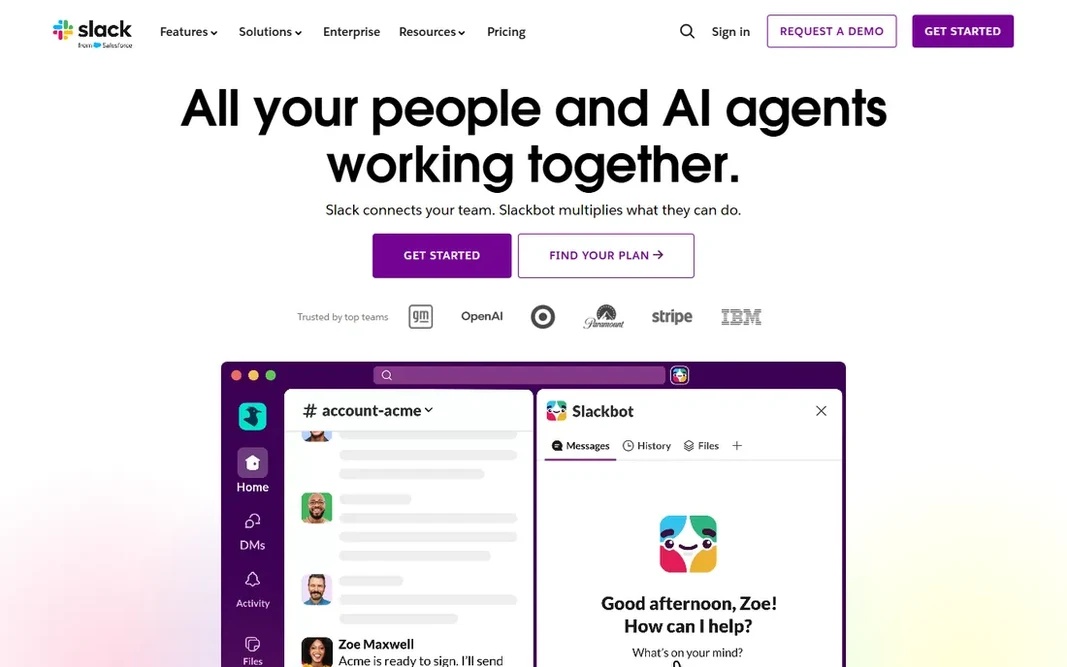
Slack is designed for SMBs and tech teams wanting the richest integration ecosystem. Slack is the desk-worker's default for a reason: channels, threads, huddles, canvas docs and 2,000+ integrations include every knowledge-work workflow, and entry-level AI features now ride on every premium plan. Per-active-user billing with a 3-seat minimum layers on up, multi-channel guests count as premium seats, and annual prepayment is non-refundable. Points against: Annual prepayment non-refundable. Slack Connect manages external collaboration without guest-account gymnastics. Beyond that, for desk teams, the ecosystem justifies it; for frontline reach, it is the wrong tool. The free plan's 90-day searchable history cap is the real paywall: the moment anyone needs to find a decision from four months ago, you are paying. Also, the pricing mechanics deserve attention. Slack starts at: $7.25/user/month billed annually. Slack includes a free tier.

Free plan: Yes

Website: slack.com

Strengths

  • Default team-chat standard: channels, threads, huddles
  • Slack Connect for external collaboration

Watch out for

  • 90-day history cap forces an upgrade once teams want searchable history
4

Microsoft Teams

Microsoft-centric SMBs and regulated industries
$4/user/month billed yearly ($4.80 monthly), Teams Essentials; commonly via Microsoft 365 Business Basic at $7/user/month billed yearly

For Microsoft-centric SMBs and regulated industries, Microsoft Teams is a natural candidate. Teams wins on arithmetic: if you already pay for Microsoft 365, the incremental cost of Teams is near zero, and Business Basic at $7 per user a month bundles it with web Office apps and 1 TB of storage. For everyone else, evaluate the chat on its own merits, where it is competent instead of delightful. On cost, Microsoft Teams starts like this: $4/user/month billed annually. Microsoft Teams includes a free tier. Where it falls short: Heavier; AI via Copilot is a premium add-on.

Free plan: Yes

Website: microsoft.com/microsoft-teams

Strengths

  • Chat, meetings
  • Effectively marginal cost for organizations already on Microsoft 365

Watch out for

  • More complicated interface than Slack
6

Staffbase

Large, distributed organizations where reaching non-desk employees is the core
See website (quote-based only; third-party reports put entry around $30,000/year for 1,000 employees)

Staffbase is a good fit for large, distributed organizations where reaching non-desk employees is the core problem. Targeting by role, location, language and device, plus Mission Control analytics on readership, provide comms teams the measurement that noticeboards never had. The entry point is enterprise in every sense: quote-only pricing reportedly starting around $30,000 per year, a sales-led process, and no self-serve evaluation. No starting price is listed for Staffbase here; confirm pricing on the vendor site. No free plan comes with Staffbase. What works well: digital signage. What to check first: Overkill for small teams.

Free plan: No

Website: staffbase.com

Strengths

  • Mobile-first employee app reaching frontline and deskless workers
  • One message published across app, email, SMS

Watch out for

  • Enterprise pricing and sales-led process
7

Connecteam

Frontline SMBs wanting chat plus operations in a single app
$29/month billed yearly ($35 per month) per hub, covering the first 30 users; Advanced $49; Expert $99

Connecteam is built with frontline SMBs wanting chat plus operations in a single app in mind. The Communications hub handles chat, updates with read tracking, surveys and a directory, inside the same app as scheduling, time clock and training. Chat depth is the trade: functional for frontline coordination, not a Slack replacement for knowledge work. Where it falls short: Modular pricing needs a careful quote; Chat is functional but not as deep as Slack or Teams for knowledge workers. Best features of Connecteam: One mobile app for chat, updates, scheduling; Flat pricing for the first 30 users undercuts per-seat chat tools. Each hub is priced separately, so a full-stack deployment multiplies the bill, though mixing levels across hubs controls cost. Updates reach workers who never open email, which is the entire point for frontline teams. Connecteam cost at the entry level: $29/month billed annually. You can start on Connecteam without paying.

Free plan: Yes

Website: connecteam.com

Strengths

  • Time clock
  • Forms and training

Watch out for

  • Each hub priced separately

FAQ

Which options for internal communication software have a free plan?

On this list, Google Chat, Slack, Microsoft Teams and Connecteam include a free plan. Caps on seats, usage or features are common, so test the free plan against your real workload. Several others offer a trial instead.

Is Google Chat the right pick for everyone comparing internal communication software?

No single tool suits every team. Google Chat comes first because it fits Google Workspace SMBs wanting simple team messaging, while Haiilo suits mid-market and enterprise comms teams wanting intranet, comms and advocacy from one vendor and Slack suits SMBs and tech teams wanting the richest integration ecosystem. Match the tool to your own size, budget and workflow before deciding.

How are the tools for internal communication software ordered?

Google Chat sits first and Connecteam last because the order follows typical fit for internal communication software, then price clarity and free access. It is a judgement call, so read each profile for fit and limits.

What is the cheapest option for internal communication software in this list?

On published monthly entry prices, Blink is the lowest here at $3.75/user/month billed annually. Entry price is only part of the cost, because seats, add-ons and billing terms can change the total.