Developer Tools · Researched comparison

6 Performance Testing Tools Compared on Price and Fit

TaskReports may earn a fee from some links on this page, and some placements are paid and labelled. Neither one decides the order. See our disclosure.

The short answer

Start with Apache JMeter if you need wide protocol coverage at no cost. For a different need, Tricentis NeoLoad covers enterprise DevOps load testing and Locust covers Python-based load testing. The full list of 6 tools follows, with prices and free plan facts.

On this page

Key takeaways

  • The list opens with Apache JMeter, aimed at wide protocol coverage at no cost.
  • Apache JMeter, Locust, Grafana k6: these are the 3 tools out of 6 that offer a free plan.
  • WebLOAD suits JavaScript enterprise load testing.
  • A fair warning about Locust: HTTP focus, with other protocols needing extensions.

Quick comparison

ToolBest forFree planWebsite
------------
Apache JMeterWide protocol coverage at no costYesjmeter.apache.org
Tricentis NeoLoadEnterprise DevOps load testingFree trialtricentis.com
LocustPython-based load testingYeslocust.io
Grafana k6Developer-led load testing in CI/CDYesgrafana.com
OpenText LoadRunnerLarge enterprise protocol coverageFree trialopentext.com
WebLOADJavaScript enterprise load testingFree trialradview.com
★ Best overall

Apache JMeter

Wide protocol coverage at no cost

  • Free and open source
  • Broad protocol support

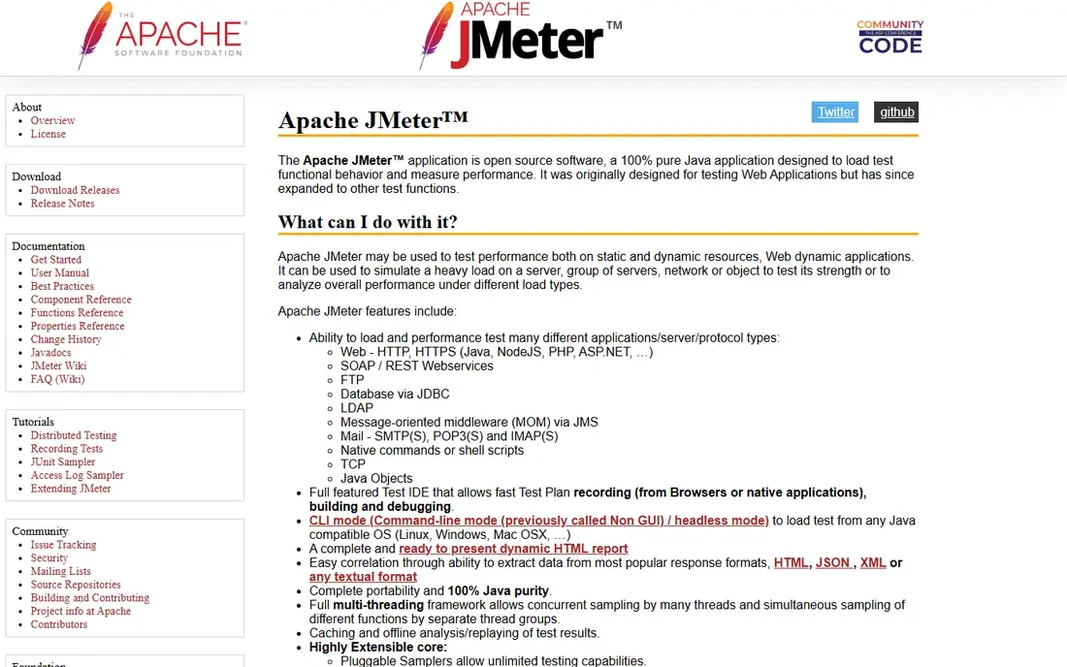
Apache JMeter targets wide protocol coverage at no cost. Apache JMeter remains the broadest free choice, notably for teams that require more than HTTP. Watch-outs: Memory use per thread is high. Worth adding: for protocol breadth at zero license cost, JMeter is still hard to beat. Apache JMeter starts at: Free. Free access exists with Apache JMeter.

Price: Free

Free plan: Yes

Website: jmeter.apache.org

Watch out for

  • GUI test plans can be hard to version
2

Tricentis NeoLoad

Enterprise DevOps load testing

See website

Tricentis NeoLoad targets enterprise DevOps load testing. Tricentis NeoLoad targets enterprise teams that require both simplicity and depth. Also, for large organizations testing SAP, Citrix, or complicated enterprise applications alongside web services, NeoLoad's breadth and DevOps integration are solid reasons to request a quote. Pricing is by quote, which puts NeoLoad in the enterprise level. Designers can build tests without code, whereas engineers can use as-code choices and version tests in CI/CD. Setup and licensing take longer than downloading JMeter or k6, and smaller teams may find the cost hard to justify. In practice, real browser emulation helps when a test must measure what a user actually experiences in a browser, not only API response times. Tricentis NeoLoad shows no starting price here, so confirm the cost on the vendor site. Free plan details: Free trial. Drawbacks to consider: Heavier setup than open-source tools.

Free plan: Free trial

Website: tricentis.com

Strengths

  • Real browser emulation
  • Solid DevOps integrations

Watch out for

  • Enterprise pricing by quote
3

Locust

Python-based load testing
Free

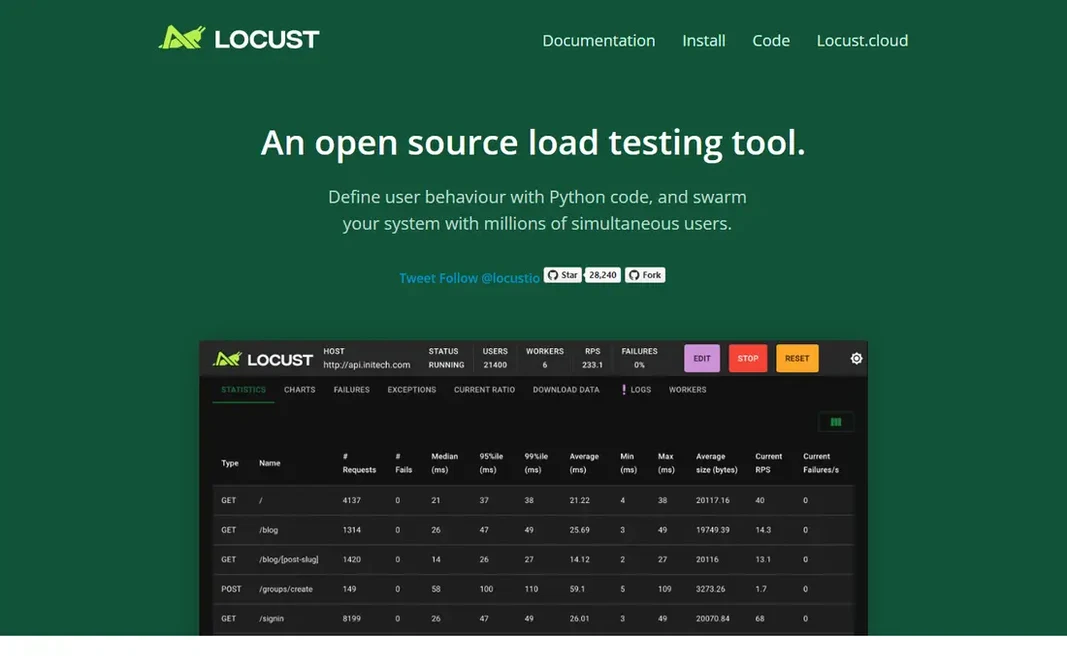
Locust is designed for Python-based load testing. Locust is the natural pick for Python teams. A web interface presents live statistics whereas a test runs, which helps during an exploratory load session. Other protocols need extensions or custom code, so Locust is less suited to a mixed protocol estate than JMeter. For everyday use, distributed execution is also self-managed, which means you provision and coordinate worker machines for large tests. On top of that, tests are plain Python classes. So a developer can model complicated user behavior, like browsing, adding to a cart, and checking out, without learning a new scripting language. Price to start with Locust: Free. A free plan is available with Locust. Watch-outs: HTTP focus, with other protocols needing extensions.

Free plan: Yes

Website: locust.io

Strengths

  • Simple custom user behavior
  • Plain Python test code

Watch out for

  • You run distributed execution yourself
4

Grafana k6

Developer-led load testing in CI/CD
Free

Where Grafana k6 fits: developer-led load testing in CI/CD. Protocol support centers on HTTP, WebSocket, and gRPC, so teams that need JDBC, JMS, or LDAP will find JMeter broader. Beyond that, the open-source engine is free to run on your own machines, and Grafana Cloud k6 layers on hosted execution and dashboards for teams that do not want to handle generators. Drawbacks to consider: Browser testing costs more per virtual user. Worth adding: Grafana k6 leads for teams that treat load tests as code. You write a test in JavaScript or TypeScript, set thresholds for response time or error rate, and let the test fail a build when those thresholds break. Worth adding: for API-heavy services owned by developers, k6 is the most direct choice. Grafana k6 cost at the entry level: Free. Grafana k6 includes a free tier.

Free plan: Yes

Website: grafana.com

Strengths

  • Thresholds that fail a build
  • Tests written in JavaScript or TypeScript

Watch out for

  • Protocol coverage is narrower than JMeter
5

OpenText LoadRunner

Large enterprise protocol coverage
See website

OpenText LoadRunner works best for large enterprise protocol coverage. Its protocol library spans web, SAP, Citrix, mainframe, and numerous legacy systems that open-source tools cannot test straight. In daily use, VuGen scripting, protocol selection, and license management need trained performance engineers, and pricing is quote only. OpenText LoadRunner does not show a starting price in this comparison, so check the vendor site for current pricing. Free options: Free trial. Watch-outs: Quote-only enterprise pricing.

Free plan: Free trial

Website: opentext.com

Strengths

  • Proven at very large scale
  • Capable for legacy and packaged applications

Watch out for

  • Scripting and setup are complicated for small teams
6

WebLOAD

JavaScript enterprise load testing
See website

WebLOAD was built for JavaScript enterprise load testing. Protocol support includes HTTP, WebSocket, JMS, MQTT, JDBC, and multiple enterprise clients, so it fits mixed web and backend estates. In practice, for teams that want JavaScript scripting with enterprise protocol coverage and support, WebLOAD is a credible alternative to LoadRunner and NeoLoad. Points against: Enterprise levels are quote based. More specifically, WebLOAD also sits in the enterprise level, which means procurement takes longer than downloading an open-source engine. More specifically, a published Starter plan has existed for smaller enterprise tests, whereas bigger levels are priced by quote. No starting price is listed for WebLOAD here; confirm pricing on the vendor site. Free options: Free trial.

Free plan: Free trial

Website: radview.com

Strengths

  • JavaScript-based scripting
  • Published entry pricing on some plans

Watch out for

  • Smaller community than JMeter or k6

Pre-purchase checklist

  • Ask Tricentis NeoLoad, OpenText LoadRunner and WebLOAD for a written quote, since no starting price is shown.
  • Read the fine print on the free plans from Apache JMeter, Locust and Grafana k6; seat, project and feature caps differ.
  • Take the trial from Tricentis NeoLoad, OpenText LoadRunner and WebLOAD and push a live task through it before you pay.
  • Read the limits listed for Apache JMeter first: GUI test plans can be hard to version.
  • See whether OpenText LoadRunner offers onboarding or training, and whether it is included in the price.
  • Read the plan comparison for WebLOAD carefully; key features often start on a higher tier.

FAQ

How are the tools for performance testing tools ordered?

Apache JMeter sits first and WebLOAD last because the order follows typical fit for performance testing tools, then price clarity and free access. It is a judgement call, so read each profile for fit and limits.

Can I try these options before paying?

Often, yes. Apache JMeter, Locust and Grafana k6 have a free plan and Tricentis NeoLoad, OpenText LoadRunner and WebLOAD offer a free trial. Use your own data and a real task during the test, and check what the free tier or trial limits before you rely on it.

Is Apache JMeter the right pick for everyone comparing performance testing tools?

No single tool suits every team. Apache JMeter comes first because it fits broad protocol coverage for free, while Tricentis NeoLoad suits enterprise DevOps load testing and Locust suits Python-based load testing. Match the tool to your own size, budget and workflow before deciding.

Which tool is a good match for API load testing in CI/CD?

Apache JMeter is the pick this page puts first, mainly for wide protocol coverage at no cost. If your situation differs, Tricentis NeoLoad suits enterprise DevOps load testing, and Locust suits Python-based load testing. Compare price and limits before you decide.

How numerous virtual users do I need for a realistic test?

Base the number on real peak traffic, not a round number. A test with too few users will miss bottlenecks, whereas a test with far too numerous users can measure generator limits rather than application limits.

Do I need a premium tool for large load tests?

Not always. Open-source engines can run large tests if you provision enough generator machines and run distributed execution. Premium cloud and enterprise tools help when you need geographic distribution, managed generators, team reporting, or enterprise protocols without building that infrastructure yourself.