How we rank
HR and Workforce · Researched comparison

Best Attendance Tracking Software for Museums in 2026

TaskReports may earn a fee from some links on this page, and some placements are paid and labelled. Neither one decides the order. See our disclosure.

The short answer

Homebase is the first pick for most museums because its free plan covers clock-in records and scheduling for hourly staff. Deputy is the better fit for larger sites that manage many shifts and locations. Both publish entry pricing, though per-user costs add up for volunteer-heavy teams.

On this page

Key takeaways

  • Homebase and QuickBooks Time are strong for hourly museum staff who clock in at a front desk or gallery station.
  • Deputy and When I Work fit museums that schedule docents, guards and weekend crews across multiple shifts.
  • Most listed tools price per user or per location, so small museums should confirm the free tier limits before committing.

Quick comparison

ToolBest fitStarting price
HomebaseSmall museums tracking hourly staff and volunteersSee vendor pricing page
QuickBooks TimeMuseums already using QuickBooks for payrollSee vendor pricing page
DeputyLarger museums with complex shift schedulesSee vendor pricing page
When I WorkMuseums scheduling weekend and event crewsSee vendor pricing page
ClockifyMuseums tracking project and grant-funded hoursSee vendor pricing page
JibbleMuseums wanting a low-cost time clockSee vendor pricing page

How we chose

We picked tools that record real staff attendance, then compared published entry prices, free access and main limits. Sources are vendor websites and public pricing pages, not hands-on testing. Prices and plan limits change, so confirm current details on each vendor site before buying.

Best overall

Homebase

Small museums tracking hourly staff and volunteers

  • Free plan includes time clock and scheduling
  • mobile app for clock-ins
PriceSee vendor pricing page
See Homebase pricing
joinhomebase.comHomepage, Nov 2026
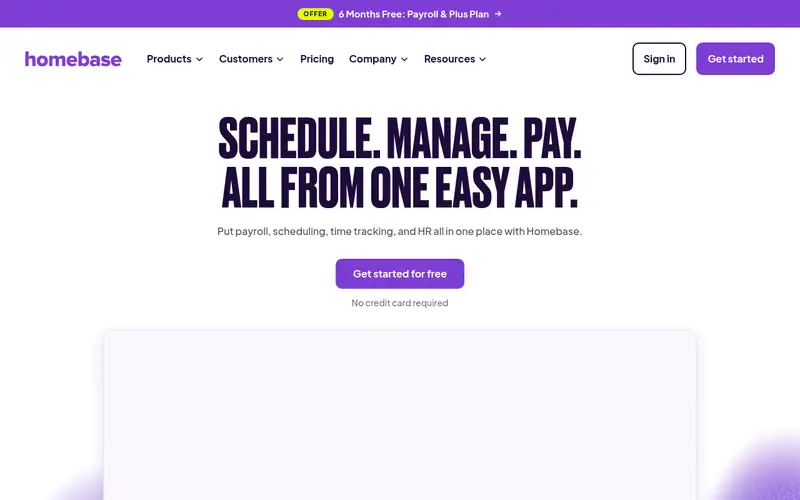
Homebase homepage

Homebase gives museums a time clock, shift schedules and timesheets in one place. Staff clock in from a shared tablet at the entrance or from their own phone, which suits front desk, gallery and shop roles. The free plan covers one location and a limited number of employees, so a small museum can start without paying. Paid plans add hiring tools, payroll and more employees. Museums with a large volunteer roster should check the employee cap on the free tier, since volunteers who clock in usually count toward it. Skip Homebase if you need visitor counting, which it does not do.

Price: See vendor pricing page

Free plan: Yes

Website: joinhomebase.com

Watch out for

  • Free tier caps staff count
  • advanced features sit on paid plans
2

QuickBooks Time

Museums already using QuickBooks for payroll
See vendor pricing page
quickbooks.intuit.comHomepage, Nov 2026
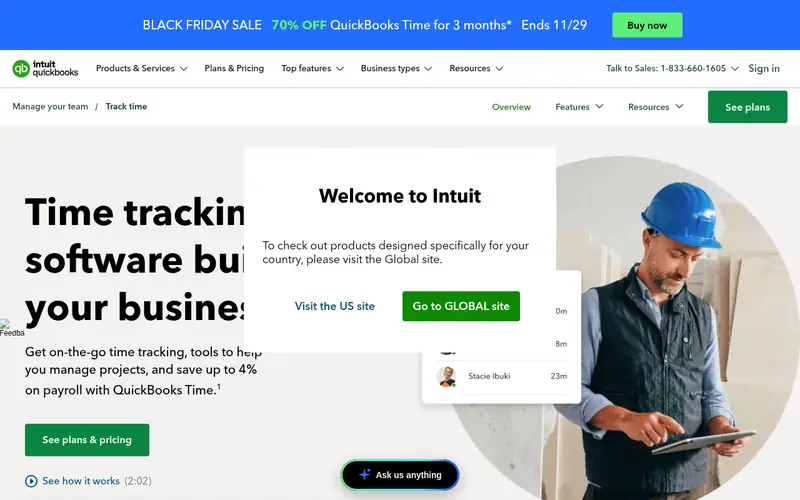
QuickBooks Time homepage

QuickBooks Time records clock-ins by employee, project or location. A museum can set up separate job codes for galleries, the shop and events, then run reports on hours by area. Timesheets flow into QuickBooks payroll, which saves re-entry for museums already on that system. There is no free plan, only a trial, and pricing is per user per month, so cost scales with headcount. Volunteer-heavy museums may find that costly. It does not count visitors. Choose it when payroll integration matters more than a free tier.

Free plan: Free trial (30 days)

Website: quickbooks.intuit.com/time-tracking

Strengths

  • GPS and job-site clock-ins
  • integrates with QuickBooks payroll

Watch out for

  • No free plan
  • priced per user per month
3

Deputy

Larger museums with complex shift schedules
See vendor pricing page
deputy.comHomepage, Nov 2026
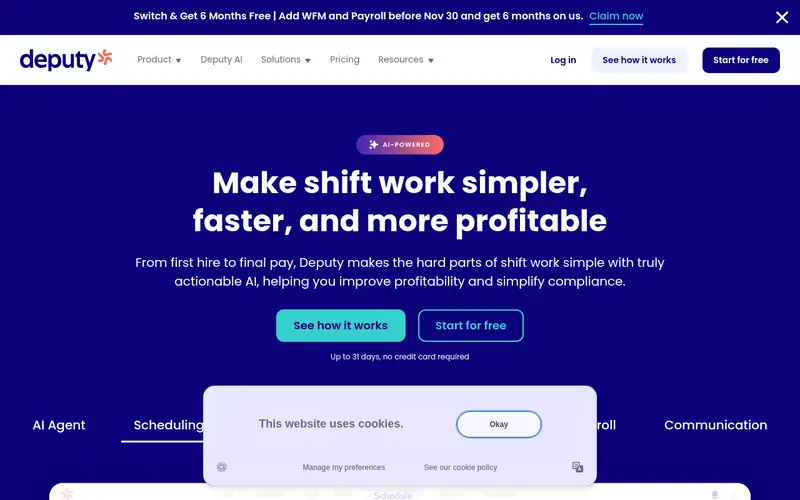
Deputy homepage

Deputy handles scheduling, clock-in and timesheets for teams with many shifts. Museums with guards, docents and event staff on rotating rosters can build schedules, let staff swap shifts and approve timesheets from one dashboard. Multi-location support helps sites with several buildings or branches. Pricing is per user, and there is no free plan beyond the trial. Small museums with a handful of staff may find it more than they need. It does not count visitors. It fits best where scheduling complexity, not price, is the main concern.

Free plan: Free trial (31 days)

Website: deputy.com

Strengths

  • Strong shift scheduling and shift-swap tools
  • multi-location support

Watch out for

  • No free plan
  • per-user pricing
4

When I Work

Museums scheduling weekend and event crews
See vendor pricing page
wheniwork.comHomepage, Nov 2026
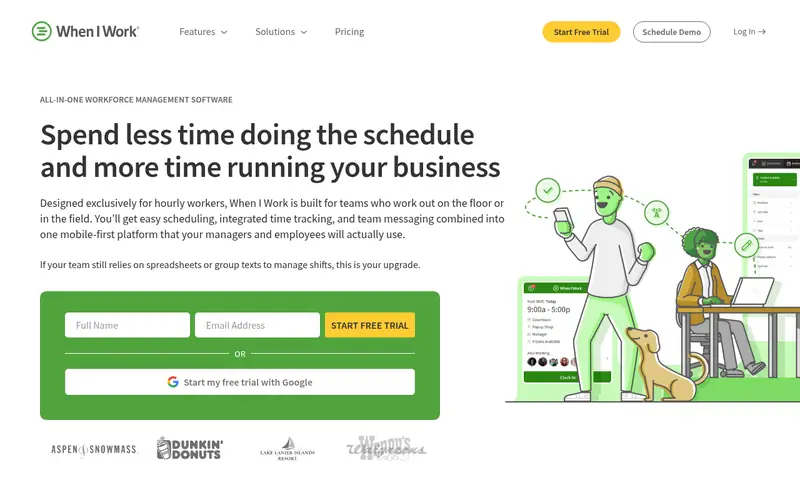
When I Work homepage

When I Work focuses on shift scheduling and team messaging, with clock-in from the mobile app. Museums that run weekend openings, school groups and evening events can publish schedules, fill gaps and message staff in one place. Attendance records come from the same app. There is no free plan, only a trial, and pricing depends on the number of users. Museums that mainly need a time clock may prefer Homebase. When I Work suits teams where scheduling changes often and communication matters as much as the clock.

Free plan: Free trial (14 days)

Website: wheniwork.com

Strengths

  • Easy shift scheduling and messaging
  • staff clock in from the app

Watch out for

  • No free plan
  • attendance features tied to paid tiers
5

Clockify

Museums tracking project and grant-funded hours
See vendor pricing page
clockify.meHomepage, Nov 2026
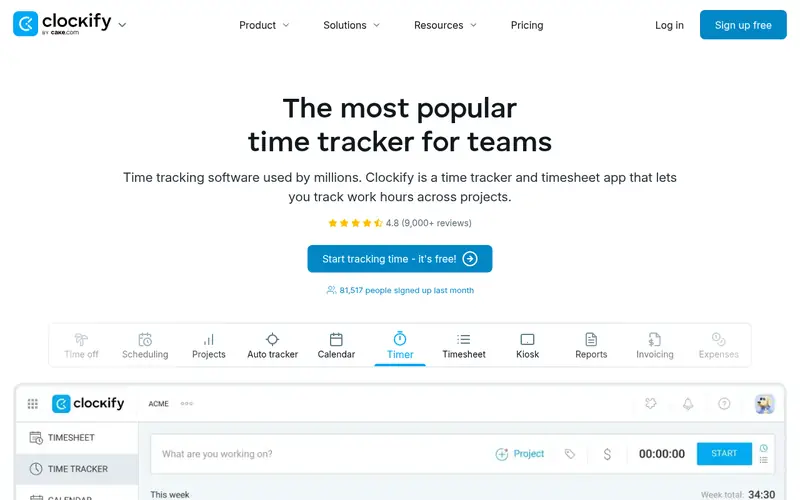
Clockify homepage

Clockify is a time tracker built around projects and tasks. A museum can log hours against exhibitions, education programs or grant-funded work, then report on time by project. The free plan allows unlimited users, which helps where many volunteers log hours. It is not a shift-scheduling tool, and it does not count visitors. Museums that need a time clock at a fixed station may find it less direct than Homebase. It fits back-office and project reporting, especially where grant reporting requires hours by activity.

Free plan: Yes

Website: clockify.me

Strengths

  • Free plan with unlimited users
  • project and task time tracking

Watch out for

  • Built for project time, not shift scheduling
  • no visitor counting
6

Jibble

Museums wanting a low-cost time clock
See vendor pricing page
jibble.ioHomepage, Nov 2026
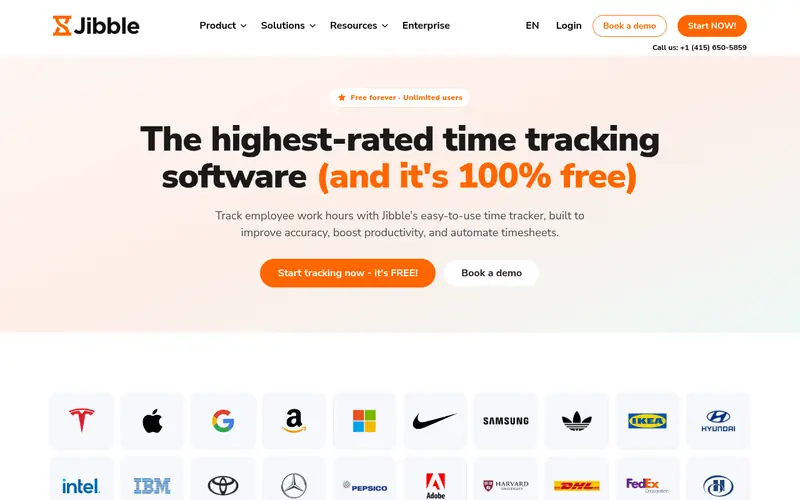
Jibble homepage

Jibble offers a time clock with clock-in through the app, web browser or a shared kiosk. A museum can set up a kiosk tablet at the staff entrance and record arrivals and departures. Timesheets and basic reports are included. The free plan covers a limited team and basic features; paid tiers add more. It does not handle visitor counting or deep scheduling. Jibble suits small museums that want a simple, low-cost clock and can manage schedules separately.

Free plan: Yes

Website: jibble.io

Strengths

  • Free plan for a small team
  • clock-in by app, web or kiosk

Watch out for

  • Free tier limits features
  • no visitor counting

Which attendance tracking software for museums should I use if I run a small site with volunteers?

Start with Homebase, whose free plan covers a time clock and scheduling for a limited team. If volunteers log hours against projects or grants, Clockify's free plan allows unlimited users. If you need a simple kiosk clock, Jibble works. Match the tool to whether your priority is scheduling or project hours.

Is Homebase better than Deputy for attendance tracking software for museums?

Homebase is better for small museums that want a free start, while Deputy is better for larger sites with complex, multi-location shift schedules. Homebase includes a time clock and scheduling on its free plan with a staff cap. Deputy offers stronger shift-swap and multi-location tools but has no free plan and charges per user. Choose by team size and scheduling complexity.

Pre-purchase checklist

  • Confirm whether you need staff attendance only or visitor counting as well.
  • Check the free plan's employee or user cap against your staff and volunteer roster.
  • Confirm how staff clock in: shared kiosk, app or web.
  • Check whether scheduling and shift swaps are included or cost extra.
  • Verify per-user pricing against your peak seasonal headcount.

FAQ

What is the best attendance tracking software for museums?

Homebase is a common first choice for small museums because its free plan includes a time clock and scheduling. Deputy suits larger sites with complex shifts. The right pick depends on team size and how shifts are planned.

Can attendance software also count museum visitors?

No. Homebase, Deputy, When I Work, Clockify and Jibble focus on staff hours and do not count visitors. If visitor numbers matter, use a separate visitor-counting system alongside the time clock.

Is there free attendance tracking software for museums?

Homebase, Clockify and Jibble offer free plans. Homebase's free tier covers a time clock and scheduling for a limited team. Clockify's free plan allows unlimited users for project time tracking. Jibble's free plan covers a small team with basic clock-in. Check current limits on each vendor site.

How much does attendance tracking software cost for a museum?

Entry prices vary and most tools charge per user per month, so cost depends on headcount. Several vendors list prices only on their pricing pages, and free tiers have caps. Confirm the current entry price and per-user rate on the vendor site before budgeting, especially for seasonal staff.

Does attendance software handle volunteer hours?

Some tools can. Clockify's free plan allows unlimited users and tracks time by project, which suits volunteer hours tied to programs or grants. Homebase and Jibble can record volunteer clock-ins if they fall within plan limits. Confirm whether volunteers count toward user caps before choosing.