How we rank
HR and Workforce · Researched comparison

Best Time Clock Software for Libraries in 2026

TaskReports may earn a fee from some links on this page, and some placements are paid and labelled. Neither one decides the order. See our disclosure.

The short answer

Homebase is the best starting point for most libraries. Its free plan covers employee scheduling, time clock tracking, and basic hour reports for a single location, which fits small branches and part-time staff. For libraries that already use QuickBooks for payroll, QuickBooks Time keeps hours and pay in one system. For larger systems with complex shift rules and multiple branches, Deputy is a strong alternative with more advanced scheduling controls.

On this page

Key takeaways

  • Homebase is the top pick for most small and mid-size libraries because its free plan covers scheduling and time tracking for one location.
  • QuickBooks Time fits libraries that already run payroll in QuickBooks and need job costing by branch or grant.
  • Most library time clock needs center on part-time staff, student workers, and multiple branch locations.
  • Entry prices below are published rates and should be confirmed on each vendor's pricing page before purchase.

Quick comparison

ToolBest fitStarting price
HomebaseSmall libraries needing free scheduling and time clockSee vendor pricing page
QuickBooks TimeLibraries already using QuickBooks for payrollSee vendor pricing page
DeputyMulti-branch library systems with complex shift rulesSee vendor pricing page
ClockifyLibraries tracking staff time on projects and programsSee vendor pricing page
When I WorkLibraries scheduling part-time and student staffSee vendor pricing page
TimeClock PlusLarge library systems with strict time and attendance rulesSee vendor pricing page
Buddy PunchSmall libraries wanting simple clock in and outSee vendor pricing page

How we chose

We selected tools based on fit for library staffing: hourly and part-time workers, shift schedules, multiple branches, and payroll export. We also weighed entry price, free plan availability, and main limits such as user caps or location limits. Information comes from vendor websites and public documentation. Prices change, so confirm current rates on each vendor's pricing page before buying.

★ Best overall

Homebase

Small libraries needing free scheduling and time clock

  • Free plan covers one location with scheduling and time clock
  • mobile app for clock in and out
PriceSee vendor pricing page
See Homebase pricing
joinhomebase.comHomepage, Nov 2026
Homebase homepage

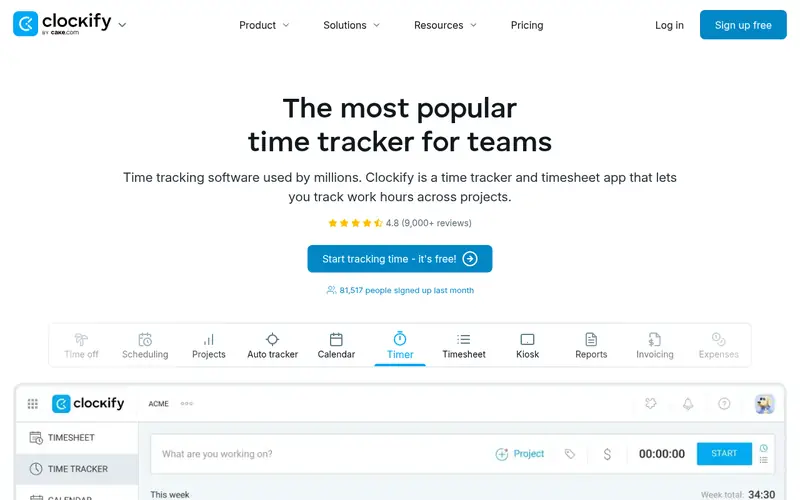
Homebase combines employee scheduling, a time clock, and hour tracking in one app. Staff can clock in and out from a shared device or their phone, and managers see hours by employee and by week. For a single library branch with part-time and student workers, the free plan covers the basics without a subscription. Paid plans add features like payroll integration, hiring tools, and more detailed reporting. Libraries with several branches will need a paid tier, since the free plan covers only one location. The tool is built for hourly teams, so it fits library staffing patterns better than tools designed for salaried office work. Skip Homebase if you need deep job costing by grant or program, or if you run many locations and want advanced scheduling rules.

Price: See vendor pricing page

Free plan: Yes

Website: joinhomebase.com

Watch out for

  • Free plan limited to a single location
  • advanced features require paid plans
2

QuickBooks Time

Libraries already using QuickBooks for payroll
See vendor pricing page
quickbooks.intuit.comHomepage, Nov 2026
QuickBooks Time homepage

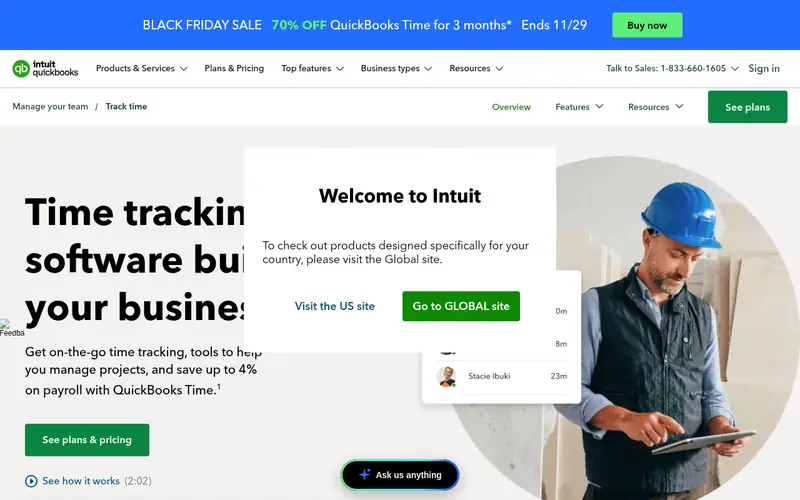
QuickBooks Time is a time tracking tool that connects to QuickBooks payroll. Staff clock in from a mobile app, a web browser, or a shared kiosk. Managers can assign hours to specific jobs or locations, which helps libraries track staff time by branch, program, or grant-funded project. The tool supports schedules, time-off requests, and approval workflows. Reports can be exported or sent straight to payroll. Libraries that already run payroll in QuickBooks avoid double entry, which is the main reason to choose it. Libraries not using QuickBooks will find the standalone price higher than some alternatives and the payroll link less useful. There is no free plan, only a trial, so budget for a subscription.

Free plan: Free trial (30 days)

Website: quickbooks.intuit.com/time-tracking

Strengths

  • Direct payroll sync with QuickBooks
  • job and location tracking for branches

Watch out for

  • No free plan after trial
  • best value only inside the QuickBooks ecosystem
3

Deputy

Multi-branch library systems with complex shift rules
See vendor pricing page
deputy.comHomepage, Nov 2026
Deputy homepage

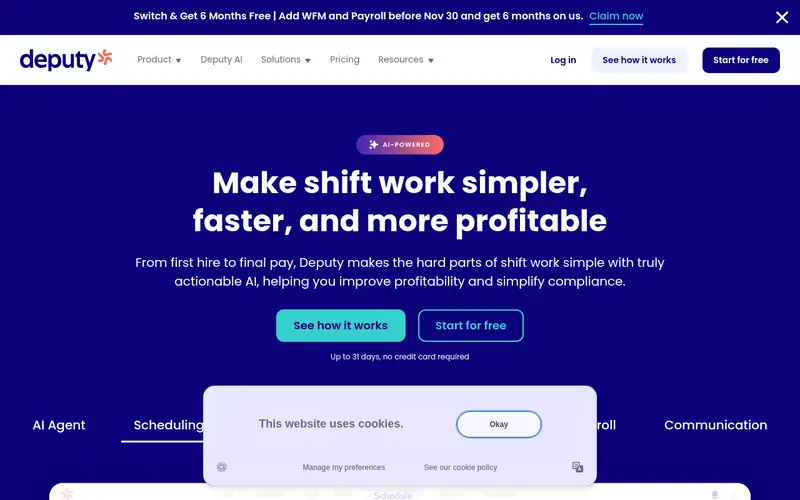
Deputy handles scheduling and time tracking for hourly teams. It lets managers build shifts, apply rules such as break requirements and overtime thresholds, and approve timesheets. For library systems with several branches, the location structure keeps hours separate while giving central staff a combined view. The scheduling tools are more detailed than most small library teams need. Larger systems with student workers, rotating shifts, and union or policy rules will get more value. Deputy also tracks time and attendance from a mobile app or a shared device. There is no free plan, so small single-branch libraries should compare it against free options first. Setup requires entering staff, locations, and rules, which takes time but pays off for multi-site scheduling.

Free plan: Free trial (30 days)

Website: deputy.com

Strengths

  • Strong scheduling with shift rules and compliance checks
  • supports many locations

Watch out for

  • No free plan
  • setup takes more time than simple tools
4

Clockify

Libraries tracking staff time on projects and programs
See vendor pricing page
clockify.meHomepage, Nov 2026
Clockify homepage

Clockify is a time tracking tool with a free plan that supports unlimited users. Staff can clock in and out, and managers can assign hours to projects such as programs, grants, or departments. That makes it useful for libraries that report staff time by funding source or initiative. The free plan covers basic time tracking, reports, and a shared timesheet view. Paid plans add features like scheduling, approvals, and more detailed reporting. Libraries that mainly need to record hours and split them across programs will find the free tier workable. Clockify is less focused on shift scheduling and payroll export than dedicated time clock tools. Libraries that need break rules, shift swaps, or direct payroll sync should look at Homebase or QuickBooks Time instead.

Free plan: Yes

Website: clockify.me

Strengths

  • Free plan with unlimited users
  • tracks time by project and task

Watch out for

  • Free plan lacks some payroll and scheduling depth
  • advanced features need paid tiers
5

When I Work

Libraries scheduling part-time and student staff
See vendor pricing page
wheniwork.comHomepage, Nov 2026
When I Work homepage

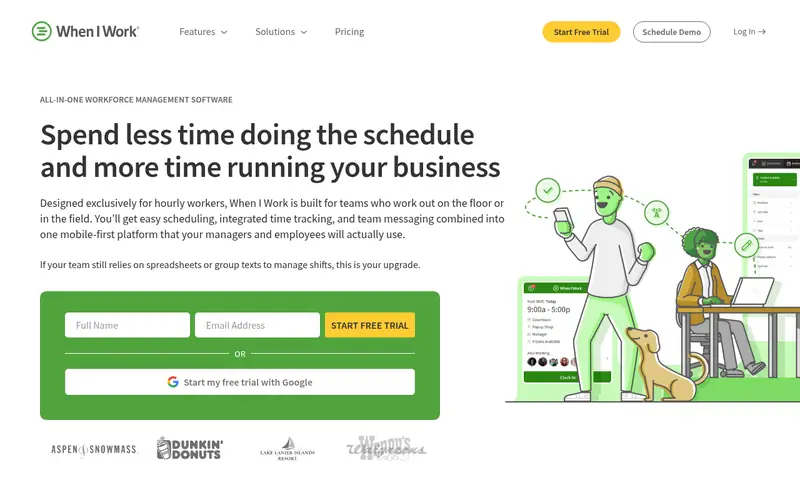
When I Work focuses on employee scheduling and time tracking for hourly teams. Managers build schedules, staff swap shifts from the app, and the time clock records hours against those shifts. For libraries with many part-time and student workers, the shift swap and availability tools reduce manual scheduling work. The time clock works from a mobile app or a shared device. Attendance and hours flow into reports that can be exported for payroll. The tool is straightforward and does not require deep setup. There is no free plan, and pricing is per user, so cost grows with staff count. Small libraries with a handful of employees may prefer a free option. Larger teams with frequent schedule changes will get more from the scheduling features.

Free plan: Free trial (14 days)

Website: wheniwork.com

Strengths

  • Simple scheduling and shift swaps for hourly staff
  • mobile clock in

Watch out for

  • No free plan
  • pricing is per user
6

TimeClock Plus

Large library systems with strict time and attendance rules
See vendor pricing page
TimeClock PlusHomepage image unavailable

TimeClock Plus is a workforce management system built for time and attendance in larger organizations, including public-sector employers. It supports detailed rules for breaks, overtime, leave, and attendance, which fits library systems with formal policies or union agreements. Staff can clock in from kiosks, browsers, or mobile devices. Managers review exceptions and approve time, and the system produces payroll-ready exports. The tool is designed for scale, so multi-branch systems can keep rules consistent across locations. There is no free plan and no simple self-serve signup. Implementation involves configuration and often vendor support. Small libraries should skip it; the value shows up mainly for large systems with complex policy needs.

Free plan: No

Website: timeclockplus.com

Strengths

  • Handles complex attendance rules and leave policies
  • built for larger public-sector teams

Watch out for

  • No free plan or self-serve trial
  • implementation is heavier
7

Buddy Punch

Small libraries wanting simple clock in and out
See vendor pricing page
Buddy PunchHomepage image unavailable

Buddy Punch is a straightforward time clock tool. Staff clock in and out from a browser, mobile app, or kiosk, and managers can require a photo or location check at punch time. That helps libraries that want a simple record of who was on site and when. Schedules, time-off requests, and reports are included. Hours can be exported for payroll. The interface is simple, so staff need little training, which matters for libraries with rotating part-time workers. There is no free plan, only a trial. Libraries that need advanced scheduling, shift swaps, or deep payroll integration should compare with Homebase, When I Work, or QuickBooks Time. Buddy Punch fits small teams that mainly need accurate punch records.

Free plan: Free trial (14 days)

Website: buddypunch.com

Strengths

  • Easy clock in with photo and location options
  • simple reports

Watch out for

  • No free plan
  • fewer scheduling features than larger tools

Pre-purchase checklist

  • Confirm how many locations the plan covers, since some free plans allow only one.
  • Check whether the time clock works on a shared kiosk, a browser, or only a personal phone.
  • Verify payroll export formats match your payroll provider or finance system.
  • Confirm the plan supports part-time, student, and seasonal staff without per-user surprises.
  • Ask how the tool handles breaks, overtime, and leave rules used in your library.

FAQ

What is the best time clock software for libraries?

Homebase is the best fit for most small and mid-size libraries because its free plan includes scheduling and time clock for one location. QuickBooks Time suits libraries using QuickBooks payroll, and Deputy fits larger multi-branch systems with complex shift rules.

Do libraries need special time clock features?

Libraries often have part-time staff, student workers, and multiple branches. Useful features include shift scheduling, shared kiosk clock in, hours by location or program, and payroll export. Break and overtime rules matter for systems with formal policies.

Is there free time clock software for libraries?

Homebase offers a free plan for one location with scheduling and time clock. Clockify has a free plan with unlimited users for time tracking by project. Both have limits, so check whether your branch count and reporting needs fit before relying on them.

Can time clock software track hours by branch or grant?

Yes. QuickBooks Time and Clockify let managers assign hours to jobs, locations, or projects. That helps libraries report staff time by branch, program, or grant-funded initiative without manual spreadsheets.

How much does library time clock software cost?

Prices vary by vendor and staff count. Several tools publish entry prices on their pricing pages, and some charge per user. Because rates change, confirm the current price on the vendor's site before purchase.