How we rank
HR and Workforce · Researched comparison

Best Time Clock Software for Movie Theaters in 2026

TaskReports may earn a fee from some links on this page, and some placements are paid and labelled. Neither one decides the order. See our disclosure.

The short answer

Homebase suits small and single-location theaters that want a free time clock with scheduling and shift notes. For larger chains with many part-time staff and complex labor rules, Deputy is a strong fit for shift swapping and award interpretation. When You Work is a practical alternative for theaters that need biometric clock-in at the door and simple payroll exports.

On this page

Key takeaways

  • Homebase is the first pick for small theaters because its free plan covers one location with time clock and scheduling tools.
  • Theater schedules mix box office, concession, projection and usher shifts, so look for tools with shift swapping and multiple positions.
  • Most vendors price per location or per employee, so a cinema with many part-time staff should check the per-user cost before committing.
  • Every product here publishes its pricing online, but rates change, so confirm the current number on the vendor page before you buy.

Quick comparison

ToolBest fitStarting price
HomebaseSmall theaters needing a free clock and scheduleSee vendor pricing page
DeputyMulti-screen cinemas with complex shift rulesSee vendor pricing page
When I WorkTheaters focused on fast weekly schedulingSee vendor pricing page
SlingSmall cinemas wanting free scheduling and clock-inSee vendor pricing page
ClockifyTheaters tracking hours by project or cost centerSee vendor pricing page
QuickBooks TimeTheaters already using QuickBooks for payrollSee vendor pricing page
TimeClock PlusLarger chains needing workforce managementSee vendor pricing page

How we chose

We picked tools that publish time clock and scheduling features for hourly staff and that fit the shift patterns of a movie theater: multiple roles, part-time staff and weekend peaks. We looked at entry price, whether a free plan or trial exists, and the main limits of each tier. Sources are vendor websites and public pricing pages. Prices change, so confirm the current rate on the vendor site before you buy.

★ Best overall

Homebase

Small theaters needing a free clock and schedule

  • Free plan for one location
  • built-in scheduling and shift notes
PriceSee vendor pricing page
See Homebase pricing
joinhomebase.comHomepage, Nov 2026
Homebase homepage

Homebase combines a time clock, employee scheduling and payroll prep in one app. For a movie theater, staff can clock in from a shared tablet at the box office or concession stand, and managers can post weekly schedules with different roles such as usher, cashier and projectionist. Employees see shifts on their phones and can request swaps. The free plan covers one location and basic time tracking and scheduling. Paid plans add features such as hiring tools and more advanced reporting. A theater with several locations or a large part-time roster will likely need a paid tier, so check the current limits on the vendor page. Skip Homebase if you need biometric clock-in or deep payroll integration with a specific provider.

Price: See vendor pricing page

Free plan: Yes

Website: joinhomebase.com

Watch out for

  • Free tier limited to a single location
  • advanced features cost extra
2

Deputy

Multi-screen cinemas with complex shift rules
See vendor pricing page
deputy.comHomepage, Nov 2026
Deputy homepage

Deputy is built around scheduling and time tracking for hourly teams. A cinema can set up separate areas such as box office, concessions and floor staff, then apply pay rules per role. Employees clock in on a kiosk or their phone, and managers approve timesheets before export to payroll. The scheduling tools handle open shifts and swap requests, which matters when part-time staff trade weekend shifts. Deputy also supports GPS and photo verification on mobile clock-in, useful if staff work at different sites. There is no free plan, only a trial, and pricing is per employee per month. A theater with many casual staff should estimate the monthly cost before choosing it.

Free plan: Free trial (31 days)

Website: deputy.com

Strengths

  • Strong shift swapping and award rules
  • mobile clock-in with GPS

Watch out for

  • No permanent free plan
  • pricing is per employee
3

When I Work

Theaters focused on fast weekly scheduling
See vendor pricing page
wheniwork.comHomepage, Nov 2026
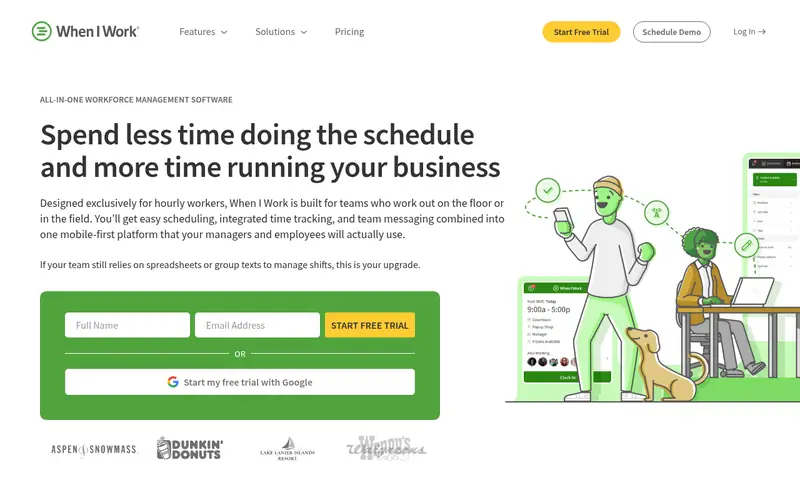
When I Work homepage

When I Work centers on scheduling. A manager can build a week of shifts across box office, concession and usher roles, then publish to staff phones. Employees get reminders, request time off and offer shifts to coworkers. Time clock and attendance tracking are available, but they are add-ons on top of the scheduling plan, so the total cost is higher than the base price suggests. For a small theater that mainly needs a clean weekly schedule and swap handling, the scheduling side is easy to run. Check the add-on pricing before you commit, since the time clock is the part a theater needs most.

Free plan: Free trial (14 days)

Website: wheniwork.com

Strengths

  • Simple drag-and-drop scheduling
  • staff can swap shifts in the app

Watch out for

  • Time clock is a paid add-on
  • no free plan
4

Sling

Small cinemas wanting free scheduling and clock-in
See vendor pricing page
getsling.comHomepage, Nov 2026
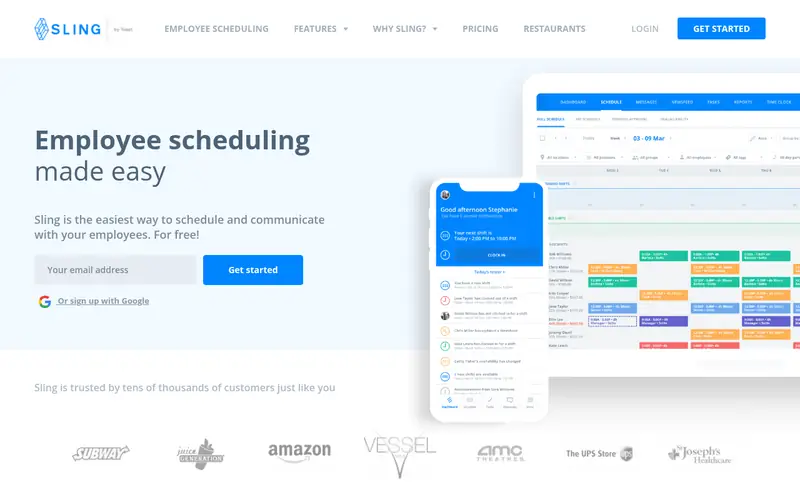
Sling homepage

Sling offers scheduling, time clock and communication in one app. A movie theater can post shifts by position, let staff claim open shifts, and track clock-in and clock-out from a shared device or phone. The free plan includes core scheduling and time tracking for small teams, which suits a single-screen or small multiplex. Paid tiers add features such as payroll integration and more detailed reporting. The free tier has limits on some advanced tools, so a growing theater should review the plan comparison on the vendor site. Sling is a reasonable starting point for a small cinema that wants low cost first.

Free plan: Yes

Website: getsling.com

Strengths

  • Free plan includes scheduling and time clock
  • shift swap and open shift tools

Watch out for

  • Free plan limits some features
  • payroll add-ons cost extra
5

Clockify

Theaters tracking hours by project or cost center
See vendor pricing page
clockify.meHomepage, Nov 2026
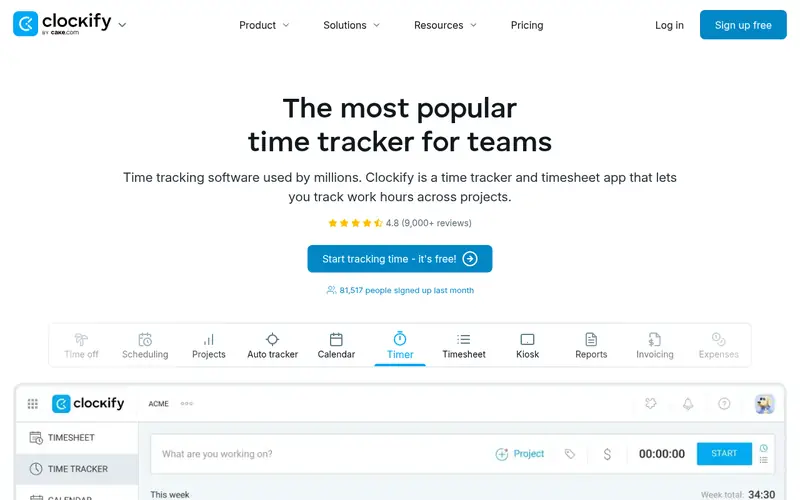
Clockify homepage

Clockify is a time tracking tool that works for hourly teams. A theater can create projects or tags for box office, concessions and cleaning, then have staff log hours against each. Reports show where labor hours go. The free plan supports unlimited users and basic time tracking, which is useful for a small cinema on a budget. Paid plans add features such as scheduling, approvals and more reporting. Clockify is weaker on shift scheduling and payroll export than dedicated time clock tools, so it fits a theater that mainly wants to record and report hours rather than build complex schedules.

Free plan: Yes

Website: clockify.me

Strengths

  • Free plan for unlimited users
  • track hours by role or cost center

Watch out for

  • Less focused on shift scheduling
  • payroll features are limited
6

QuickBooks Time

Theaters already using QuickBooks for payroll
See vendor pricing page
quickbooks.intuit.comHomepage, Nov 2026
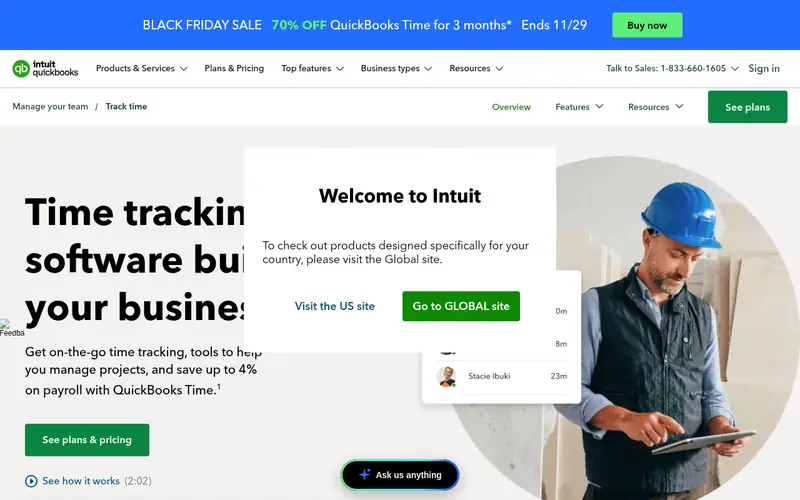
QuickBooks Time homepage

QuickBooks Time handles time tracking with mobile clock-in, GPS and job costing. For a cinema that already runs payroll in QuickBooks, hours flow into payroll without manual re-entry, which saves admin time each pay period. Staff can clock in from a shared kiosk or their phone, and managers can review and approve timesheets. The tool supports scheduling and time-off requests on paid plans. If you do not use QuickBooks payroll, the value drops, since much of the benefit is the connection. The product has a trial but no free plan, so confirm the current per-user price on the vendor page.

Free plan: Free trial (30 days)

Website: quickbooks.intuit.com/time-tracking

Strengths

  • Connects to QuickBooks payroll
  • mobile clock-in with GPS

Watch out for

  • No free plan
  • best value only inside the QuickBooks ecosystem
7

TimeClock Plus

Larger chains needing workforce management
See vendor pricing page
TimeClock PlusHomepage image unavailable

TimeClock Plus is a workforce management system for organizations with complex time and attendance needs. A theater chain can apply pay rules by role, track overtime and manage schedules across sites. It supports kiosk and biometric clock-in, which suits a cinema where staff clock in at a back-office terminal before a shift. Reporting covers attendance and labor cost. This is a heavier tool than a single-screen cinema needs. There is no free plan, and pricing is quoted by the vendor, so a small theater should compare it against simpler options before requesting a quote.

Free plan: No

Website: timeclockplus.com

Strengths

  • Handles complex labor rules
  • supports biometric and kiosk clock-in

Watch out for

  • No free plan or trial listed
  • setup is heavier for small teams

Pre-purchase checklist

  • Confirm the plan covers the number of locations and part-time staff you have.
  • Check whether shift swapping and open-shift claiming are included or cost extra.
  • Verify the time clock works on the devices you have, such as a shared tablet or kiosk.
  • Confirm payroll export matches your payroll provider or file format.
  • Read the free plan limits, including user caps and feature restrictions.

FAQ

What is the best time clock software for a small movie theater?

Homebase and Sling both offer free plans with a time clock and scheduling, which suits a single-location cinema. Compare their free-tier limits, then check paid pricing if you need payroll export or multiple locations.

Can time clock software handle box office and concession roles separately?

Yes. Most tools here let you create positions or departments, so hours for box office, concessions and ushers are tracked separately for reporting and payroll.

Do these tools support shift swapping for part-time staff?

Several do. Deputy, When I Work and Sling all include shift swap and open-shift tools in their scheduling features. Check which plan tier includes them.

Is there a free option for a cinema on a budget?

Homebase, Sling and Clockify offer free plans. Each has limits, such as one location or fewer advanced features, so read the vendor page to confirm what the free tier covers.

Do I need biometric clock-in for a theater?

Not always. A shared tablet or kiosk works for most cinemas. Biometric clock-in is available from vendors such as TimeClock Plus and can reduce buddy punching, but it adds cost and setup.