How we rank
HR and Workforce · Researched comparison

Best Timesheet Software for Art Galleries in 2026

TaskReports may earn a fee from some links on this page, and some placements are paid and labelled. Neither one decides the order. See our disclosure.

The short answer

Clockify is the first pick for most art galleries because it has a free plan for unlimited users and supports billable hours by project. Harvest suits galleries that want timesheets and invoicing in one tool. QuickBooks Time fits galleries that already run payroll through QuickBooks and need scheduling.

On this page

Key takeaways

  • Clockify has a free plan with unlimited users and tracks billable hours, which suits galleries billing client work.
  • Harvest starts at $12 per user per month and combines timesheets with invoicing.
  • QuickBooks Time starts at $20 per month plus $8 per user per month and adds scheduling and payroll.
  • Hubstaff starts at $7 per seat per month and includes activity tracking for remote staff.

Quick comparison

ToolBest fitStarting price
ClockifyGalleries that need free timesheets for many staffSee vendor pricing page
HarvestGalleries that bill clients and want invoicing in one tool$12 per user per month
QuickBooks TimeGalleries already using QuickBooks for payroll$20 per month plus $8 per user per month
HubstaffGalleries managing remote or off-site staff$7 per seat per month
Toggl TrackSmall gallery teams that want simple time entrySee vendor pricing page
ClockSharkGalleries with field staff and off-site installs$40 per month for up to 50 users
TimeCampGalleries that want automatic time trackingSee vendor pricing page

How we chose

We picked tools that support project and client time tracking, which art galleries need for exhibitions, installations, and client work. We weighed fit for the use case, entry price, free access, and main limits. Sources are vendor websites and public pricing pages. Prices change, so confirm the current price on the vendor site before you buy.

Best overall

Clockify

Galleries that need free timesheets for many staff

  • Free plan with unlimited users
  • Billable hours and project tracking
PriceSee vendor pricing page
See Clockify pricing
clockify.meHomepage, Nov 2026
Clockify homepage

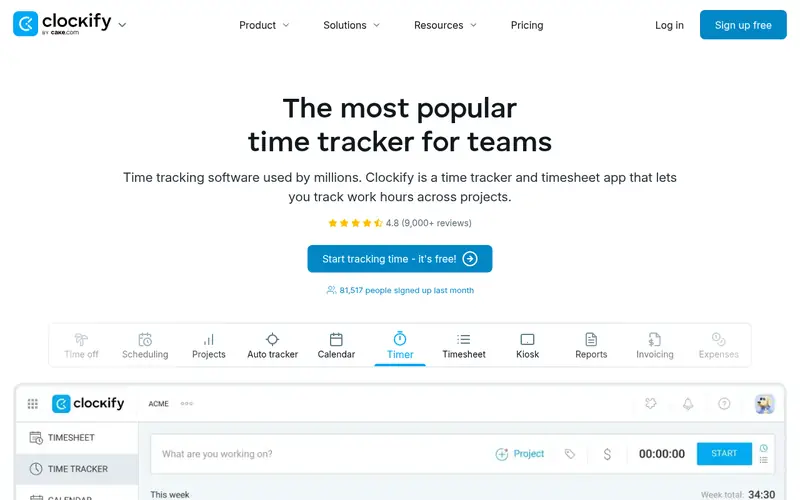
Clockify is a time tracking tool built around projects and clients. For a gallery, that means you can set up a project for each exhibition, art fair, or client consignment and log hours against it. Staff can start and stop a timer or enter hours manually. The free plan covers unlimited users and unlimited tracking, which helps when front desk staff, preparators, and curators all need access. Paid plans add features such as invoicing, scheduling, and admin controls. The free plan does not include those. A small gallery can run on the free tier for a long time. A larger gallery that bills clients for installation or framing work may need a paid plan. Skip Clockify if you need payroll built in.

Price: See vendor pricing page

Free plan: Yes

Website: clockify.me

Watch out for

  • Advanced features sit on paid plans
  • Interface has many options to learn
2

Harvest

Galleries that bill clients and want invoicing in one tool
$12 per user per month
getharvest.comHomepage, Nov 2026
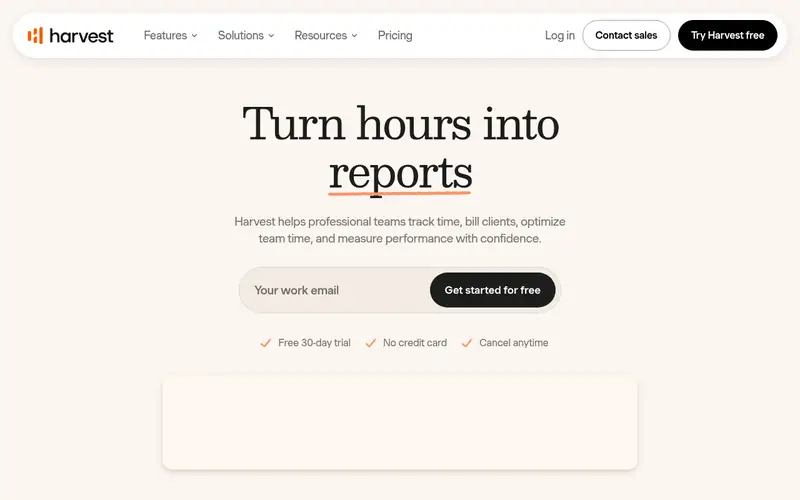
Harvest homepage

Harvest pairs time tracking with invoicing. A gallery that charges clients for framing, shipping coordination, or private installation can log hours by project and turn them into an invoice. Budgets show how much of a project's hours are used, which helps on fixed-fee jobs. The entry price is $12 per user per month on the annual plan. There is a 30-day free trial but no free plan. Every person who tracks time needs a paid seat. That can be costly for a gallery with many part-time staff. For a small team that bills clients, the invoice link is the main reason to choose it.

Free plan: Free trial (30 days)

Website: getharvest.com

Strengths

  • Timesheets connect to invoices
  • Clear project and client budgets

Watch out for

  • No free plan after the trial
  • Per-user pricing adds up for large teams

3

QuickBooks Time

Galleries already using QuickBooks for payroll
$20 per month plus $8 per user per month
quickbooks.intuit.comHomepage, Nov 2026
QuickBooks Time homepage

QuickBooks Time is a time tracking and scheduling tool from Intuit. Galleries that already run payroll in QuickBooks can send approved hours straight to payroll, which cuts manual entry. Scheduling helps cover front desk and event shifts, and staff can clock in from a phone. Pricing starts at $20 per month for the base fee plus $8 per user per month. There is a 30-day trial but no free plan. The tool is strongest when payroll already lives in QuickBooks. A gallery without QuickBooks may find the cost hard to justify against simpler trackers.

Free plan: Free trial (30 days)

Website: quickbooks.intuit.com/time-tracking

Strengths

  • Connects to QuickBooks payroll
  • Scheduling and GPS tracking

Watch out for

  • No free plan
  • Costs rise with each user
4

Hubstaff

Galleries managing remote or off-site staff
$7 per seat per month
hubstaff.comHomepage, Nov 2026
Hubstaff homepage

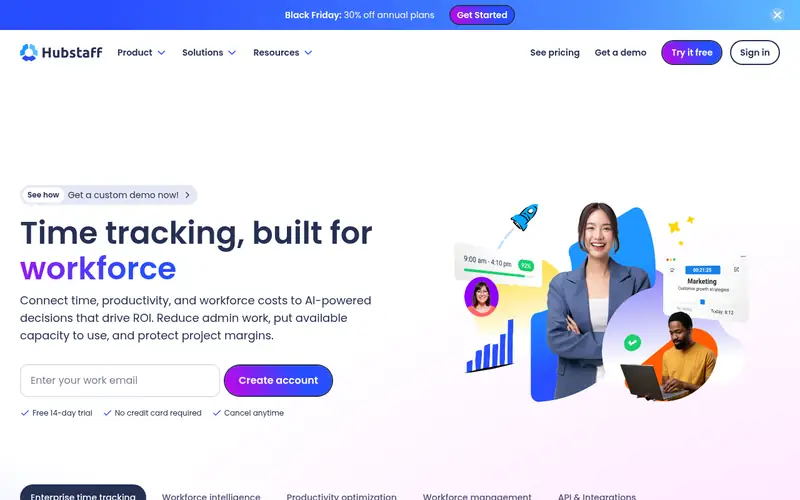
Hubstaff tracks time with optional activity monitoring, screenshots, and app and URL logs. A gallery with remote staff doing catalog work, marketing, or art fair planning can see where hours go. Projects and clients can carry budgets, and timesheets export to payroll and accounting tools. The entry price is $7 per seat per month on the annual plan, billed per seat. There is a 14-day free trial but no free plan. The monitoring features are the main difference from simpler trackers. Some gallery staff may object to screenshots and activity scores, so decide before rollout whether to turn them on.

Free plan: Free trial (14 days)

Website: hubstaff.com

Strengths

  • Activity tracking for remote work
  • Project and client budgets

Watch out for

  • Activity monitoring may not suit all staff
  • Short trial period
5

Toggl Track

Small gallery teams that want simple time entry
See vendor pricing page
toggl.comHomepage, Nov 2026
Toggl Track homepage

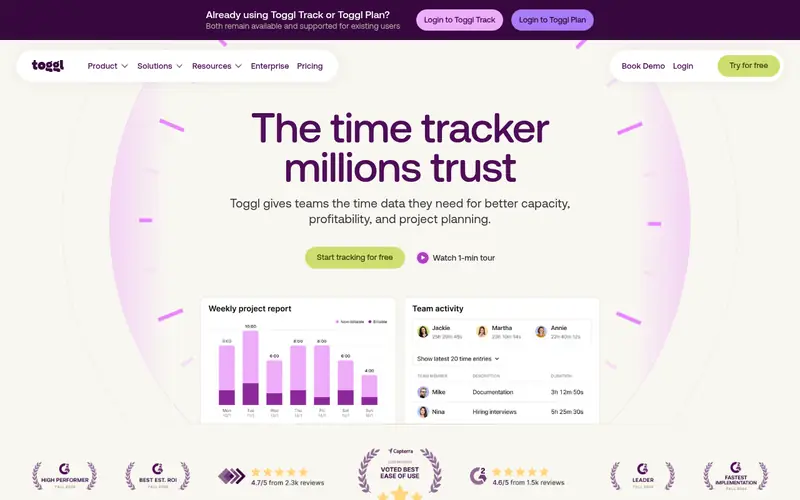
Toggl Track is a lightweight time tracker. Staff start a timer, pick a project, and stop when done. For a small gallery, that covers tracking hours on exhibitions, art handling, and client requests without a long setup. Reports show time by project, client, and user. The free plan covers up to 5 users. Paid plans add more users and reporting. A gallery with more than five people who track time will need to pay. The tool is easy to learn, which matters when staff turnover is high. It does not handle payroll or invoicing on its own.

Free plan: Yes

Website: toggl.com/track

Strengths

  • Simple one-click timer
  • Free plan for up to 5 users

Watch out for

  • Free plan capped at 5 users
  • Limited reporting on the free tier
6

ClockShark

Galleries with field staff and off-site installs
$40 per month for up to 50 users
ClockSharkHomepage image unavailable

ClockShark is built for field and mobile staff. A gallery that sends preparators or installers to client sites or other venues can use GPS clock-in to confirm location and hours. Scheduling shows who is where, and job costing ties hours to specific jobs. Pricing starts at $40 per month for up to 50 users on the standard plan. There is a 14-day trial but no free plan. The tool is heavier than a gallery office needs if all staff work on site. It fits galleries with regular off-site installation or art handling work.

Free plan: Free trial (14 days)

Website: clockshark.com

Strengths

  • GPS tracking for off-site work
  • Scheduling and job costing

Watch out for

  • No free plan
  • Built for field service teams
7

TimeCamp

Galleries that want automatic time tracking
See vendor pricing page
timecamp.comHomepage, Nov 2026
TimeCamp homepage

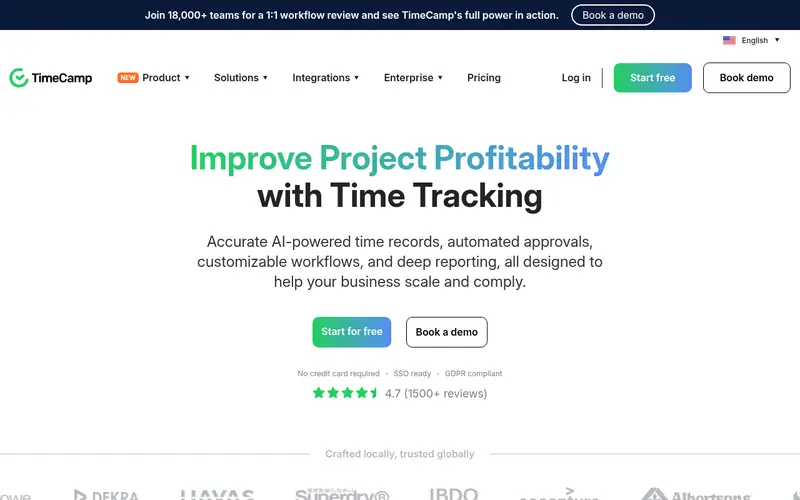
TimeCamp tracks time automatically by watching which apps and documents are open, and staff can also start a manual timer. For a gallery, that can capture hours spent on catalog files, emails, and planning without constant timer starts. Reports break time down by project and client. The free plan has limited features and is best for a single user or a very small team. Paid plans add invoicing, budgeting, and more reports. Automatic tracking can misread short tasks, so review entries before billing. Galleries that want precise manual control may prefer a simpler timer.

Free plan: Yes

Website: timecamp.com

Strengths

  • Automatic tracking in the background
  • Project and client reports

Watch out for

  • Automatic tracking can be inaccurate
  • Free plan has limited features

Which timesheet software for art galleries should I use if my staff work off site at art fairs and client venues?

Start with ClockShark if off-site location tracking matters, because it includes GPS clock-in and job costing. If you want a free option for a small team, Toggl Track covers up to 5 users. If you already run payroll in QuickBooks, QuickBooks Time sends approved hours straight to payroll. If you bill clients for installation work and want invoices from the same tool, Harvest links timesheets to invoices at $12 per user per month.

Is Clockify better than Harvest for timesheet software for art galleries?

Clockify is better if you need a free plan for unlimited users. Harvest is better if you bill clients and want timesheets and invoicing in one tool. Clockify's free tier covers unlimited users and tracking, but invoicing sits on paid plans. Harvest starts at $12 per user per month with a 30-day trial and no free plan, and it connects logged hours to client invoices.

Pre-purchase checklist

  • Confirm how many staff need to track time, since per-user pricing changes the total cost.
  • Check whether the tool tracks billable hours by project and client for exhibition and installation work.
  • Decide if you need payroll or invoicing in the same tool or can export timesheets.
  • Review whether activity monitoring or GPS tracking is acceptable to your staff.
  • Confirm the free plan limits and trial length before you commit.

FAQ

What is the best free timesheet software for an art gallery?

Clockify has a free plan with unlimited users and billable hour tracking, which suits galleries of any size. Toggl Track also has a free plan but caps it at 5 users. TimeCamp has a free plan with limited features. All three let you log hours by project, which fits exhibition and client work.

Can timesheet software track hours for exhibitions and client projects separately?

Yes. Most tools on this list let you create projects and clients, then log hours against each. Clockify, Harvest, and Hubstaff all support project and client budgets. That lets a gallery see hours spent on one exhibition or one client consignment apart from daily front desk work.

Do art galleries need timesheet software with invoicing?

Only if the gallery bills clients for time, such as installation, framing, or shipping coordination. Harvest links timesheets to invoices and starts at $12 per user per month. Galleries that do not bill for time can use a simpler tracker like Clockify or Toggl Track and export hours for payroll.

How much does timesheet software for art galleries cost?

Prices range from free to about $40 per month plus per-user fees. Clockify and Toggl Track have free plans. Harvest starts at $12 per user per month, Hubstaff at $7 per seat per month, and QuickBooks Time at $20 per month plus $8 per user per month. Confirm current prices on vendor sites.

What should a small gallery look for in timesheet software?

Look for a free plan or low entry price, simple time entry, and project tracking for exhibitions and client work. Check the user limit on free plans, since Toggl Track caps its free plan at 5 users. Decide early whether you need payroll or invoicing in the same tool.