How we rank
HR and Workforce · Researched comparison

Best Timesheet Software for Home Builders in 2026

TaskReports may earn a fee from some links on this page, and some placements are paid and labelled. Neither one decides the order. See our disclosure.

The short answer

QuickBooks Time is the first pick for home builders who already run their books in QuickBooks, because crew hours can be tied to jobs and payroll in one place. Buildertrend is the stronger choice for builders who want timesheets inside a full construction management system. Clockify is a low-cost alternative for small crews that mainly need to record hours against jobs and clients.

On this page

Key takeaways

  • QuickBooks Time is the first pick for builders already using QuickBooks, with crew time capture that can flow into job costing.
  • Clockify has a free plan for small crews and charges per seat on paid plans, which suits builders who bill hours by job.
  • Buildertrend combines timesheets with project and client management built for residential construction.
  • Prices and plan limits change, so confirm the current entry price on each vendor's pricing page before you buy.

Quick comparison

ToolBest fitStarting price
QuickBooks TimeBuilders already using QuickBooks for payroll and job costingSee vendor pricing page
BuildertrendHome builders who want timesheets inside full project managementSee vendor pricing page
ClockifySmall crews that bill hours by job and clientSee vendor pricing page
HubstaffBuilders managing remote staff and subcontractor hoursSee vendor pricing page
Toggl TrackSolo builders and small teams billing hours to clientsSee vendor pricing page
HarvestBuilders who invoice clients from tracked hoursSee vendor pricing page
PaymoSmall building teams that need time tracking and project billingSee vendor pricing page

How we chose

We picked tools that support time capture against jobs, projects or clients, which is the core need for home builders. We looked at fit for the use case, published entry prices, free access and the main limits of each plan. Sources are vendor websites and public documentation. Prices and plan limits change, so confirm current details on the vendor's pricing page before you buy. We did not run hands-on tests or collect user reviews.

Best overall

QuickBooks Time

Builders already using QuickBooks for payroll and job costing

  • Crew time can be tied to jobs and customers
  • mobile app for time capture in the field
PriceSee vendor pricing page
See QuickBooks Time pricing
quickbooks.intuit.comHomepage, Nov 2026
QuickBooks Time homepage

QuickBooks Time is a time tracking product from Intuit. Home builders use it to record crew hours on site and assign those hours to a specific job or customer. When the account is connected to QuickBooks Online or Desktop, approved hours can move into payroll and job costing instead of being re-entered by hand. The product is sold on its own or bundled with QuickBooks payroll plans. It includes a mobile app, GPS and location data on time entries, and scheduling tools. The main limit is that the strongest job costing features live in QuickBooks itself, so the value depends on which accounting plan you run. Skip it if you do not use QuickBooks and do not plan to. A builder who only needs simple hour logs against jobs will find lighter, cheaper tools in this list.

Price: See vendor pricing page

Free plan: Free trial (30 days)

Website: quickbooks.intuit.com/time-tracking

Watch out for

  • Full job costing depends on a QuickBooks plan
  • per-user pricing adds up for large crews
2

Buildertrend

Home builders who want timesheets inside full project management
See vendor pricing page
BuildertrendHomepage image unavailable

Buildertrend is a construction management platform aimed at home builders and remodelers. Its time tracking features let crew members log hours against projects, and those hours can feed into job budgets and cost reporting alongside schedules, change orders and client communication. Because it is a full platform, the cost is higher than a standalone timesheet app. Builders get value when they use several modules, such as daily logs, scheduling and client portals, not just the time clock. The product is sold through a demo and quote process rather than a simple self-serve checkout. Skip it if you only need to record hours and export them to payroll. A dedicated time tracking tool will cost less and take less setup.

Free plan: No

Website: buildertrend.com

Strengths

  • Timesheets sit alongside scheduling, budgets and client updates
  • built for residential construction workflows

Watch out for

  • Priced as a full platform, not a standalone timesheet tool
  • setup takes more time than a simple tracker
3

Clockify

Small crews that bill hours by job and client
See vendor pricing page
clockify.meHomepage, Nov 2026
Clockify homepage

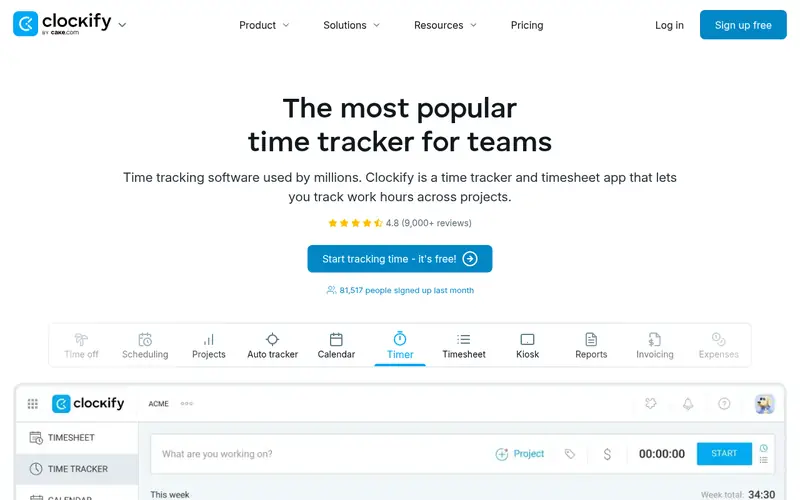
Clockify is a time tracking tool that works for builders who need to log hours against jobs and clients. You can create a project for each home or job and a client for each customer, then run reports on hours per job. That structure fits builders who bill hourly or need to compare estimated hours to actual hours. The free plan covers core time tracking for unlimited users, with paid tiers adding features such as invoicing, approvals and more detailed reporting. It is not built for construction, so scheduling, daily logs and job costing come from other tools or from manual work. Skip it if you need crew scheduling, site photos or budget tracking in the same system. It is a time tracker first.

Free plan: Yes

Website: clockify.me

Strengths

  • Free plan for unlimited users with core time tracking
  • hours can be grouped by project and client

Watch out for

  • Advanced job costing needs paid tiers or integrations
  • construction-specific features are limited
4

Hubstaff

Builders managing remote staff and subcontractor hours
See vendor pricing page
hubstaff.comHomepage, Nov 2026
Hubstaff homepage

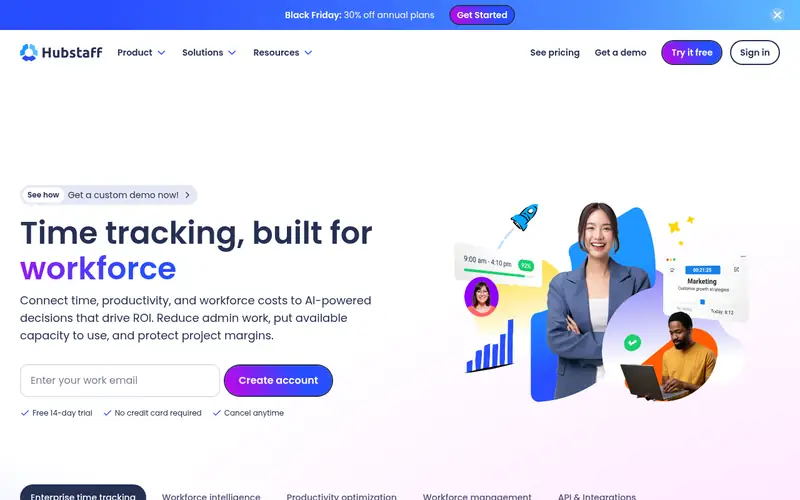
Hubstaff is a workforce management tool with time tracking, scheduling and payroll features. For home builders, it is most useful when some work happens off site, such as estimating, design or admin, and you want hours tied to projects and clients in one account. The product tracks time with optional screenshots and location data, and it can pay contractors and staff. That makes it a fit for builders with a mix of office and field workers. The per-user pricing means cost rises with crew size, and the monitoring features may be more than a small crew wants. Skip it if your crew only needs a simple clock-in and job selection on a phone. A lighter tool will cost less.

Free plan: Free trial (14 days)

Website: hubstaff.com

Strengths

  • Time tracking with location and activity data
  • supports teams and contractors in one account

Watch out for

  • Per-user pricing
  • activity monitoring is more than many site crews need
5

Toggl Track

Solo builders and small teams billing hours to clients
See vendor pricing page
toggl.comHomepage, Nov 2026
Toggl Track homepage

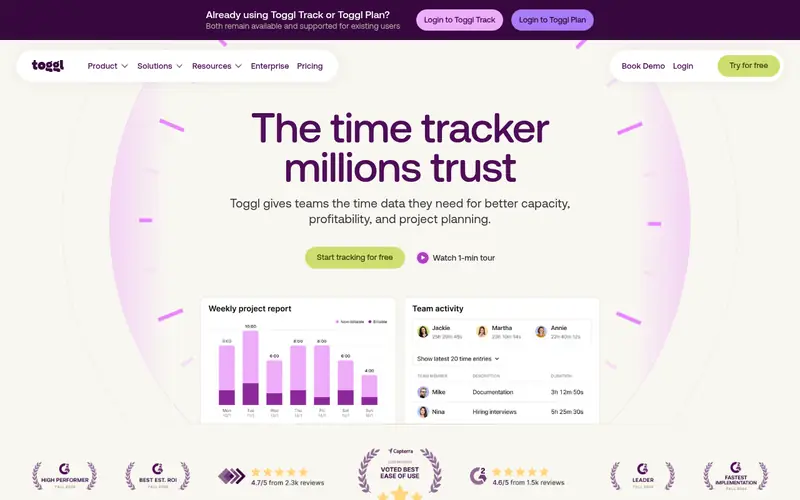
Toggl Track is a time tracking app built around simple start and stop timers. A home builder can set up a project per job and tag entries by task, then export reports for billing or payroll. It works well for a solo builder or a small team that bills clients by the hour. The free plan covers basic tracking for a small number of users, with paid plans adding more users, billable rates and reporting. It does not handle scheduling, job costing or crew management, so it is a time capture tool rather than a construction system. Skip it if you need approvals, GPS or job cost reports. It is best for simple hour logging.

Free plan: Yes

Website: toggl.com/track

Strengths

  • Simple time entries tagged to projects and clients
  • reports for billable hours

Watch out for

  • No construction-specific features
  • limited free plan history
6

Harvest

Builders who invoice clients from tracked hours
See vendor pricing page
getharvest.comHomepage, Nov 2026
Harvest homepage

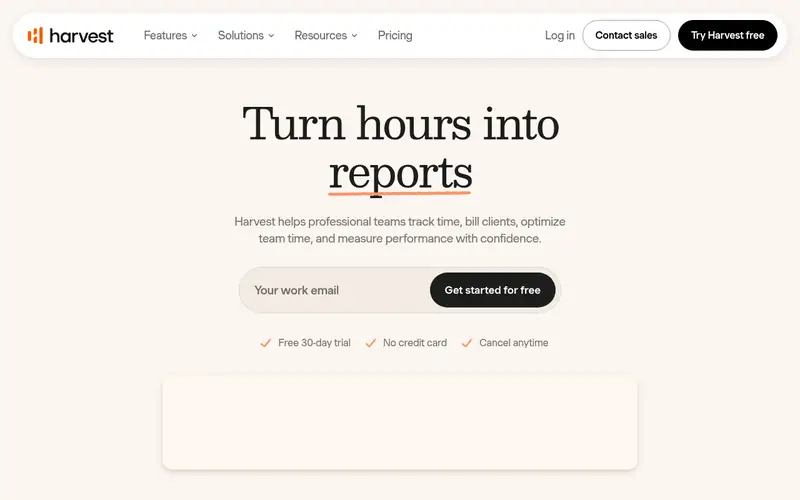
Harvest is a time tracking and invoicing tool. Builders who bill clients for hourly work, such as design, consulting or small jobs, can track hours by project and turn them into invoices. Reports show hours and costs by project and client. The product is simple and focused. It does not include crew scheduling, daily logs or job costing, so it fits builders who mainly need to bill time rather than run a full construction workflow. Pricing is per seat, with a free trial and no permanent free plan. Skip it if you need field crew features or payroll. Use it for client billing only.

Free plan: Free trial (30 days)

Website: getharvest.com

Strengths

  • Time tracking and invoicing in one tool
  • reports by project and client

Watch out for

  • Per-seat pricing
  • no construction scheduling or job costing
7

Paymo

Small building teams that need time tracking and project billing
See vendor pricing page
paymoapp.comHomepage, Nov 2026
Paymo homepage

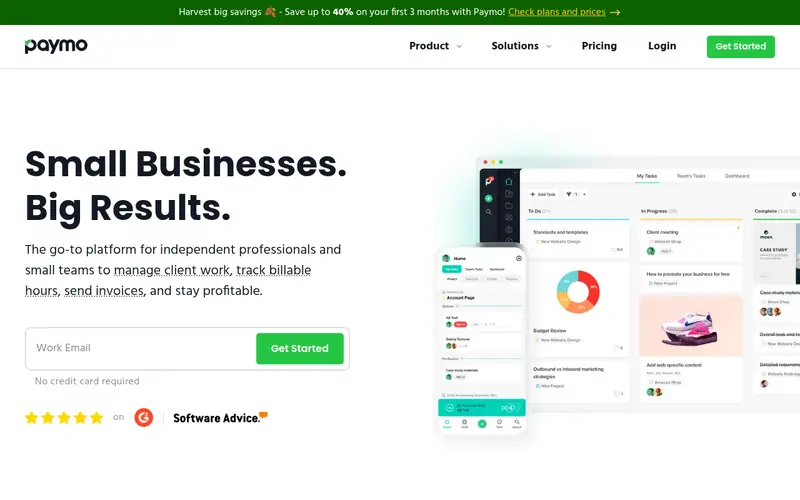
Paymo combines time tracking with task management and invoicing. A small home building business can track hours against projects, assign tasks and bill clients from the same tool. It suits teams that run several small jobs and want hours, tasks and invoices together. The free plan covers a small team with core features, and paid plans add more users and features such as budgeting and advanced reporting. It is not a construction platform, so scheduling, site logs and job costing are outside its scope. Skip it if you need crew scheduling or construction-specific job costing. It is a general project and time tool.

Free plan: Yes

Website: paymoapp.com

Strengths

  • Time tracking, tasks and invoicing in one tool
  • free plan for small teams

Watch out for

  • Not built for construction
  • advanced features need paid plans

Pre-purchase checklist

  • Check whether hours can be assigned to a specific job or customer, not just a general project.
  • Confirm the mobile app works offline or on poor signal, since site crews often have weak coverage.
  • Check how time data moves to payroll or accounting, and whether that needs a specific plan.
  • Count the number of users you will add, because per-seat pricing changes the total cost.
  • Confirm whether job costing, approvals and reporting are included or cost extra.

FAQ

What is the best timesheet software for home builders?

QuickBooks Time is the first pick for builders who use QuickBooks, because hours can flow into payroll and job costing. Buildertrend is better for builders who want timesheets inside full construction management. Clockify is a low-cost option for small crews.

Do home builders need construction-specific timesheet software?

Not always. If you only need to record hours against jobs and export them, a general time tracker works. If you need scheduling, daily logs, client updates and job costing in one place, a construction platform such as Buildertrend is a better fit.

Can crew members track time on a phone?

Yes. QuickBooks Time, Clockify, Hubstaff and Toggl Track all offer mobile apps for time capture. Check offline support before you buy, because site coverage can be weak.

How much does timesheet software cost for a small building crew?

Prices vary by plan and user count. Clockify, Toggl Track and Paymo have free plans for small teams. QuickBooks Time, Harvest and Hubstaff charge per user on paid plans. Confirm current prices on each vendor's pricing page.

Can timesheet hours feed job costing?

Yes, in some tools. QuickBooks Time can pass hours to QuickBooks for job costing. Buildertrend ties hours to job budgets and cost reports. General trackers such as Clockify and Toggl Track need manual work or integrations for job costing.