IT Management · Researched comparison

Network Monitoring Software in 2026: A Guide to 7 Tools

TaskReports may earn a fee from some links on this page, and some placements are paid and labelled. Neither one decides the order. See our disclosure.

The short answer

Our first pick is LogicMonitor, best for enterprises wanting wide hybrid monitoring without running the backend. For a different need, Datadog Network Monitoring covers cloud-centric organizations already invested in Datadog and Paessler PRTG covers small to mid-sized Windows-centric IT teams. The remaining 4 options are covered below with prices and limits.

On this page

Key takeaways

  • Top of the list is LogicMonitor, which targets enterprises wanting wide hybrid monitoring without running the backend.
  • Only 2 of the 7 tools have a free plan (Paessler PRTG, Zabbix), so check the caps.
  • For shops already running Nagios plugins or needing on-prem control, Nagios XI is worth a look.
  • For the cheapest start, look at Datadog Network Monitoring: $15/host/month reported for infrastructure monitoring.
  • Paessler PRTG comes with a trade-off: sensor counting gets complicated as networks grow.

Quick comparison

ToolBest forMain limitPrice fromFree tier
---------------
LogicMonitorEnterprises wanting wide hybrid monitoring without running the backendSome features need workaroundsSee websiteFree trial
Datadog Network MonitoringCloud-centric organizations already invested in DatadogConsumption-based billing can surprise$15/host/month reported for infrastructure monitoringFree trial
Paessler PRTGSmall to mid-sized Windows-centric IT teamsWindows-server centricSee websiteYes
SolarWinds NPMLarge enterprises where the network is the core concernQuote-based per-element pricing is opaqueSee websiteFree trial
ZabbixTechnical Linux teams with restricted budgetsSetup and tuning take real effort$0Yes
AuvikMSPs and multi-site teams wanting maps and config management quickNo published pricingSee websiteFree trial
Nagios XIShops already running Nagios plugins or needing on-prem controlPer-node licensing adds up$1,995 reported starting licenseFree trial (60 days)
★ Best overall

LogicMonitor

Enterprises wanting wide hybrid monitoring without running the backend

  • Wide hybrid coverage with auto-discovery
  • Forecasting and topology views
PriceSee website (quote-based, per device)
See LogicMonitor pricing

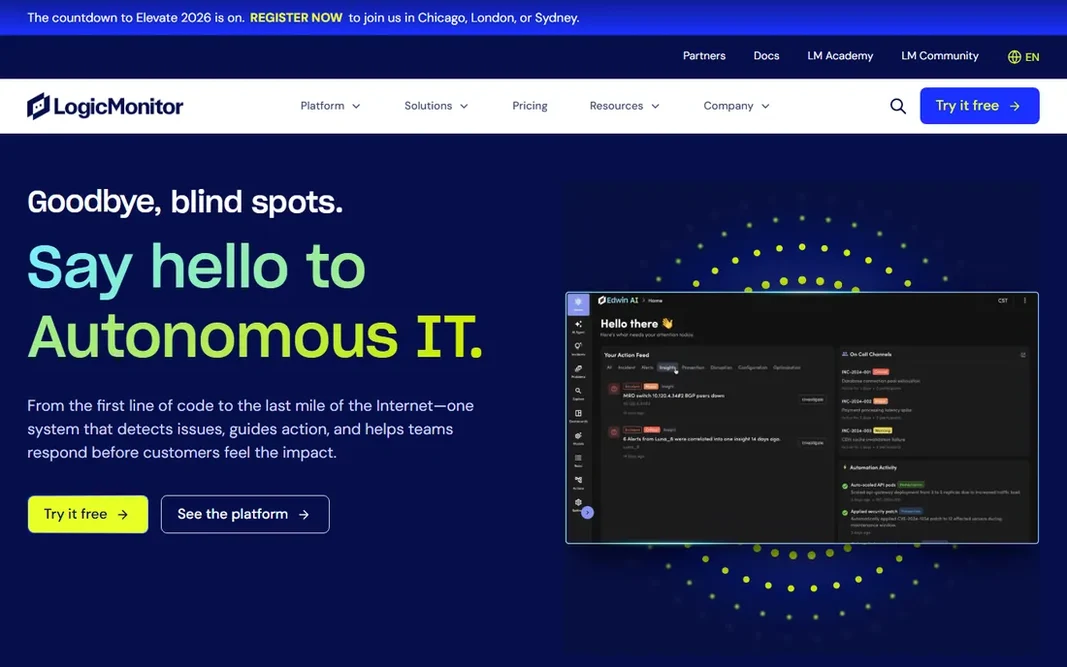
LogicMonitor works best for enterprises wanting wide hybrid monitoring without running the backend. LogicMonitor spans the hybrid estate, cloud and on-prem together, from a SaaS system: collectors sit on your network, the backend lives with the vendor, and nobody maintains monitoring servers. Honest limits: Some features need workarounds. Auto-discovery, forecasting and topology views provide enterprise teams wide visibility without the SolarWinds operational weight. Check the vendor site for LogicMonitor pricing; none is listed in this comparison. Free options: Free trial.

Price: See website (quote-based, per device)

Free plan: Free trial

Website: logicmonitor.com

Watch out for

  • "hybrid unit" licensing confuses buyers
2

Datadog Network Monitoring

Cloud-centric organizations already invested in Datadog

$15/host/month reported for infrastructure monitoring; network device monitoring priced separately

Datadog Network Monitoring works best for cloud-centric organizations already invested in Datadog. Datadog's argument is correlation. When the network alert fires, the same product displays you the application traces, the logs and the infrastructure metrics for the same minute, which collapses the war-room debate about whose problem it is. Where it falls short: Network monitoring is an add-on cost on top of hosts. Worth adding: the metering demands respect. Consumption-based billing across hosts, devices and flow logs can surprise finance if nobody models it first. Network monitoring is an add-on cost on top of the host pricing. Pure network teams may find the product overkill. For a cloud-native team already paying for Datadog, adding network monitoring beats buying and integrating a separate tool. Price to start with Datadog Network Monitoring: $15/host/month reported for infrastructure monitoring. Trial and free access: Free trial. What works well: logs and infrastructure in one system.

Free plan: Free trial

Website: datadoghq.com

Strengths

  • Capable for cloud and container traffic
  • Network data sits next to APM

Watch out for

  • Consumption-based billing can surprise
3

Paessler PRTG

Small to mid-sized Windows-centric IT teams
See website (licensed per sensor; tiers on vendor pricing page)

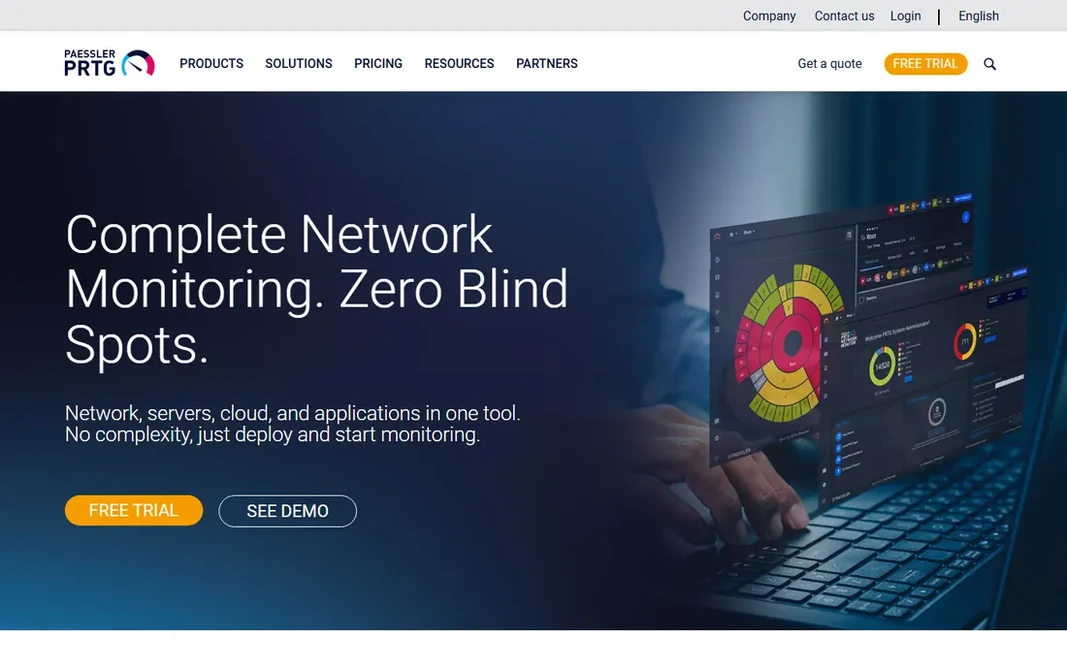
For small to mid-sized Windows-centric IT teams, Paessler PRTG is a natural candidate. PRTG is the fastest path from "we have no monitoring" to "we have monitoring." Install it, run auto-discovery, and within hours you have maps, dashboards and alerts across SNMP, WMI, NetFlow and packet sniffing. One device can consume plenty of sensors (CPU, memory, each interface, each service). The main drawbacks: Windows-server centric. So a "small" network can outgrow the free level quicker than expected, and costs scale steeply from there. For a small Windows shop, PRTG is the pragmatic pick; for a large estate, price the sensor math against the quote-based enterprise tools. The product is Windows-server centric. Also, the free 100-sensor level spans a genuinely small network at $0, which makes it the default first tool for small IT teams. Check the vendor site for Paessler PRTG pricing; none is listed in this comparison. Paessler PRTG has a free plan. Best features of Paessler PRTG: SNMP, WMI.

Free plan: Yes

Website: paessler.com

Strengths

  • NetFlow and packet sniffing in one tool
  • Free 100-sensor level includes small networks completely

Watch out for

  • Sensor counting gets complicated as networks grow
4

SolarWinds NPM

Large enterprises where the network is the core concern
See website (quote-based, licensed per monitored element)

Choose SolarWinds NPM for large enterprises where the network is the core concern. NetPath visualizes the actual path traffic takes across providers, flow analysis displays who is consuming bandwidth. The template library spans just about every device worth monitoring. Where it shines: Deep. Points against: Self-hosted system needs dedicated staff to run. The total cost goes beyond the quote. More specifically, pricing is quote-based and opaque. And any security-conscious buyer will factor in the 2020 supply-chain breach; SolarWinds has rebuilt since, but due diligence is warranted. Check the vendor site for SolarWinds NPM pricing; none is listed in this comparison. Free options: Free trial.

Free plan: Free trial

Website: solarwinds.com

Strengths

  • Purpose-built network monitoring with NetPath and flow analysis
  • Huge template and community ecosystem

Watch out for

  • Quote-based per-element pricing is opaque
5

Zabbix

Technical Linux teams with restricted budgets
$0 (open source; premium support subscriptions available)

Zabbix serves technical Linux teams with restricted budgets. Zabbix is enterprise-grade monitoring at zero license cost. In practice, the price is staffing. Trade-offs to know: Enterprise support and some features are premium. Enterprise support and some features are premium extras. From a buyer's view, for a skilled Linux team with no budget, nothing else comes close. Zabbix pricing: $0. You can start on Zabbix without paying.

Free plan: Yes

Website: zabbix.com

Strengths

  • Free with SNMP, agent, ICMP
  • IPMI and HTTP monitoring in one tool

Watch out for

  • Needs Linux skills to deploy and maintain
6

Auvik

MSPs and multi-site teams wanting maps and config management quick
See website (quote-based, per network device)

For MSPs and multi-site teams wanting maps and config management quick, Auvik is a natural candidate. Auvik's demo sells itself: install the collector, and minutes later you are looking at a live topology map of a network nobody had documented. Limits to weigh: Per-device costs scale with every switch and AP. As for the details, for MSPs managing dozens of client networks, this speed is the product. This comparison lists no price for Auvik; ask the vendor. Free plan details: Free trial.

Free plan: Free trial

Website: auvik.com

Strengths

  • Automatic discovery with live topology maps from day one
  • Configuration backup and traffic analysis included

Watch out for

  • No published pricing
7

Nagios XI

Shops already running Nagios plugins or needing on-prem control
$1,995 reported starting license (per-node tiers)

Choose Nagios XI for shops already running Nagios plugins or needing on-prem control. Nagios is the old guard, and the plugin ecosystem is its moat: decades of community checks include everything from ancient UPS units to modern APIs. Configuration is complicated for newcomers, the web UI feels dated next to Auvik or LogicMonitor, and per-node licensing layers on up across a large estate. The operational cost is real. Shops already invested in Nagios plugins should stay; everyone else should weigh Zabbix (free) or PRTG (quicker) before committing to the Nagios ramp-up time. Nagios XI pricing: $1,995 reported starting license. Free options: Free trial (60 days). Drawbacks to consider: Configuration is complicated for newcomers.

Free plan: Free trial (60 days)

Website: nagios.com

Strengths

  • Massive plugin ecosystem handles almost any check
  • On-prem control with no SaaS dependency

Watch out for

  • Per-node licensing layers on up

FAQ

Do these tools publish their prices?

Not all of them. LogicMonitor, Paessler PRTG, SolarWinds NPM and Auvik publish no starting price, so expect a quote request for those. The rest, Datadog Network Monitoring included, show a starting price, though seats and billing terms still change the final cost.

Which options for network monitoring software have a free plan?

Paessler PRTG and Zabbix offer a free plan in this list. Free plans usually cap users, projects or features, so check the limits on the vendor page. Several others offer a trial instead.

What is the cheapest option for network monitoring software in this list?

On published monthly entry prices, Datadog Network Monitoring is the lowest here at $15/host/month reported for infrastructure monitoring. Entry price is only part of the cost, because seats, add-ons and billing terms can change the total.

What is the best free network monitoring software?

LogicMonitor comes first here and is built for enterprises wanting wide hybrid monitoring without running the backend. Buyers with other needs may prefer Datadog Network Monitoring (for cloud-centric organizations already invested in Datadog) or Paessler PRTG (for small to mid-sized Windows-centric IT teams). Compare costs and limits first.

How are the tools for network monitoring software ordered?

LogicMonitor sits first and Nagios XI last because the order follows typical fit for network monitoring software, then price clarity and free access. It is a judgement call, so read each profile for fit and limits.