Web Hosting · Researched comparison

Top 7 Website Builder Platforms for 2026, Compared

TaskReports may earn a fee from some links on this page, and some placements are paid and labelled. Neither one decides the order. See our disclosure.

The short answer

For one-page sites at minimal cost, Carrd is where this list starts. For a different need, Webflow covers designer-grade sites without code and Wix covers adaptable drag-and-drop for most sites. All 7 tools are compared below on price, free plan and limits.

On this page

Key takeaways

  • Carrd takes the first slot, best suited to one-page sites at minimal cost.
  • Expect to ask for a quote from Squarespace and Shopify; the other tools show a starting price.
  • Shopify fits E-commerce keeps.
  • Check the limits for WordPress.com before you commit: plugin access needs higher levels.
  • Only 5 of the 7 tools have a free plan (Carrd, Webflow, Wix, WordPress.com, Weebly), so check the caps.

Quick comparison

ToolFree accessBest forWatch out for
------------
CarrdYesOne-page sites at minimal costLimited features
WebflowYesDesigner-grade sites without codeLearning curve is steep
WixYesAdaptable drag-and-drop for most sitesFreedom enables messy design
WordPress.comYesAdaptable blogging and business sitesPricing tiers confuse
WeeblyYesStraightforward sites on a budgetDevelopment has slowed
SquarespaceFree trialBeautiful templates for creativesPricing is premium
ShopifyFree trialE-commerce keepsOverkill for non-stores
★ Best overall

Carrd

One-page sites at minimal cost

  • Pro is remarkably cheap
  • Straightforward and quick

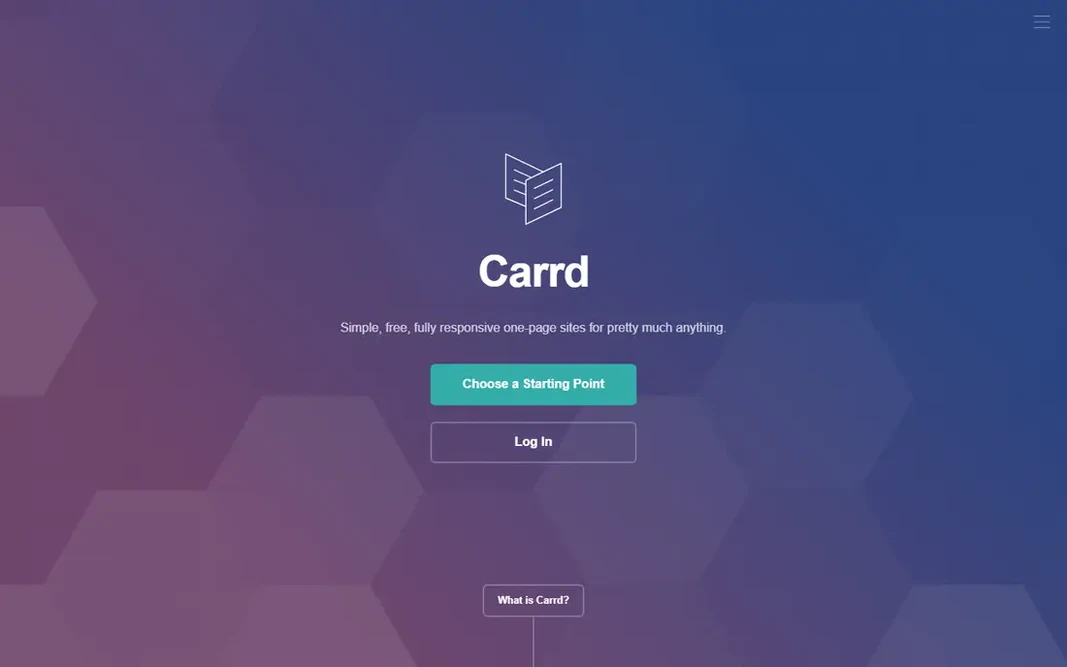
Carrd is built with one-page sites at minimal cost in mind. Carrd does one thing: beautiful one-page sites, absurdly cheap. Landing pages, portfolios, link-in-bio pages and straightforward profiles go up in minutes. Real multi-page websites need other tools. Price to start with Carrd: Free. Carrd offers a free plan. Honest limits: Not for real websites.

Price: Free

Free plan: Yes

Website: carrd.com

Watch out for

  • One-page only
2

Webflow

Designer-grade sites without code
Free

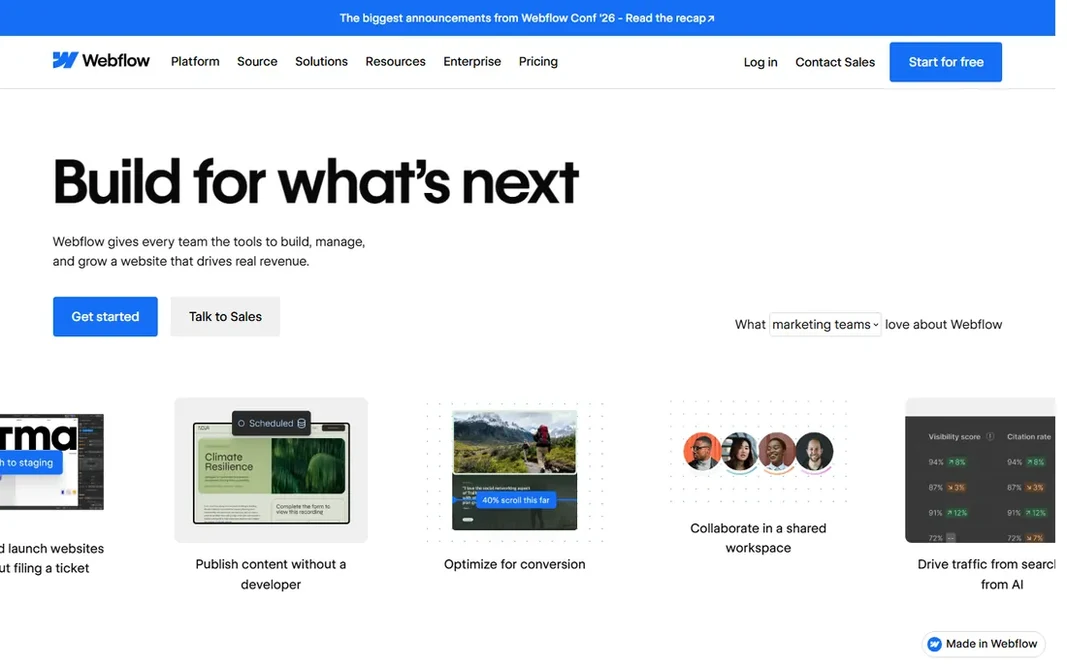
Webflow makes the most sense for designer-grade sites without code. Agencies and design-led startups build production sites on it. For everyday use, the visual editor maps to real HTML, CSS and JavaScript concepts, producing clean code and genuinely custom sites. From a buyer's view, straightforward brochure sites do not need this power. Webflow is what designers use when they outgrow template builders. As for the details, the learning curve is the steepest here; Webflow assumes design literacy. Also, CMS collections, interactions and animations come built in. Entry price for Webflow: Free. Webflow includes a free tier. Honest limits: Pricing climbs with features.

Free plan: Yes

Website: webflow.com

Strengths

  • Real web design power visually
  • CMS and interactions built in

Watch out for

  • Overkill for straightforward sites
3

Wix

Adaptable drag-and-drop for most sites
Free

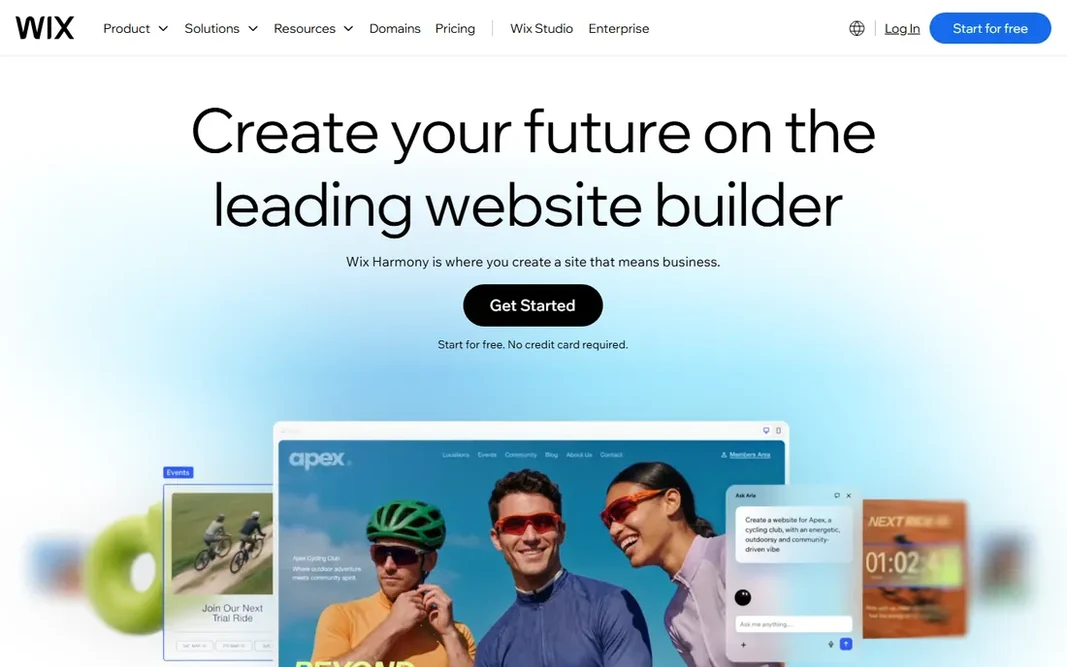
Wix serves adaptable drag-and-drop for most sites. Wix hands users the most design freedom of the mainstream builders: drag anything anywhere, with hundreds of templates and an app market handling bookings, keeps, forums and more. Beyond that, freedom has costs. Untrained users produce messy sites, and switching templates later means rebuilding. For small companies that want a specific look without hiring a designer, that adaptability is the appeal. The free plan displays Wix ads and blocks custom domains. But as the general-purpose default for DIY websites, Wix's breadth is unmatched. Price to start with Wix: Free. Wix offers a free plan. What to check first: Freedom makes it possible for messy design; Switching templates needs rebuilding. What users get: True drag-and-drop freedom.

Free plan: Yes

Website: wix.com

Strengths

  • Huge app market
  • Enormous template library

Watch out for

  • Premium needed for custom domain
4

WordPress.com

Adaptable blogging and business sites
Free

WordPress.com is a good fit for adaptable blogging and business sites. WordPress.com offers WordPress without the hosting burden. Beyond that, Blogging remains its superpower, the theme and plugin ecosystem is the largest in web publishing. Watch-outs: Plugin access needs higher levels. The product scales from free blogs to business sites. For everyday use, the building experience is less visual than Wix. But for content-led sites where publishing matters more than drag-and-drop design, WordPress.com's ecosystem depth wins. WordPress.com pricing: Free. You can start on WordPress.com without paying.

Free plan: Yes

Website: wordpress.com

Strengths

  • A good match for blogging
  • Huge theme and plugin ecosystem

Watch out for

  • Pricing levels confuse
5

Weebly

Straightforward sites on a budget
Free

Weebly is a good fit for straightforward sites on a budget. Weebly was the simplicity champion, and it remains simple: pick a template, drag elements, publish. In practice, development has plainly slowed under Square, templates feel dated next to Squarespace, and innovation goes to commerce features. Weebly starts at: Free. Weebly has a free plan. What to check first: Square focus is commerce.

Free plan: Yes

Website: weebly.com

Strengths

  • Very straightforward to use
  • Free level available

Watch out for

  • Templates feel dated
6

Squarespace

Beautiful templates for creatives
See website

Squarespace is a good fit for beautiful templates for creatives. Squarespace built its brand on design. More specifically, the structure that guarantees decent design also limits freedom; Wix lets more customization. Trade-offs to know: No permanent free level. But for design-led firms that want a beautiful site without design skill, Squarespace remains the benchmark. The templates look professionally art-directed from day one, which fits photographers, designers, restaurants and boutiques whose sites must impress visually. Blogging, scheduling and commerce features are built in instead of bolted on. This comparison lists no price for Squarespace; ask the vendor. As for free access: Free trial.

Free plan: Free trial

Website: squarespace.com

Strengths

  • The best-looking templates
  • Capable for portfolios

Watch out for

  • Less adaptable than Wix
7

Shopify

E-commerce keeps
See website

Think of Shopify for E-commerce keeps. The monthly subscription plus transaction fees add up, and design adaptability trails pure site builders. Beyond that, non-commerce sites should look elsewhere. But for selling online, general builders' store features are toys next to Shopify's depth. For everyday use, keeps scale from first sale to enterprise without replatforming. This comparison lists no price for Shopify; ask the vendor. Free plan details: Free trial. Limits to weigh: Overkill for non-stores.

Free plan: Free trial

Website: shopify.com

Strengths

  • Proven at every scale
  • Huge app ecosystem

Watch out for

  • Monthly cost plus transaction fees

FAQ

Can I try these options before paying?

Often, yes. Carrd, Webflow, Wix and others have a free plan and Squarespace and Shopify offer a free trial. Use your own data and a real task during the test, and check what the free tier or trial limits before you rely on it.

Is Carrd the right pick for everyone comparing website builder platforms?

No single tool suits every team. Carrd comes first because it fits one-page sites at minimal cost, while Webflow suits designer-grade sites without code and Wix suits flexible drag-and-drop for most sites. Match the tool to your own size, budget and workflow before deciding.

Which options for website builder platforms have a free plan?

On this list, Carrd, Webflow, Wix, WordPress.com and Weebly include a free plan. Caps on seats, usage or features are common, so test the free plan against your real workload. Several others offer a trial instead.

Is Wix or Squarespace better?

Wix provides more design freedom and a larger app market. Squarespace gives you better-looking templates and a more guided experience. Creative firms frequently prefer Squarespace; companies wanting specific custom layouts prefer Wix.

Do these tools publish their prices?

Not all of them. Squarespace and Shopify publish no starting price, so expect a quote request for those. The rest, Carrd included, show a starting price, though seats and billing terms still change the final cost.