
Ecommerce · Researched comparison

6 Best Analytics Tools for Ecommerce Options for 2026

TaskReports may earn a fee from some links on this page, and some placements are paid and labelled. Neither one decides the order. See our disclosure.

The short answer

For teams obsessed with funnel and behavioral detail, Mixpanel is where this list starts. Littledata is the stronger choice for stores whose GA and ad tracking cannot be trusted, while Google Analytics 4 suits every store as the free baseline. Prices, free plans and limits for all 6 tools follow.

On this page

Key takeaways

  • The list opens with Mixpanel, aimed at teams obsessed with funnel and behavioral detail.
  • For Shopify DTC brands that require attribution tied to profit, Triple Whale is worth a look.
  • Free plans exist at 4 of 6 tools (Mixpanel, Google Analytics 4, Klaviyo, Triple Whale).
  • For Mixpanel, Littledata, Klaviyo and others, you have to request a quote because no starting price is shown.
  • Mixpanel comes with a trade-off: ecommerce-specific profit and attribution views need custom work.

Quick comparison

ToolIdeal forFree tierWatch out for
------------
MixpanelTeams obsessed with funnel and behavioral detailYesEcommerce-specific profit and attribution views need custom work
LittledataKeeps whose GA and ad tracking cannot be trustedFree trialSetup value depends on how broken your current tracking
Google Analytics 4Every store as the free baselineYesSteep learning curve after the Universal Analytics redesign
KlaviyoBrands where email and SMS drive real revenueYesAnalytics depth outside email and SMS is limited
GlewMultichannel retailers drowning in disconnected systemsNoCustom pricing with no self-serve transparency
Triple WhaleShopify DTC brands that require attribution tied to profitYesDeeply Shopify-centric
★ Best overall

Mixpanel

Teams obsessed with funnel and behavioral detail

  • Live data without the sampling games
  • Ample free level for getting started
PriceSee website
See Mixpanel pricing

Mixpanel is designed for teams obsessed with funnel and behavioral detail. Mixpanel answers the questions GA4 makes painful: where exactly does the checkout funnel break, which behaviors predict repeat purchase, which cohorts actually retain. Its event model is made for product and growth teams who think in user journeys instead of pageviews. For behavior-led growth teams, it is one of the sharpest instruments available. You will build those views yourself or pipe Mixpanel data into a warehouse. Check the vendor site for Mixpanel pricing; none is listed in this comparison. Mixpanel offers a free plan. Watch-outs: Ecommerce-specific profit and attribution views need custom work. Where it shines: cohort and retention analysis.

Price: See website

Free plan: Yes

Website: mixpanel.com

Watch out for

  • Pricing climbs with event volume as you scale
2

Littledata

Keeps whose GA and ad tracking cannot be trusted
See website

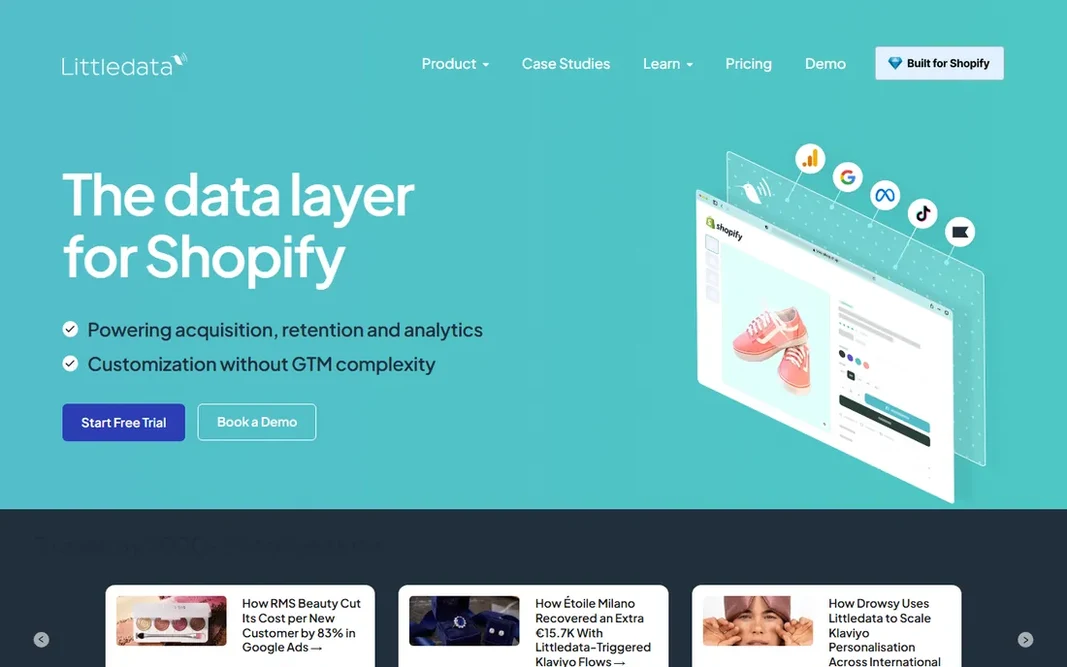
Littledata is built with keeps whose GA and ad tracking cannot be trusted in mind. Littledata solves the problem upstream of every dashboard: bad data in. In practice, keeps with clean tracking already in place will see less value. Honest limits: Setup value relies on how broken your current tracking is. But for brands whose attribution arguments start with "these numbers are wrong," fixing the pipeline beats buying another dashboard. Littledata rebuilds the tracking layer with server-side events, then keeps it audited so drift gets caught. Pricing for Littledata is not stated here, so ask the vendor for current figures. Trial and free access: Free trial.

Free plan: Free trial

Website: littledata.io

Strengths

  • Server-side tracking fixes the data accuracy problem at the source
  • Deep Shopify and Google Analytics integration

Watch out for

  • It is a data pipeline, not a dashboard, so you still need somewhere to look at the numbers
3

Google Analytics 4

Every store as the free baseline
Free

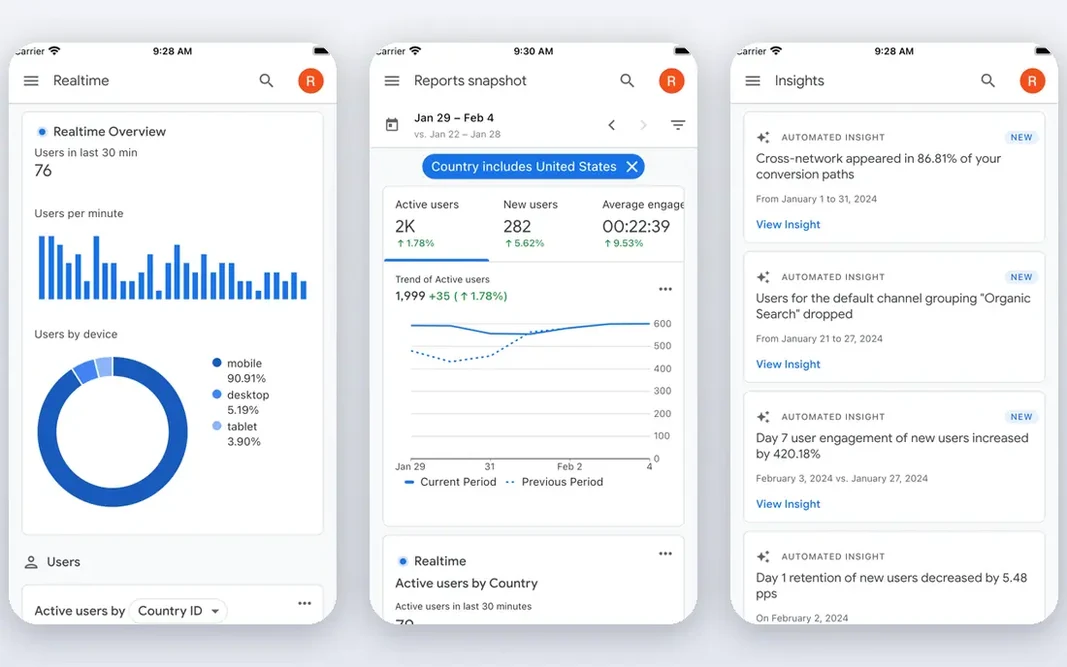
Choose Google Analytics 4 for every store as the free baseline. The ML layer brings anomaly detection and predictive audiences that once required a data team. Honest limits: Samples data on high-traffic properties, with unsampled Analytics 360 priced for enterprises. More specifically, the honest complaints are the interface and sampling. More specifically, GA4 is the foundation, not the finished house: run it always, and add a dedicated ecommerce tool when the questions get harder than its interface comfortably answers. Google Analytics 4 cost at the entry level: Free. Google Analytics 4 offers a free plan.

Free plan: Yes

Website: analytics.google.com

Strengths

  • Cross-device journey stitching from mobile browse to desktop purchase
  • Machine-learning insights surface anomalies and churn predictions

Watch out for

  • Steep ramp-up time after the Universal Analytics redesign
4

Klaviyo

Brands where email and SMS drive real revenue
See website

Choose Klaviyo for brands where email and SMS drive real revenue. Klaviyo is a marketing product first, but its analytics deserve a place here since for plenty of DTC brands, email and SMS are the highest-margin channels. Its revenue attribution presents exactly what each flow and campaign earned. The predictive models (expected CLV, churn risk) turn segments into revenue forecasts. This comparison lists no price for Klaviyo; ask the vendor. A free plan is available with Klaviyo. Honest limits: Costs scale with contact count, which punishes list growth.

Free plan: Yes

Website: klaviyo.com

Strengths

  • Revenue attribution ties every flow and campaign to dollars
  • Not in a separate tool

Watch out for

  • Analytics depth outside email and SMS is restricted
5

Glew

Multichannel retailers drowning in disconnected systems
See website

For multichannel retailers drowning in disconnected products, Glew is a natural candidate. The connector library is the product's core asset, and for multichannel retailers it replaces a small army of CSV exports. What works well: Designed for multichannel commerce reporting. Custom quotes mean a sales process before you can budget, and smaller single-channel keeps will not need 170 connectors. Glew also reports on your data rather than cleaning it; pair it with solid tracking or the numbers inherit your mess. This comparison lists no price for Glew; ask the vendor. There is no free plan with Glew. Where it is weaker: Custom pricing with no self-serve transparency.

Free plan: No

Website: glew.io

Strengths

  • Marketing and profitability
  • More than 170 native ecommerce connectors in one BI layer

Watch out for

  • Reporting-first, so it will not fix bad source data by itself
6

Triple Whale

Shopify DTC brands that require attribution tied to profit
See website

Triple Whale serves Shopify DTC brands that require attribution tied to profit. Triple Whale built its reputation inside the Shopify ecosystem. It displays: setup is genuinely fast for Shopify keeps since orders, product costs and ad spend flow in natively. From a buyer's view, the product's real value is the profit layer. From a buyer's view, where most tools stop at telling you a campaign generated revenue, Triple Whale subtracts ad spend, shipping, product costs and returns to present actual profit per channel, per campaign and per creative. This comparison lists no price for Triple Whale; ask the vendor. Triple Whale has a free plan. Drawbacks to consider: a weak fit for WooCommerce or BigCommerce.

Free plan: Yes

Website: triplewhale.com

Strengths

  • Moby AI surfaces budget and creative recommendations
  • First-party Triple Pixel records purchase data ad-blockers miss

Watch out for

  • Pricing scales with GMV and climbs quick for high-revenue brands

FAQ

Do these tools publish their prices?

Not all of them. Mixpanel, Littledata, Klaviyo and others publish no starting price, so expect a quote request for those. The rest, Google Analytics 4 included, show a starting price, though seats and billing terms still change the final cost.

Do I still need Google Analytics if I buy Triple Whale?

Yes. GA4 is free and remains the baseline for traffic, content and SEO analysis. Dedicated tools add profit and attribution depth; they do not replace GA4's breadth.

Can I try these tools before paying?

Often, yes. Mixpanel, Google Analytics 4, Klaviyo and Triple Whale have a free plan and Littledata offers a free trial. Use your own data and a real task during the test, and check what the free tier or trial limits before you rely on it.

How much should an ecommerce analytics tool cost?

Anywhere from free (GA4) to a handful of hundred dollars per month for DTC products, scaling with GMV, events or contacts. Budget for your revenue in 12 months, not today.

What is the difference between attribution and analytics?

Attribution assigns credit for it across channels and campaigns. Ecommerce brands need both, which is why tools like Triple Whale bundle them.

Is Mixpanel the right pick for everyone comparing analytics tools for ecommerce?

No single tool suits every team. Mixpanel comes first because it fits teams obsessed with funnel and behavioral detail, while Littledata suits stores whose GA and ad tracking cannot be trusted and Google Analytics 4 suits every store as the free baseline. Match the tool to your own size, budget and workflow before deciding.