Ecommerce · Researched comparison

The 7 Best B2B Ecommerce Platforms to Shortlist in 2026

TaskReports may earn a fee from some links on this page, and some placements are paid and labelled. Neither one decides the order. See our disclosure.

The short answer

Sana Commerce leads the list, best for firms running SAP or Microsoft Dynamics ERP. Salesforce B2B Commerce is better for enterprises already living in Salesforce, and WooCommerce B2B is better for small wholesalers already on WordPress. The other 4 tools in the list cover narrower or pricier cases.

On this page

Key takeaways

  • Top of the list is Sana Commerce, which targets companies running SAP or Microsoft Dynamics ERP.
  • Adobe Commerce is the one to check for enterprises with complicated catalogs and custom workflows.
  • WooCommerce B2B is the only tool of the 7 with a free plan.
  • BigCommerce B2B Edition is the lowest-priced starter here at $399/month.
  • A fair warning about Sana Commerce: custom pricing across several editions.

Quick comparison

ToolBest fitFree tierOfficial site
------------
Sana CommerceBusinesses running SAP or Microsoft Dynamics ERPNosana-commerce.com
Salesforce B2B CommerceEnterprises already living in SalesforceNosalesforce.com
WooCommerce B2BSmall wholesalers already on WordPressYeswoocommerce.com
BigCommerce B2B EditionMid-market distributors that want pricing transparencyNobigcommerce.com
Shopify PlusBrands running B2B and direct-to-consumer togetherNoshopify.com
NetSuite SuiteCommerceFirms already running NetSuite ERPNonetsuite.com
Adobe CommerceEnterprises with complicated catalogs and custom workflowsNoadobe.com
★ Best overall

Sana Commerce

Businesses running SAP or Microsoft Dynamics ERP

  • No sync middleware to maintain
  • ERP-native: the storefront reads pricing
PriceSee website
See Sana Commerce pricing

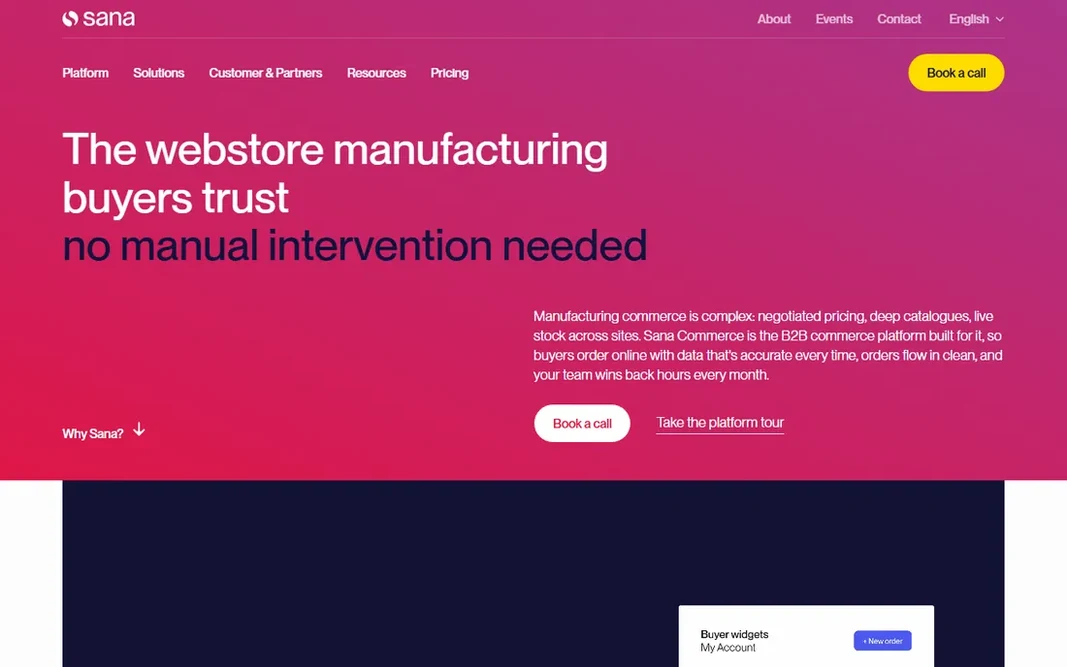
Sana Commerce is designed for companies running SAP or Microsoft Dynamics ERP. Pricing, inventory, order history and customer data come straight from SAP or Microsoft Dynamics in live, which eliminates the integration layer where most B2B projects fail. The flip side is dependence: your ERP's data quality and availability straight determine the storefront experience. Pricing for Sana Commerce is not stated here, so ask the vendor for current figures. Sana Commerce has no permanent free option. Points against: Less adaptability outside the ERP model.

Price: See website

Free plan: No

Website: sana-commerce.com

Watch out for

  • Tied to your ERP, so ERP problems become storefront problems
2

Salesforce B2B Commerce

Enterprises already living in Salesforce
See website

Salesforce B2B Commerce works best for enterprises already living in Salesforce. Outside the Salesforce world, there is little reason to choose it over more focused systems. Salesforce B2B Commerce makes sense for one buyer: the company already committed to Salesforce. Salesforce B2B Commerce does not show a starting price in this comparison, so check the vendor site for current pricing. No free plan comes with Salesforce B2B Commerce. Downsides: Full value needs the Salesforce ecosystem.

Free plan: No

Website: salesforce.com

Strengths

  • Price books and contract pricing
  • Einstein AI for recommendations

Watch out for

  • Implementation is an enterprise project
3

WooCommerce B2B

Small wholesalers already on WordPress
Free (open source; hosting extra)

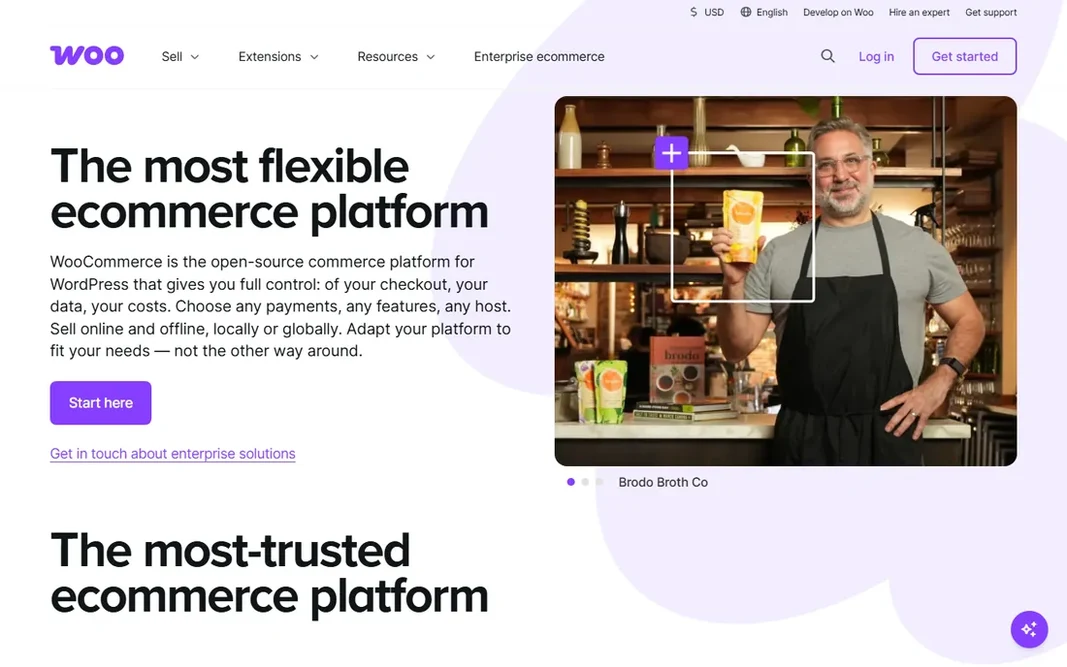
WooCommerce B2B targets small wholesalers already on WordPress. WooCommerce with B2B plugins is the budget route to wholesale ecommerce. Worth adding: hosting, a theme and premium plugins are the real costs, usually hundreds to low thousands a year. On top of that, the core software is free and open source. Plugins add customer-specific pricing, quote requests, bulk order forms and tax-exempt checkout. WooCommerce B2B pricing: Free. Free access exists with WooCommerce B2B. Where it is weaker: B2B features come from plugins of varying quality.

Free plan: Yes

Website: woocommerce.com

Strengths

  • B2B plugins add tiered pricing
  • Full ownership of data and code

Watch out for

  • You own hosting, security and maintenance
4

BigCommerce B2B Edition

Mid-market distributors that want pricing transparency
From $399/month (Scale)

BigCommerce B2B Edition is aimed squarely at mid-market distributors that want pricing transparency. For distributors that want to buy software, not a consulting project, start here. On top of that, the B2B Edition spans customer-specific pricing, bulk ordering, quote-to-order workflows, shared shopping lists and multi-storefront management, with native connectors to NetSuite and SAP. What you pay to start with BigCommerce B2B Edition: From $399/month. No free plan comes with BigCommerce B2B Edition. Where it falls short: Design adaptability needs developer help.

Free plan: No

Website: bigcommerce.com

Strengths

  • The only major B2B system with published pricing
  • Customer pricing rules

Watch out for

  • App ecosystem smaller than Shopify's
5

Shopify Plus

Brands running B2B and direct-to-consumer together
From $2,300/month (3-year term)

For brands running B2B and direct-to-consumer together, Shopify Plus is a natural candidate. Shopify Plus is the pragmatic choice for brands that sell both ways: one admin, one inventory, one customer record, with B2B storefronts offering custom catalogs, volume pricing, payment terms and company accounts alongside the DTC store. Deployment is measured in weeks, not quarters, and the app ecosystem fills most gaps. Honest limits: $2,300/month entry is steep for pure wholesalers. The trade is depth. Distributors with complicated quoting, credit limits and ERP-driven pricing will find B2B-native systems more complete. But for manufacturers and brands where wholesale is a channel instead of the entire business, Shopify Plus is the fastest path to a working B2B portal. Entry price for Shopify Plus: From $2,300/month. There is no free plan with Shopify Plus.

Free plan: No

Website: shopify.com/plus

Strengths

  • Custom catalogs
  • One product for B2B wholesale and DTC retail

Watch out for

  • Transaction fees without Shopify Payments
6

NetSuite SuiteCommerce

Firms already running NetSuite ERP
See website

NetSuite SuiteCommerce is built with companies already running NetSuite ERP in mind. For the hundreds of thousands of firms on NetSuite, it removes a whole integration project. The storefront itself is less adaptable than headless alternatives, and you are deepening NetSuite commitment. Downsides: Custom pricing; NetSuite lock-in. Strengths: B2B account hierarchies; Single system for ERP. NetSuite SuiteCommerce extends NetSuite ERP into commerce: the webstore shares the same item, inventory, pricing and customer records as the ERP, so B2B pricing rules and availability are always accurate. NetSuite users should evaluate it before considering any external product. Check the vendor site for NetSuite SuiteCommerce pricing; none is listed in this comparison. NetSuite SuiteCommerce has no free tier.

Free plan: No

Website: netsuite.com

Strengths

  • Pricing and order management
  • Native NetSuite integration: real-time inventory

Watch out for

  • Design adaptability trails best-of-breed storefronts
7

Adobe Commerce

Enterprises with complicated catalogs and custom workflows
See website

Think of Adobe Commerce for enterprises with complicated catalogs and custom workflows. Adobe Commerce (the former Magento Commerce) is the customization king. That freedom costs money: custom licensing, agency implementation, and continuous maintenance. Where it falls short: Needs experienced developers or an agency. Everyone else should buy a product that already does what they need. Total system costs run roughly 40% above more straightforward SaaS choices by some estimates. Adobe Commerce shows no starting price here, so confirm the cost on the vendor site. There is no free plan with Adobe Commerce.

Free plan: No

Website: adobe.com

Strengths

  • Company hierarchies
  • Pricing and checkout

Watch out for

  • Upgrades and maintenance are continuing work

FAQ

Can I try these options before paying?

Often, yes. WooCommerce B2B has a free plan. Use your own data and a real task during the test, and check what the free tier or trial limits before you rely on it.

Do these tools publish their prices?

Not all of them. Sana Commerce, Salesforce B2B Commerce, NetSuite SuiteCommerce and Adobe Commerce publish no starting price, so expect a quote request for those. The rest, WooCommerce B2B included, show a starting price, though seats and billing terms still change the final cost.

What is a B2B ecommerce system?

Software that lets firms sell to other firms online: wholesale storefronts with customer-specific pricing, bulk ordering, quote requests, credit terms, approval workflows and ERP integration. It differs from B2C ecommerce in serving known business accounts instead of anonymous shoppers.

Which options for B2B ecommerce platforms have a free plan?

WooCommerce B2B is the only tool in this list with a free plan. Free plans usually cap users, projects or features, so check the limits on the vendor page.

What is the cheapest option for B2B ecommerce platforms in this list?

On published monthly entry prices, BigCommerce B2B Edition is the lowest here at $399/month. Entry price is only part of the cost, because seats, add-ons and billing terms can change the total.